
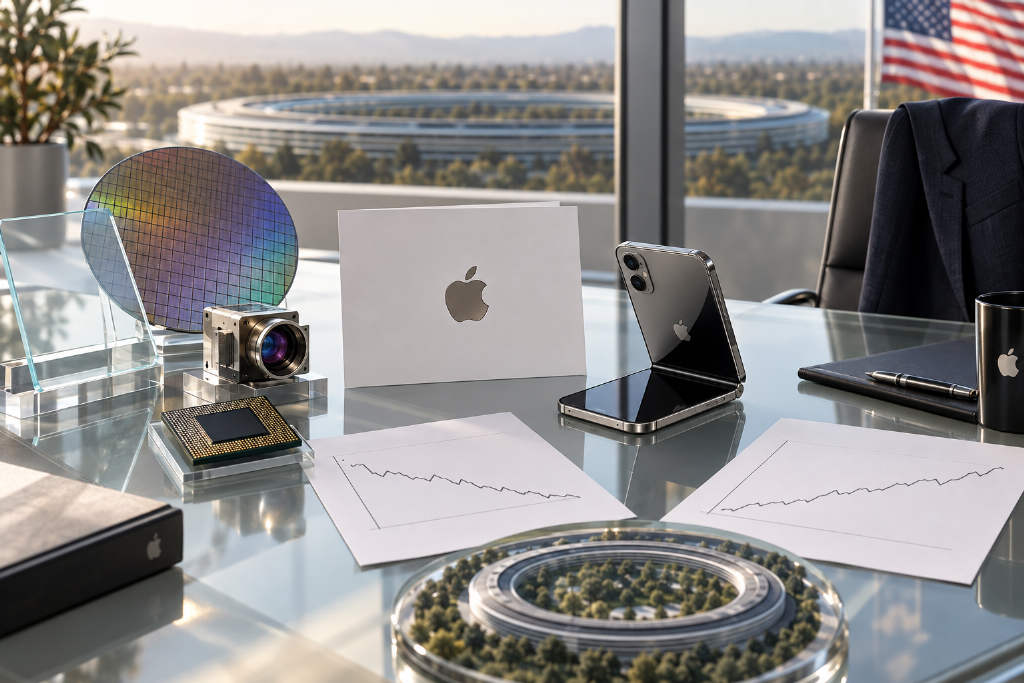
Apple enters its "Surprise and Shine" launch event with a split market backdrop. The presentation is scheduled for 1 a.m. tonight, or 10 a.m. on Sept. 9 in U.S. Pacific Time. In the final trading session before the event, Apple closed at $316.22, down 1.17% on the day. Combined with the previous session, the stock has fallen 3.7% over two trading days.
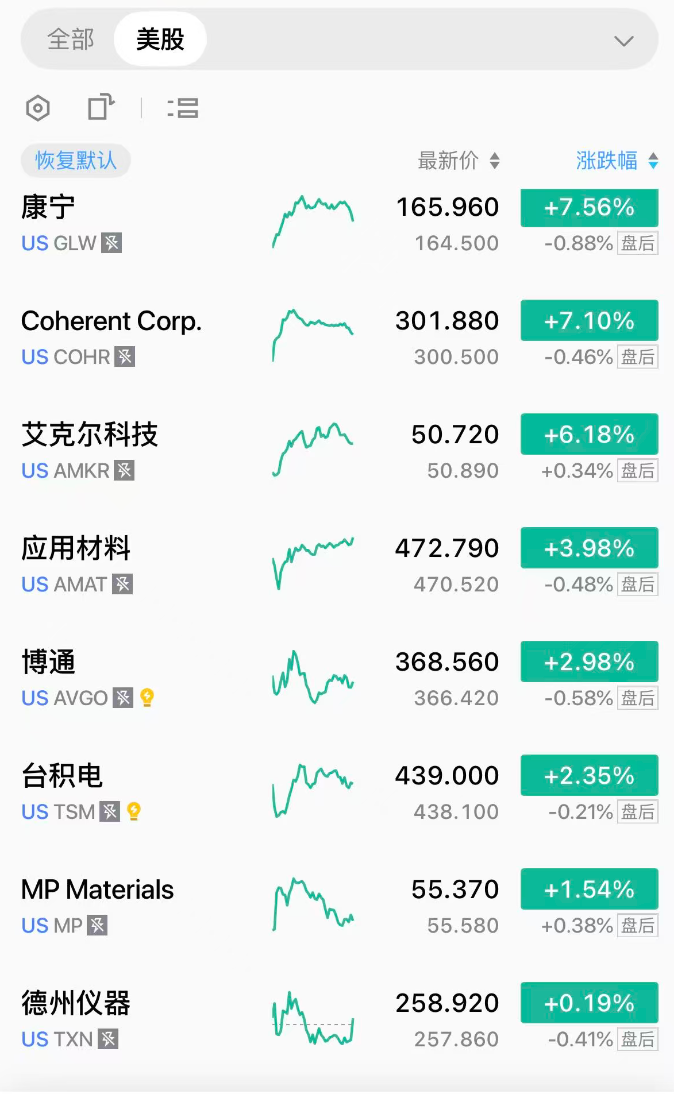
Its suppliers and related names moved the other way. Corning gained 7.56%, Coherent rose 7.10%, and Amkor Technology added 6.18%. That contrast has shifted attention away from the product reveal alone and toward the numbers inside Apple’s latest earnings report, the reshaping of its supply chain, and the reasons Apple-linked stocks have kept climbing.
What stood out in Apple’s fiscal third-quarter results
At the end of July, Apple reported results for its fiscal 2026 third quarter, which covered the period through June 27. On the surface, the figures were strong. Revenue reached $109.4 billion, up more than 16% from a year earlier and the company’s best result on record for the same period. iPhone revenue increased by more than 20% year over year, services revenue hit a record high, and paid subscriptions topped 1.5 billion.
But the article argues that the details under gross margin and cash flow deserve closer attention.
A one-off tariff refund lifted margin
Gross margin came in at 50.1%, though that figure included roughly two percentage points of support from a one-time tariff refund. Excluding that item, the article says actual gross margin was about 48.1%, lower than the 49% posted in the prior quarter. On the earnings call, management said rising memory costs accounted for more than the full quarter-on-quarter decline in margin.
That has added to market expectations that Apple may push through broader price increases on new products. At a minimum, the earnings release showed memory inflation is already weighing on profitability.
Guidance framed as supply-constrained, not demand-constrained
For the September quarter, Apple guided to revenue growth of 9% to 11%. Management explicitly described the outlook as being limited by supply rather than weak demand. According to the article, iPhone posted quarterly records in multiple regions, while active installed devices and upgrade volumes both hit new highs. Demand, in that telling, remains firm. The pressure sits on the supply side.
Cash generation held up, but services growth slowed
Even with product margins squeezed by memory costs, operating cash flow was up more than 23% year over year, and free cash flow rose by more than 30%. The article says Apple’s cash generation has not yet shown obvious damage.
Services, however, are no longer accelerating at the same pace. That segment posted a 75.6% gross margin, but its sequential growth slowed from 16% to 12%.
Why Apple-related stocks are back in focus
Apple sits at the center of one of the longest supply chains in consumer electronics. That matters more if a foldable iPhone brings in new components and manufacturing steps. In that setup, a broader list of public companies becomes tied, to varying degrees, to Apple’s shipment cycle.
The piece points to Apple’s American Manufacturing Program, or AMP, as one of the lists investors use when defining the core "Apple concept" basket. The program is described as a four-year U.S. investment effort with a total size of $600 billion, and its formal partners have gone through screening on capacity, yield stability, and supply security.
Two forces are driving the latest supplier rally
The article does not frame this move as a simple pre-event trade. Instead, it identifies two lines of support: Apple’s own supply-chain positioning, and the rerating effect created by AI infrastructure spending.
Apple and Intel: a push to secure domestic capacity
According to the article, Apple reached a deal with Intel in June under which Intel will design and manufacture chips for Apple in the United States. The stated aim is to reduce Apple’s reliance on Taiwan Semiconductor Manufacturing Co. and broader Asian foundry capacity, while locking in advanced domestic process capacity ahead of an AI-driven upgrade cycle expected to unfold over the next three to four years.
The report links that move to Apple’s earlier U.S. manufacturing investment of nearly $60 billion. With memory and foundry capacity increasingly directed toward AI data centers, Apple is trying to strengthen its bargaining position and secure long-term supply.
AI data-center spending is lifting multiple names
Coherent posted quarterly results that beat expectations by a wide margin and also received a strategic investment of about $2 billion from Nvidia, according to the article. Orders for optical modules used in AI data centers have reportedly been booked through 2028, at a scale far larger than its Apple Face ID laser business.
Corning has been promised up to $3.2 billion in investment from Nvidia for three new AI fiber plants, while also winning business from Amazon. iPhone cover glass remains part of its traditional base, but the article says the market is repricing Corning around its role as an AI data-center fiber manufacturer.
Broadcom’s AI-chip related revenue rose 221% year over year to $16.7 billion in the latest quarter. Its guidance for the next quarter implies another 236% increase to $21.7 billion, mainly on custom AI-chip orders from cloud companies including Google and Meta. The piece says that business now dwarfs Broadcom’s iPhone radio-frequency front-end exposure.

TSMC has raised its 2026 capital spending budget from about $56 billion to a range of $60 billion to $64 billion, citing stronger-than-expected AI demand. Management also said spending over the next three years will be materially higher than in the prior three-year period. Applied Materials is presented as a direct beneficiary as an equipment supplier. Intel, in the same period, lifted its own capital expenditure guidance to more than $20 billion, in line with the timing of its reported cooperation with Apple.
Amkor Technology reached a multi-year agreement with Nvidia worth $1.5 billion, with prepayments from Nvidia supporting an expansion of advanced packaging capacity in the United States. The company also has a $7 billion Arizona plant project expected to begin mass production in 2028. Even so, the article notes that the stock had fallen about 40% over the past month at one point, and concerns around insider selling remain in place. The latest rebound is described more as a stage of repair than a confirmed trend reversal.
Texas Instruments followed a more traditional path. The article says demand from industrial customers rose 30% to 35% year over year, automotive electronics increased 12% to 15%, and consumer electronics rose 6% to 8%. The analog chip market is seeing a broad recovery, with lead times for some products stretching beyond 16 weeks and suppliers taking the chance to raise prices.
MP Materials also benefited as rare earths and critical minerals stocks moved higher on U.S. supply-chain autonomy policies and defense-related orders. The company secured a multi-year rare-earth contract in the second quarter worth a nine-figure sum, and the article also mentions its recycled magnet agreement with Apple, with delivery scheduled for 2027.
Capacity in memory and advanced nodes is being reallocated
The article ties these growth stories to a common source: capacity in memory and advanced manufacturing nodes is being reallocated across the industry. In the second quarter, DRAM contract prices rose more than 40% sequentially, while NAND increased by more than 60%. Tight supply is expected to persist through 2027 and possibly into 2028.
Apple’s reported cooperation with Intel is presented as an attempt to lock in domestic chip capacity before that squeeze worsens. The same shortage that pressures Apple’s gross margin is also feeding the share-price gains of suppliers and semiconductor companies tied to the buildout.
Why Wall Street is not fully buying Apple’s case
The article argues that Apple’s challenge is not just higher costs. The bigger problem is that none of the company’s defenses can solve the issue on its own.
A premium redesign faces yield problems
Apple had been expected to use a 20th-anniversary, all-glass iPhone to offset cost pressure. The device was said to be priced above $2,000, with similar high-end design language gradually filtering down to future Pro and Pro Max models, lifting the pricing center of the whole iPhone lineup.
Supply-chain checks cited in the article suggest that model has most likely been canceled because of yield issues. As of late August, actual foldable output was still only at the level of "a few hundred units a day," far from a target of nearly 10 million units a year. Even if the anniversary concept device is pushed back to 2027, a product with a starting price above $2,000 would only address a relatively small group of buyers willing to pay for a new form factor.
Pricing, product mix, and services each have limits
The June agreement with Intel is described as one line of defense, intended to diversify away from TSMC and increase access to advanced-node capacity in the United States. The article says the move came shortly after management publicly said the situation was "unsustainable" and that price increases were "inevitable," which led some in the market to see the deal as supply-chain preparation ahead of September pricing changes and the product launch.
The other defenses are pricing, product mix, and services revenue. Pricing carries demand-elasticity risk, because steep increases can hurt unit sales. Product mix changes can help only at the margin. Services still have a strong 75.6% gross margin, compared with product gross margin of 40.1%, but sequential growth has slowed from 16% to 12%, and App Store revenue has posted its first year-over-year decline in many years, according to the article.
The AI upgrade narrative is not enough by itself, for now
The piece also says Apple cannot yet rely on AI features alone to drive a new replacement cycle. Whether Siri can understand user intent and complete tasks across apps depends heavily on Apple’s control over third-party app ecosystems and user-data interfaces. The article says that issue is especially constrained in China’s regulatory environment, limiting how much the AI story can do on its own in the near term.
Two major questions hang over the event
Even with the pressures around cost, capacity, and pricing, the article says the event still carries enough uncertainty to command attention.
John Ternus’s first public launch as CEO
This will be the first public product event led by new Chief Executive Officer John Ternus since he took over on Sept. 1. The article notes that he has spent years running product lines including the iPhone, Mac, and AI hardware, together accounting for about 80% of Apple’s revenue. The event is therefore also a public test of whether Apple’s leadership transition can maintain execution through the AI cycle, supply-chain changes, and new hardware formats.
Can a foldable iPhone deliver an Apple-style surprise?
The biggest product question is whether Apple will unveil its first foldable iPhone. If it does, the article describes it as Apple’s largest exterior redesign since the move to the full-screen iPhone. The rumored setup includes an inner display close to 8 inches, an outer screen in the 5-point-something-inch range, and a next-generation 2-nanometer chip.
If the device delivers a strong real-world experience, some institutions still expect it could generate meaningful revenue in the holiday quarter and even trigger shortages in the market. Alongside it, the next iPhone Pro and Pro Max models will be judged on imaging, performance, battery life, and how Apple frames the value case for any price increase. In that sense, the final meaning of "Surprise" will not be clear until the event begins.