
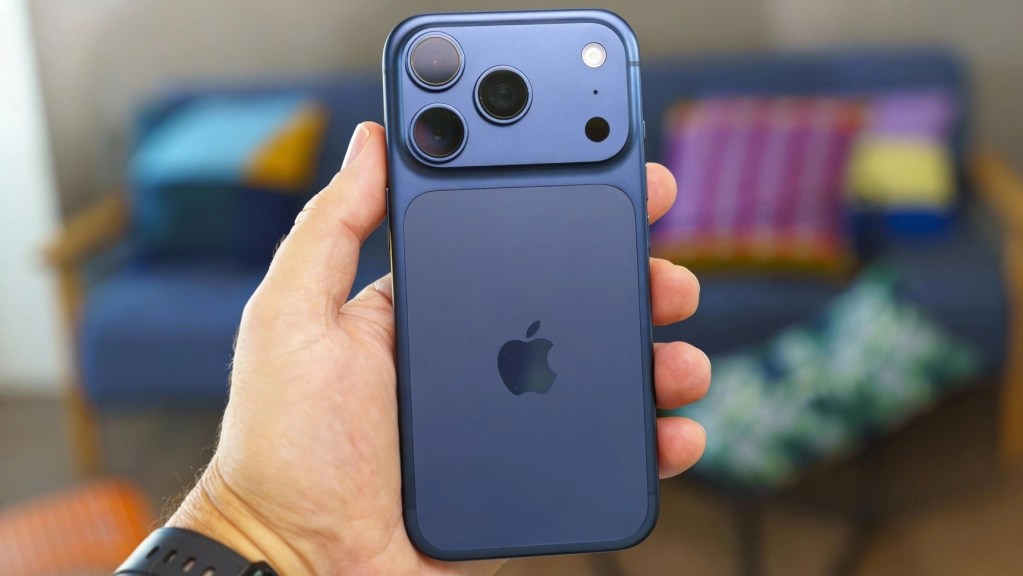
Memory prices have risen more than fivefold since early 2025, and TrendForce says that surge is now hitting the economics of smartphone production. In its latest report, the research firm said the bill of materials for Apple’s 256GB iPhone 18 Pro, expected in the third quarter of 2026, will likely increase about 38% year over year versus the equivalent iPhone 17 Pro model.

TrendForce said a price increase is close to unavoidable. To protect shipment volume and market share, Apple may choose to absorb part of the hit through lower gross margins, following a pricing approach similar to that used in recent MacBook releases. Another option would be to raise prices on older iPhone models at the same time the iPhone 18 series reaches the market, spreading the financial pressure across the broader product mix.
Memory takes a much larger share of the BOM
According to the report, the BOM mix for 256GB iPhone Pro models is changing quickly. In the third quarter of 2025, for the iPhone 17 Pro generation, memory accounted for roughly 10% of total BOM cost. That was close to the 11% share for the application processor, or AP, and the 16% share for the display panel, leaving the three major components on fairly balanced footing.
By the third quarter of 2026, in the iPhone 18 Pro generation, memory’s share is projected to climb to about 34%, while the shares of the AP and panel each fall to 10%. TrendForce added that memory could exceed 42% of total BOM cost in the first half of 2027, putting a single component close to half of the full device cost structure.
Apple may trade margin for shipments
TrendForce attributed the near-40% increase in the iPhone 18 Pro 256GB BOM largely to soaring memory pricing. If memory quotes keep rising, the report said production costs in 2027 could come under even heavier pressure.
The firm outlined two likely responses from Apple:
- Absorb part of the margin loss, using a pricing model similar to recent MacBook launches, to keep the retail increase from becoming too steep and to avoid a sharper hit to demand.
- Raise prices on older iPhone models when the iPhone 18 series launches, repositioning prices across the lineup to spread out the financial impact of higher memory costs.
In effect, TrendForce expects Apple may accept weaker short-term profitability in exchange for protecting shipment volume and longer-term market share.
Android brands face a tighter squeeze
TrendForce said that if Apple, with its strong brand premium and deep profit base, still has to give up part of its margin, Android vendors are in a tougher spot. The report said Android makers will have a harder time absorbing sharply higher component costs internally, and are therefore more likely to pass on a larger portion of those increases to consumers.
That means retail price hikes for Android phones are expected to be larger than those for the iPhone lineup. TrendForce said, 「The greatest pressure is on the entry-level and mid-range segments. Those categories already rely on thin margins and high volume, and now there is barely any margin left at all.」
The report also said some specific Android models may already have slipped into negative-margin territory, leaving vendors with difficult choices: sharp price increases, lower production volumes, or ending loss-making product lines altogether.
Industry recovery timeline may be pushed back
On the wider market outlook, TrendForce took a cautious and pessimistic view. The firm said sustained memory costs are no longer just a supply-chain issue. They are also weighing on end-market demand.
Whether through Apple’s limited ability to shield buyers from higher prices even after taking a margin hit, or through broader cost pass-through by Android brands, the result could be weaker consumer replacement demand. TrendForce expects global smartphone production to remain under downward pressure from the second half of 2026 into 2027, with the sector’s recovery delayed as memory costs fail to retreat.