memory chips
Nov 4, 2026

Memory price surge squeezes handset margins while Longcheer and Huaqin lean on diversification

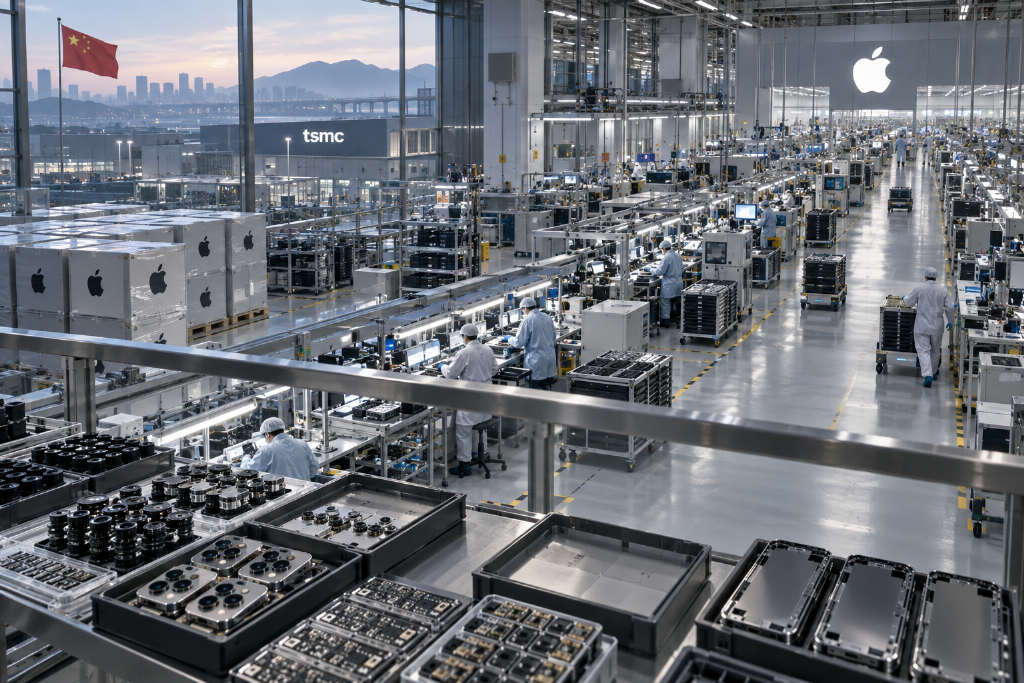
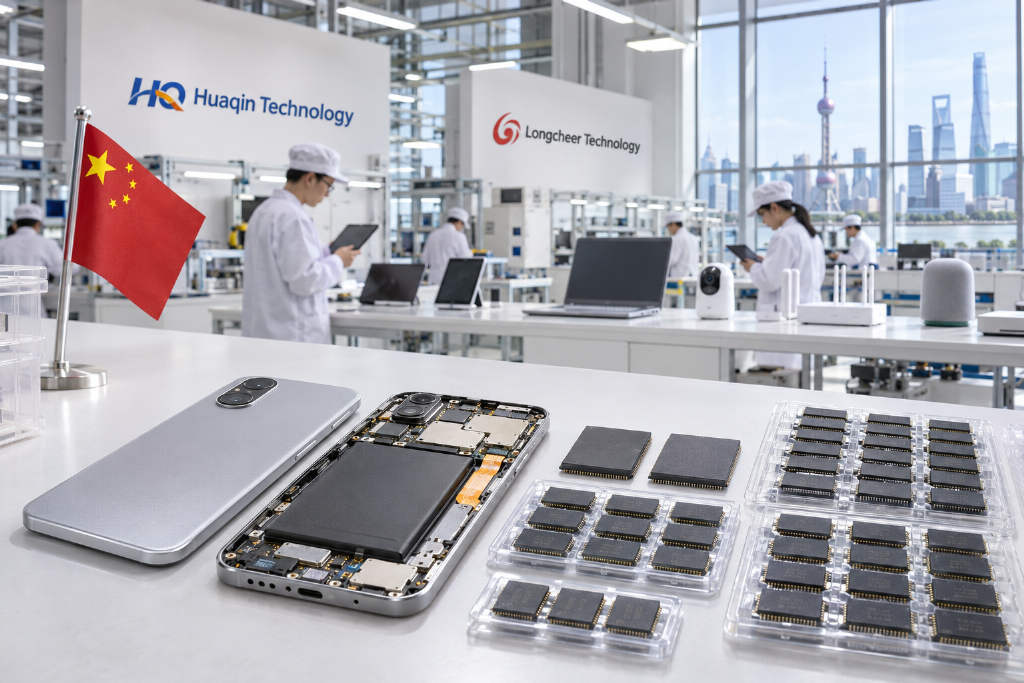
Rising memory prices are reshaping the consumer electronics supply chain, lifting profits for upstream chipmakers while putting pressure on smartphone brands, PC vendors, and original design manufacturers. IDC said China smartphone shipments fell 15.2% year over year to about 58.06 million units in the third quarter of 2026, the weakest level for the period since 2012 according to Counterpoint. The report links the decline to sharply higher component costs, with storage accounting for 40% to 50% of bill-of-materials costs in low-end phones, up from a normal 10% to 15% range. Upstream suppliers posted outsized gains. GigaDevice reported revenue of 20.297 billion yuan in the first three quarters, up 197.11%, while net profit attributable to shareholders jumped 921.55% to 11.066 billion yuan. ChangXin Technology posted even faster growth, with revenue up 738.5% to 269.02 billion yuan and net profit up 2600.8% to 132.04 billion yuan. Nomura said the memory upcycle may continue through 2028. The report argues that leading ODMs such as Huaqin Technology and Longcheer Technology have held up better than the broader market because of broader product exposure. Huaqin’s data business and Longcheer’s AIoT and tablet segments helped offset weakness in smartphones, even as the article warns that low-end handsets and the sub-1,500 yuan segment may keep shrinking if memory costs stay elevated.
930
Memory price surge squeezes handset margins while Longcheer and Huaqin lean on diversification
ASUS
Oct 28, 2026

ASUS winds down smartphone line as Zenfone inventory sells out, shifts focus to AI hardware

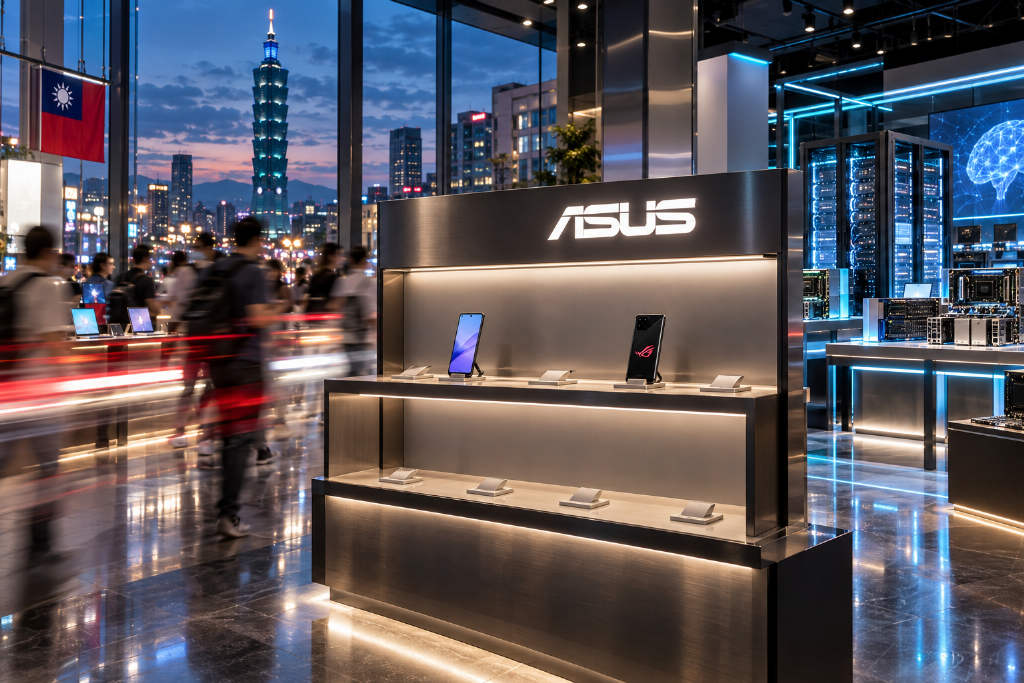
ASUS smartphones have largely disappeared from major retail channels, with distributors saying the final batch of inventory has sold out and chain retailers no longer plan to restock. The remaining sell-off covered the Zenfone 11 Ultra and Zenfone 12 Ultra, while ROG Phone inventory had already dried up earlier in the year. ASUS had said at the start of the year that it would gradually step back from the smartphone market and stop launching successor models for both the Zenfone and ROG Phone lines. Chairman Jonney Shih said on Jan. 16 that the company would continue supporting existing smartphone users, but would not add new models and would reallocate resources toward AI, which he described as having greater strategic value. The report also said discounted pricing had attracted attention, with the Zenfone 11 Ultra falling to NT$16,990 after another NT$2,000 cut in September, marking a cumulative decline of 43%. HTC is moving in a similar direction. Senior Vice President Huang Chao-ying said in September that the smartphone business would "temporarily take a back seat," though the company could revisit the category if a new technological breakthrough emerges. HTC’s U24 pro, launched in June 2024, is now nearing the end of its sales cycle, with only double-digit inventory left in retail channels. Meanwhile, VIVE Eagle AI glasses, launched in 2025, have generated more revenue this year than HTC’s smartphone business, according to the report.

990
ASUS winds down smartphone line as Zenfone inventory sells out, shifts focus to AI hardware
smartphones
Oct 20, 2026

Memory chip surge pushes student phone prices toward the premium tier

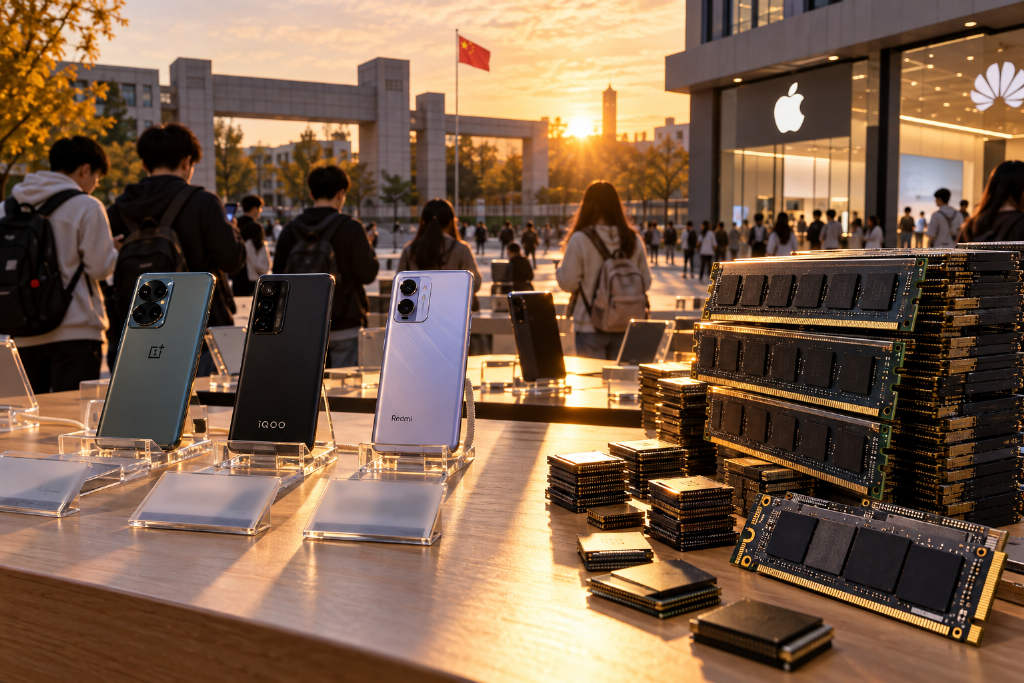
China’s smartphone makers are losing their old pricing playbook for college users as memory costs keep climbing. A report cited by MarsBit says DDR5 16Gb spot prices jumped from $5.5 in May last year to $40 in May this year, lifting storage from just over 10% of bill-of-materials costs in mid-range phones to as much as 30% to 50%. That shift has pushed brands such as OnePlus, iQOO and Redmi to raise prices on models that traditionally sold in the RMB 2,000 to RMB 3,500 range, with some higher-memory versions now nearing or crossing RMB 4,500 and flagship launches moving into the RMB 5,000 to RMB 6,000 band. Analysts and executives quoted in the report said the pressure may last well beyond this year, with Xiaomi President Lu Weibing expecting elevated memory prices to remain through the end of 2027. As a result, performance-focused Android phones aimed at younger buyers are no longer competing only with each other. In the higher price bracket, they are running into Apple and Huawei, which rely more on education discounts and ecosystem appeal than esports branding.

1260
Memory chip surge pushes student phone prices toward the premium tier
Android
Oct 19, 2026

Developers boot iOS 16 on Android phones in early proof-of-concept projects

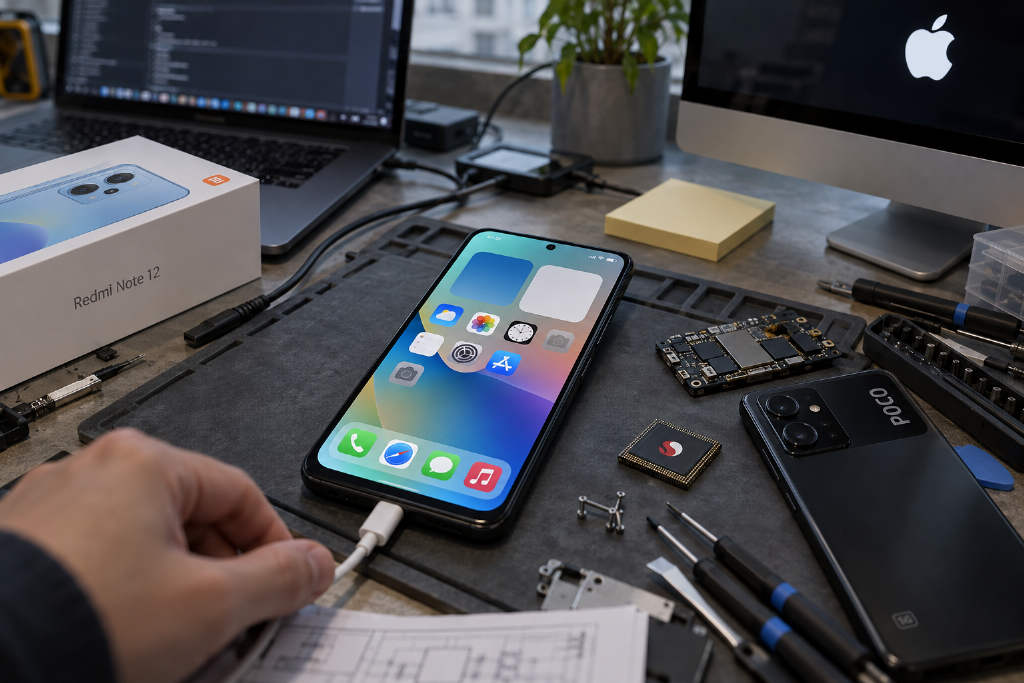
Developers have, for the first time, demonstrated Apple’s iOS running on Android hardware, according to a Techub News brief citing Decrypt. A demo clip circulating on social media shows iOS 16 booting on a Redmi Note 12, and the video has drawn more than 2 million views. One open-source effort, called ios-sweet, combines Apple’s open-source XNU kernel with unmodified iOS 16.7.16 files to make the system run on a phone powered by Qualcomm’s Snapdragon 732G chip. The project is still highly limited: Wi-Fi, cellular connectivity, audio, camera support, and graphics acceleration are not yet working. Separately, a team calling itself OOSexGang said its HackiOS project can run iOS 16.5 on a Poco X5 Pro. Both efforts remain experimental and are aimed at showing technical feasibility rather than delivering a usable mobile operating system.

1220
Developers boot iOS 16 on Android phones in early proof-of-concept projects
Samsung Electronics
Oct 16, 2026

Samsung cuts Q4 budget smartphone output as memory prices stay high and Nittobo tightens glass fiber supply

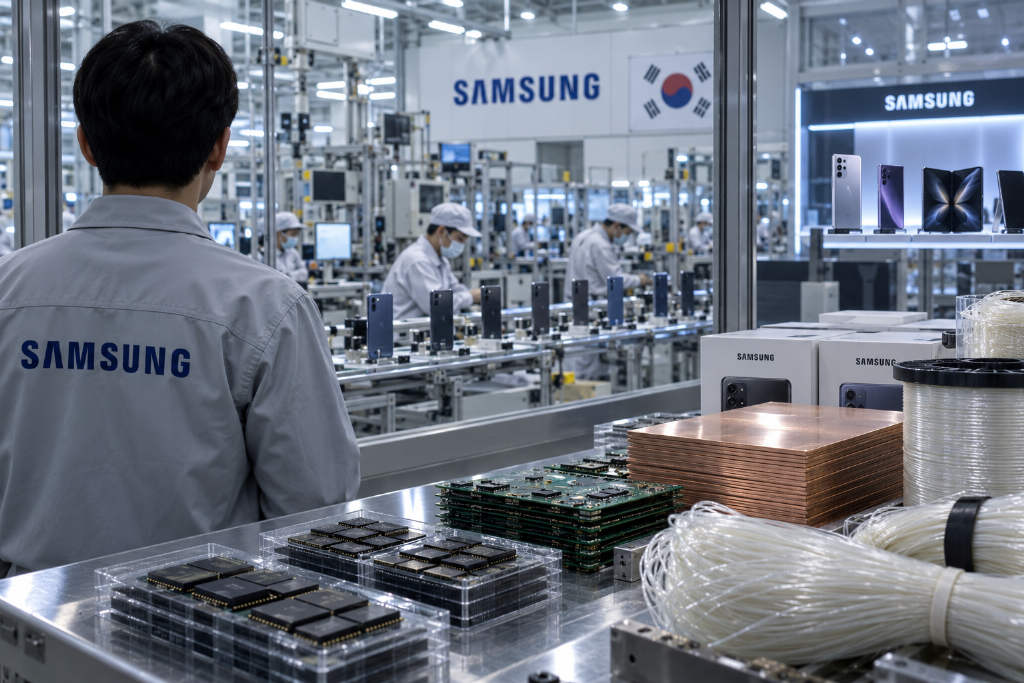
Samsung Electronics has lowered its fourth-quarter production plan for low- to mid-range smartphones, according to a report published by Korean tech outlet ZDNet on Oct. 15. The adjustment was tied to two cost pressures hitting at the same time: a sharp rise in memory chip prices and tighter supply of E-glass fiber used in printed circuit boards for smartphones. The report said Nittobo of Japan, a key producer of glass fiber yarn for copper clad laminates, has recently focused more of its capacity on higher-margin T-glass for AI semiconductors. That shift has reduced output of E-glass for mobile phone PCB applications. Industry sources cited in the report said Samsung has responded by cutting orders for components tied to E-glass as manufacturing costs climbed. Samsung also reportedly revised down its Q4 parts orders based on an annual smartphone shipment target of about 230 million units, below the 240 million units previously expected by the supply chain. Monthly production estimates for October through December were lowered from a combined 31.4 million units to 24.2 million units, a drop of about 23%. While profitability pressure is weighing on the MX division, the report said shipment plans for the Galaxy S27 series remain relatively firm and foldable phone output is expected to rise next year.

1170
Samsung cuts Q4 budget smartphone output as memory prices stay high and Nittobo tightens glass fiber supply
Samsung Electronics
Oct 16, 2026

Samsung cuts Q4 low- and mid-range smartphone output plan as component costs rise

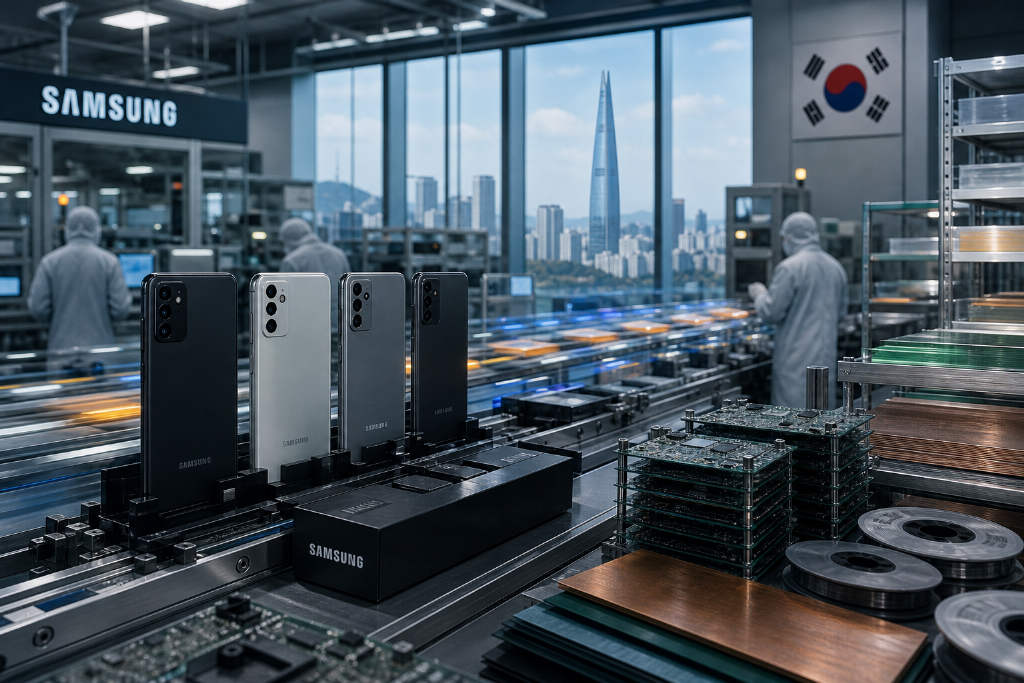
Samsung Electronics has lowered its fourth-quarter production plan for low- and mid-range smartphones, according to an Oct. 15 report by ZDNet Korea cited by ChainCatcher. The reported reasons include higher memory chip prices and disruptions in the supply of glass fiber used in copper clad laminate, a key PCB material. The report said Japan’s Nittobo has shifted more capacity toward T-glass for AI semiconductors, which offers higher profitability, while reducing output of E-glass used in smartphone PCBs. That has tightened supply and pushed prices higher. E-glass is used in prepregs for smartphone motherboard HDI and RFPCB applications. Samsung’s component order outlook shared with partners for the fourth quarter implies annual smartphone shipments of just over 230 million units, below the 240 million units expected by the parts industry. It was also down 20% to 30% from levels seen before the Chuseok holiday period. The company’s Q4 production forecast was revised from 31.4 million units to 24.2 million units, a 23% reduction, even as shipment plans for flagship models such as the Galaxy S27 and foldable phones next year remain relatively high.

1080
Samsung cuts Q4 low- and mid-range smartphone output plan as component costs rise
Apple
Oct 12, 2026

Morgan Stanley says iPhone 18 Pro component cuts have not yet reached final assembly output

Morgan Stanley said component orders tied to Apple’s iPhone 18 Pro and Pro Max have been cut by at least 15% only four weeks after launch, reinforcing signs of weaker-than-expected early demand. The bank said its supply-chain checks had already picked up the adjustment in late September, and comments from Largan Precision plus a Nikkei report pointed in the same direction. Apple has not commented on either report. The bank argued that the reduction still appears confined to components rather than finished-device production. It said it has not seen order cuts at Hon Hai Precision Industry or Taiwan Semiconductor Manufacturing Co., two suppliers it considers better indicators of end-device output. Morgan Stanley therefore kept its iPhone shipment forecasts unchanged at 57 million units for the September quarter and 76 million units for the December quarter. It also pointed to shorter delivery times for the iPhone 18 Pro and Pro Max as another sign matching the component pullback. As of Oct. 6, or 25 days after preorders opened, delivery times were 1.5 to 4 weeks, below those of the iPhone 17 over the comparable period in the countries it tracks. Morgan Stanley maintained an Overweight rating on Apple with a $355 price target, while warning that if the demand trend persists, production-cut risks could grow from the March quarter of 2027 and beyond.

1100
Morgan Stanley says iPhone 18 Pro component cuts have not yet reached final assembly output
HONOR
Oct 10, 2026

HONOR unveils Magic9 lineup with ARRI imaging system and 397B-agent model

HONOR has launched its Magic9 flagship smartphone series, introducing three models: Magic9 Pro Max, Magic9, and Magic9 Ultra Power Edition. The lineup was developed in partnership with imaging brand ARRI and comes with a dual 200-megapixel camera system, ARRI LogC3 curve support, and 87 ARRI Looks aimed at delivering a cinema-style shooting experience. Across the range, HONOR is also rolling out MagicOS 11, which the company said is built on a 397-billion-parameter agentic large model jointly developed with Alibaba. The Magic9 Pro Max features a 2nm Snapdragon mobile platform, an 8800mAh battery, and 100W wired fast charging, while the standard Magic9 positions itself as a compact flagship with a 6.37-inch body and an 8000mAh battery. The Magic9 Ultra Power Edition includes an 11000mAh battery and an active cooling system. HONOR CEO Li Jian said the Magic9 series is a decade-in-the-making product for creators. The series starts at 4,499 yuan.

1210
HONOR unveils Magic9 lineup with ARRI imaging system and 397B-agent model
Total 31 items
Go topage