smartphones
Sep 1, 2026

Rising memory costs push phone makers to cut flagship plans and raise prices

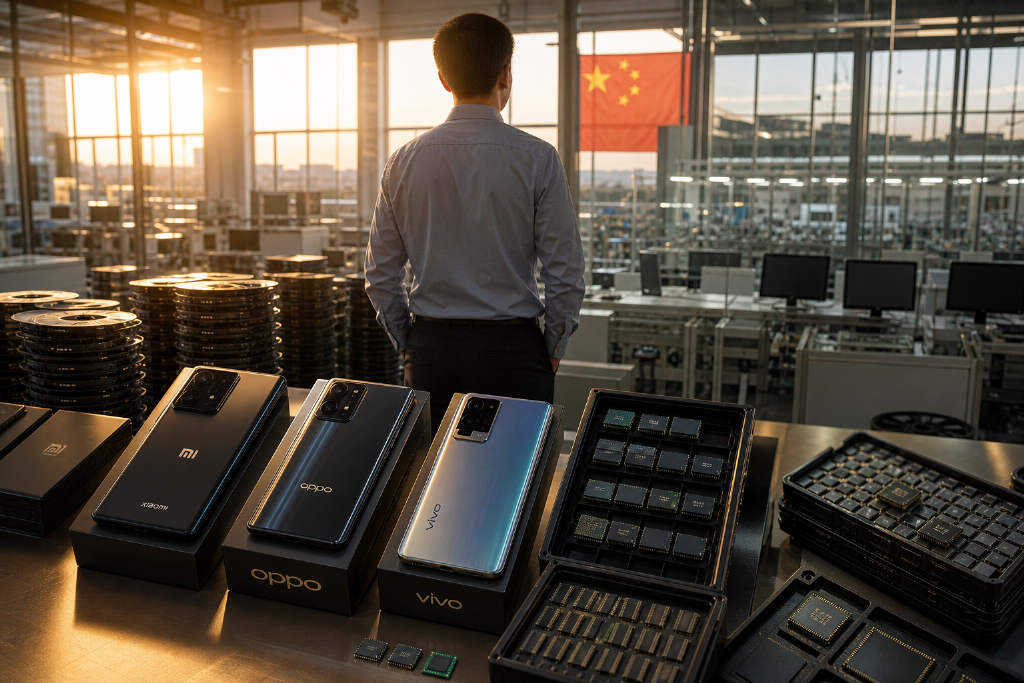
Chinese smartphone vendors are entering the September flagship launch season with a far weaker outlook than in prior years, according to a MarsBit report citing multiple industry bloggers. The core pressure point is memory pricing. Blogger Digital Chat Station said the procurement cost for a 12GB+256GB memory package rose from about 500 yuan a year ago to 2,200 yuan this year, a 340% jump, making storage more expensive than the SoC in some handset bill-of-materials calculations. Another blogger, RD Observation, said several vendors have cut planned flagship output by 30% to 50%. The report also said price increases are now spreading across product tiers: lower-end devices could move into the 2,500-3,500 yuan range with 6GB memory starts, midrange and upper-midrange models may reach 4,000-5,000 yuan with 8GB starts, and flagship models could open around 5,500 yuan, 7,000 yuan, and 8,000 yuan depending on trim. The pressure is already visible in shipment data. Xiaomi reported second-quarter smartphone shipments of 31.2 million units, down 26.5% year over year, while IDC estimated total shipments by Chinese phone makers at about 66.01 million units in the quarter, down 4.3%. The report said vendors are now leaning harder on higher-priced models to protect margins, even as some upcoming flagships are expected to launch with lower memory configurations than previous generations.

1950
Rising memory costs push phone makers to cut flagship plans and raise prices
Apple
Aug 26, 2026

IDC says Apple’s first foldable iPhone could ship more than 10 million units in its first year

IDC expects Apple to launch its first foldable iPhone in September, with first-year shipments projected to exceed 10 million units even though the device may be priced as high as $2,500. The forecast points to a strong market entry for Apple in the foldable smartphone segment. IDC also said global foldable smartphone shipments are expected to rise 12.6% this year and 18% next year. By 2027, Apple is projected to account for 40% of worldwide foldable smartphone shipments. The figures were cited in a ChainCatcher newsflash.

1790
IDC says Apple’s first foldable iPhone could ship more than 10 million units in its first year
Apple
Aug 26, 2026

Counterpoint says iPhone 17 was the best-selling smartphone worldwide in Q2 2026

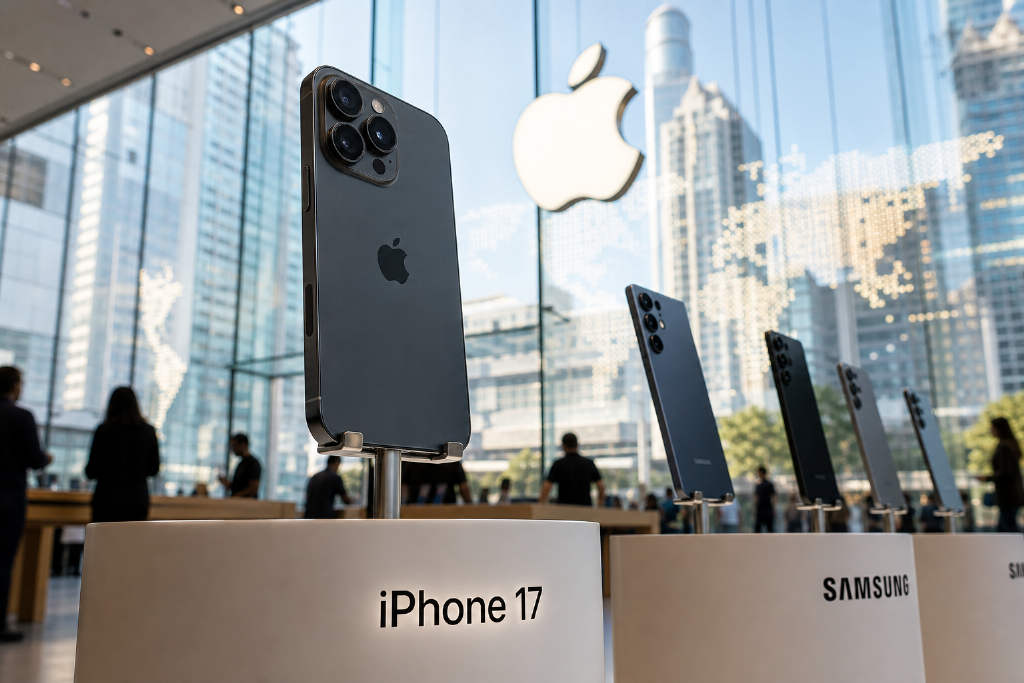
Counterpoint Research said Apple’s iPhone 17 was the world’s best-selling smartphone in the second quarter of 2026, accounting for 6% of total global smartphone shipments. The iPhone 17 Pro Max and iPhone 17 Pro ranked second and third, giving Apple the top three spots in the quarterly ranking. According to the data, Apple and Samsung each placed five models in the global top 10 best-selling smartphone list. The 10 devices together made up 26% of total global smartphone sales, up 2% year over year. Counterpoint also said the base iPhone 17 remained the quarter’s top-selling model, with major upgrades narrowing the gap with Pro variants and supporting demand. On Samsung’s side, two Galaxy S series models entered the top 10. The Galaxy S26 Ultra was Samsung’s best-selling phone for the quarter, climbed five places from its predecessor, and became the best-selling Android smartphone in the quarter. Counterpoint said this marked the first time an ultra-premium Android device led Android sales in the second quarter. Apple shares closed down 0.14% on Tuesday and fell 0.23% in after-hours trading, with market capitalization temporarily reported at $4.52 trillion.

1410
Counterpoint says iPhone 17 was the best-selling smartphone worldwide in Q2 2026
AI
Aug 25, 2026

Researchers develop AI model shrinking method that improves capability

Researchers have developed a new technique that reduces the size of artificial intelligence models while improving their capability, according to Techub News, citing Decrypt. The result breaks from the long-standing pattern in which smaller models tend to lose performance after compression. The report said the approach could be useful for phones and other mobile devices, where computing resources are limited and model efficiency matters more. It also points to a new path for deploying capable AI systems in constrained environments without relying on larger model footprints. While the brief did not disclose technical details, the core claim is that model size can be reduced without the usual tradeoff in intelligence, and that the outcome may broaden practical use on consumer hardware.

1320
Researchers develop AI model shrinking method that improves capability
Apple
Aug 23, 2026

Apple’s first foldable iPhone may debut around Sept. 9 with a price above $2,000

Apple is expected to unveil its first foldable iPhone at a launch event around Sept. 9, according to Bloomberg reporter Mark Gurman. The device is said to carry a price tag above $2,000, placing it in the company’s ultra-premium lineup. People who have used the handset said it stands out for portability, hinge feel, and durability. They also said the larger inner display will use an iPad-like app layout and can double as a camera viewfinder. The report added that Apple plans to use Touch ID instead of Face ID on the device, and that it will not include a telephoto camera. Gurman said the foldable iPhone could become an important product for drawing shoppers into Apple retail stores, while also lifting global attention on foldable smartphones.

1820
Apple’s first foldable iPhone may debut around Sept. 9 with a price above $2,000
Xiaomi
Aug 21, 2026

Xiaomi Defends Phone Margins, but Still Needs a New Profit Engine

Xiaomi held its smartphone gross margin at 8.5% in the second quarter, even as rising memory costs pushed the company to lift average selling prices by nearly 300 yuan. That helped protect profitability, but global smartphone shipments fell 26.5% year over year. The company’s electric vehicle business delivered more than 104,000 cars and generated 23.9 billion yuan in revenue, yet the automotive and AI division still posted losses. Internet services remained the main profit anchor, with gross margin at 76.8% and revenue of 9 billion yuan. Management also used the earnings call to discuss MiMo, system upgrades, and humanoid robots, but those businesses are still early. The key issue for Xiaomi now is timing: its growth engines are moving on different schedules, and the next one has not fully taken over from the old one.

1220
Xiaomi Defends Phone Margins, but Still Needs a New Profit Engine
Murata Manufacturing
Aug 20, 2026

UBS says Murata’s Fukui Takefu plant opened to outsiders for the first time in about 20 years, with roughly 20% output upside left in existing tools

UBS analysts visited Murata Manufacturing’s Fukui Takefu plant on Aug. 18, describing the tour as the first time the site had been opened externally in about two decades. In the note summarized by TechFlowPost, UBS said the visit reinforced three points: Murata’s technical moat in advanced multilayer ceramic capacitors remains hard to replicate, existing equipment still carries around 20% output upside through process optimization, and room for straightforward physical capacity expansion is getting tight. Murata, which the report says holds about 35% of the global MLCC market, uses the Takefu site as a mother plant for advanced products serving AI servers and premium smartphones. UBS highlighted Murata’s segmented production system, its ability to support 50,000 product variants, and a closed loop across materials, in-house equipment and process know-how. The bank described that structure as a “black box” barrier. Management said yield gains, better inter-process feedback and automated inspection together could unlock about 20% more output. UBS contrasted that with constraints on new buildings, labor shortages and longer lead times for components used in Murata’s self-developed equipment. The bank maintained a positive view on mix-driven margin expansion, with a ¥13,200 target price based on 30x expected FY2029 earnings, while also listing risks tied to weaker U.S. demand, technology diffusion in Asia and migration of high-frequency circuits into IC integration.

2510
UBS says Murata’s Fukui Takefu plant opened to outsiders for the first time in about 20 years, with roughly 20% output upside left in existing tools
Xiaomi
Aug 18, 2026

Xiaomi reports RMB 108.9 billion in Q2 revenue as premium phones lift ASP, while EV and AI unit stays in the red

Xiaomi posted 2026 second-quarter revenue of about RMB 108.9 billion, down 6.1% from a year earlier, while adjusted net profit fell 42.6% to roughly RMB 6.2 billion. The company’s core "smartphone x AIoT" segment generated RMB 84 billion with a 20% gross margin, and smartphone average selling price rose 25.9% year over year to RMB 1,351 as Xiaomi pushed further upmarket. Management said the premium push helped offset weaker handset shipments. According to Omdia data cited in the report, Xiaomi shipped 31.2 million smartphones globally in the quarter, ranking No. 3 worldwide for the 24th straight quarter. In mainland China, phones priced at RMB 3,000 and above accounted for 32.1% of Xiaomi’s total smartphone sales, a record high. New businesses kept expanding but remained loss-making. Xiaomi’s smart EV and AI segment reported revenue of RMB 24.9 billion, including RMB 23.9 billion from electric vehicles and about RMB 1 billion from AI-related emerging businesses. The segment posted an operating loss of RMB 2.6 billion in the quarter. Xiaomi CFO Alain Lam said AI is still in a heavy investment phase, and monetization is not the company’s main goal for now. The company also outlined a broad slate of product and technology updates, including HyperOS 4 Beta, Super XiaoAI 2.0, Xiaomi MiMo AI releases, and progress in robotics and self-developed chips.

1630
Xiaomi reports RMB 108.9 billion in Q2 revenue as premium phones lift ASP, while EV and AI unit stays in the red
Total 31 items
Go topage