Xiaomi2026-08-21 10:17:12Xiaomi Defends Phone Margins, but Still Needs a New Profit EngineXiaomi held its smartphone gross margin at 8.5% in the second quarter, even as rising memory costs pushed the company to lift average selling prices by nearly 300 yuan. That helped protect profitability, but global smartphone shipments fell 26.5% year over year. The company’s electric vehicle business delivered more than 104,000 cars and generated 23.9 billion yuan in revenue, yet the automotive and AI division still posted losses. Internet services remained the main profit anchor, with gross margin at 76.8% and revenue of 9 billion yuan. Management also used the earnings call to discuss MiMo, system upgrades, and humanoid robots, but those businesses are still early. The key issue for Xiaomi now is timing: its growth engines are moving on different schedules, and the next one has not fully taken over from the old one.590
Murata Manufa2026-08-20 04:34:41UBS says Murata’s Fukui Takefu plant opened to outsiders for the first time in about 20 years, with roughly 20% output upside left in existing toolsUBS analysts visited Murata Manufacturing’s Fukui Takefu plant on Aug. 18, describing the tour as the first time the site had been opened externally in about two decades. In the note summarized by TechFlowPost, UBS said the visit reinforced three points: Murata’s technical moat in advanced multilayer ceramic capacitors remains hard to replicate, existing equipment still carries around 20% output upside through process optimization, and room for straightforward physical capacity expansion is getting tight. Murata, which the report says holds about 35% of the global MLCC market, uses the Takefu site as a mother plant for advanced products serving AI servers and premium smartphones. UBS highlighted Murata’s segmented production system, its ability to support 50,000 product variants, and a closed loop across materials, in-house equipment and process know-how. The bank described that structure as a “black box” barrier. Management said yield gains, better inter-process feedback and automated inspection together could unlock about 20% more output. UBS contrasted that with constraints on new buildings, labor shortages and longer lead times for components used in Murata’s self-developed equipment. The bank maintained a positive view on mix-driven margin expansion, with a ¥13,200 target price based on 30x expected FY2029 earnings, while also listing risks tied to weaker U.S. demand, technology diffusion in Asia and migration of high-frequency circuits into IC integration.1240
Xiaomi2026-08-18 23:54:11Xiaomi reports RMB 108.9 billion in Q2 revenue as premium phones lift ASP, while EV and AI unit stays in the redXiaomi posted 2026 second-quarter revenue of about RMB 108.9 billion, down 6.1% from a year earlier, while adjusted net profit fell 42.6% to roughly RMB 6.2 billion. The company’s core "smartphone x AIoT" segment generated RMB 84 billion with a 20% gross margin, and smartphone average selling price rose 25.9% year over year to RMB 1,351 as Xiaomi pushed further upmarket. Management said the premium push helped offset weaker handset shipments. According to Omdia data cited in the report, Xiaomi shipped 31.2 million smartphones globally in the quarter, ranking No. 3 worldwide for the 24th straight quarter. In mainland China, phones priced at RMB 3,000 and above accounted for 32.1% of Xiaomi’s total smartphone sales, a record high. New businesses kept expanding but remained loss-making. Xiaomi’s smart EV and AI segment reported revenue of RMB 24.9 billion, including RMB 23.9 billion from electric vehicles and about RMB 1 billion from AI-related emerging businesses. The segment posted an operating loss of RMB 2.6 billion in the quarter. Xiaomi CFO Alain Lam said AI is still in a heavy investment phase, and monetization is not the company’s main goal for now. The company also outlined a broad slate of product and technology updates, including HyperOS 4 Beta, Super XiaoAI 2.0, Xiaomi MiMo AI releases, and progress in robotics and self-developed chips.660
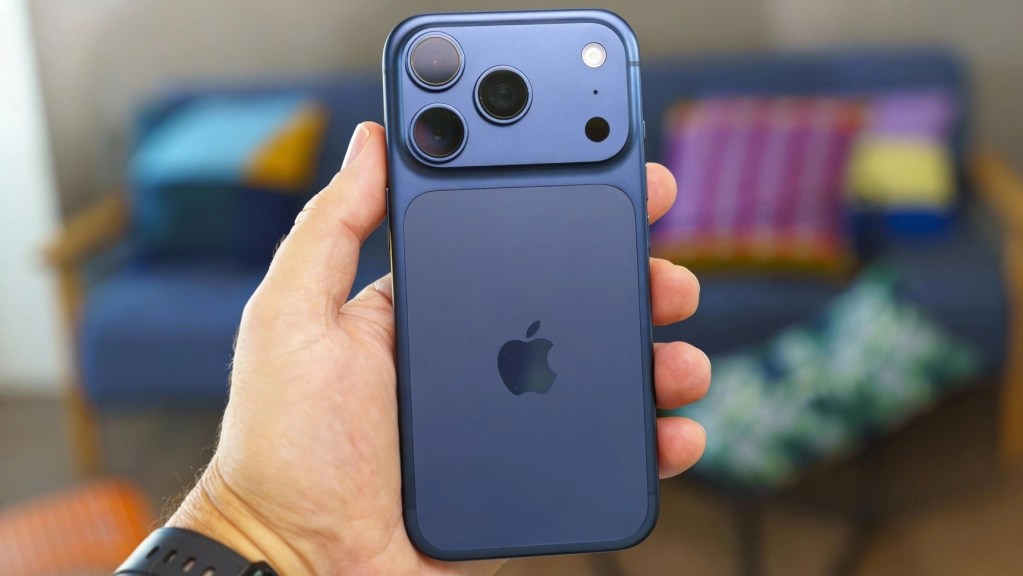
Apple2026-08-11 03:48:32iPhone 18 Pro BOM cost may jump 38% as memory prices reshape smartphone economicsA new TrendForce report says memory prices have climbed more than fivefold since the start of 2025, sharply changing the cost structure of smartphones. The research firm expects Apple’s 256GB iPhone 18 Pro, slated for release in the third quarter of 2026, to see its bill of materials rise about 38% from the comparable iPhone 17 Pro model. TrendForce says a retail price increase is now hard to avoid. The report lays out two possible responses from Apple. One is to absorb part of the shock through lower gross margins, echoing pricing moves seen in the recent MacBook lineup, in order to limit the increase passed on to buyers. The other is to raise prices on older iPhone models when the iPhone 18 series launches, using a broader product-line repricing strategy to offset higher component costs. TrendForce also warns that Android vendors face a tougher position. Without Apple’s margin buffer and brand premium, they are expected to pass on a larger share of component inflation to consumers, with entry-level and mid-range phones under the greatest strain. The firm expects global smartphone production to remain under pressure from the second half of 2026 through 2027 if memory costs stay elevated.720
AI servers2026-08-08 04:53:54IDC says data centers could absorb 70% of global memory output by 2026AI servers are taking an ever-larger share of the memory supply chain, and IDC now expects data centers to account for about 70% of global memory output in 2026, up from roughly 20% to 30% in 2022. The shift, as described in the report, is not a temporary shortage but a lasting reallocation of manufacturing capacity, with high-bandwidth memory, or HBM, consuming far more wafer capacity than standard products and drawing supply away from smartphones, medical equipment, and other end markets. IDC also projects that global smartphone average selling prices will rise 14% to a record $523 in 2026, while shipments fall 12.9% to 1.12 billion units. Devices priced below $100 are said to be especially exposed, with some vendors expected to cut camera and display specifications or even return entry models to 4GB memory configurations. In healthcare, medical imaging systems, robots, and monitoring devices are competing for the same DRAM and NAND components, but buyers have far less pricing power than hyperscale cloud operators. The report also points to volatile market reactions in memory stocks, fresh questions around how much of recent growth is price-driven, and a slow supply response, with SK Hynix warning the shortage may last beyond 2030 even as it moves ahead with new fabs in Yongin and Cheongju.2120
Xiaomi2026-08-03 12:52:15Xiaomi raises prices across nine phone models as shipments decline and memory costs climbXiaomi has raised prices on nine smartphones across the Xiaomi 17, REDMI K90 and Turbo 5 lineups, marking its third round of price increases this year. The latest move, rolled out on Aug. 2 through Xiaomi Mall, pushed flagship Xiaomi 17 models up by 400 yuan to 500 yuan, while REDMI devices in two product lines were lifted by 300 yuan. The top-end Xiaomi 17 Pro Max now starts at 6,499 yuan, up from 5,999 yuan. The pricing changes come as Xiaomi faces weaker shipment numbers. IDC said global smartphone shipments fell 6.7% year over year to 277.5 million units in the second quarter of 2026. Xiaomi shipped 31.2 million units for an 11.2% share, ranking third globally, but its shipments dropped 26.3% from a year earlier, the steepest decline among the top five vendors. Omdia reported that Xiaomi shipped 8.2 million units in mainland China in the same quarter, down 21% year over year, leaving it fifth in the market. The report ties the latest price increases to rising memory costs. Xiaomi President Lu Weibing previously said prices for the same memory configuration had surged nearly fourfold from the first quarter of 2025, while IDC estimated consumer memory costs were up nearly 300% year over year.2530
Jambo2026-07-22 14:20:14Jambo Unveils Jarvis Phone With OS-Level AI Agents for Calls, Tasks, and Onchain WalletsJambo introduced Jarvis, a smartphone that embeds AI agents at the hardware and OS level to handle calls, messages, wallets, browsing, and task execution. At the same time, OpenClaw is maintaining a strict ban on crypto discussion in its Discord community.400
TrendForce2026-07-21 10:14:03TrendForce says NAND supply shortage may ease in the second half of 2027TrendForce said server demand now accounts for more than 40% of total NAND flash demand, but smartphones and notebooks still make up nearly 40% combined, leaving consumer electronics with a major influence on overall demand. The research firm also said memory makers’ inventory levels remain relatively low. While module manufacturers have built up more inventory because of weak consumer demand, stock levels held by other buyers are still manageable. Based on those conditions, TrendForce expects the bit supply-demand gap for NAND flash to stay at 4%-5% in 2026, pointing to a continued supply shortage. It added that the gap is expected to turn positive in the second half of 2027, which would ease pressure from tight supply.1390