

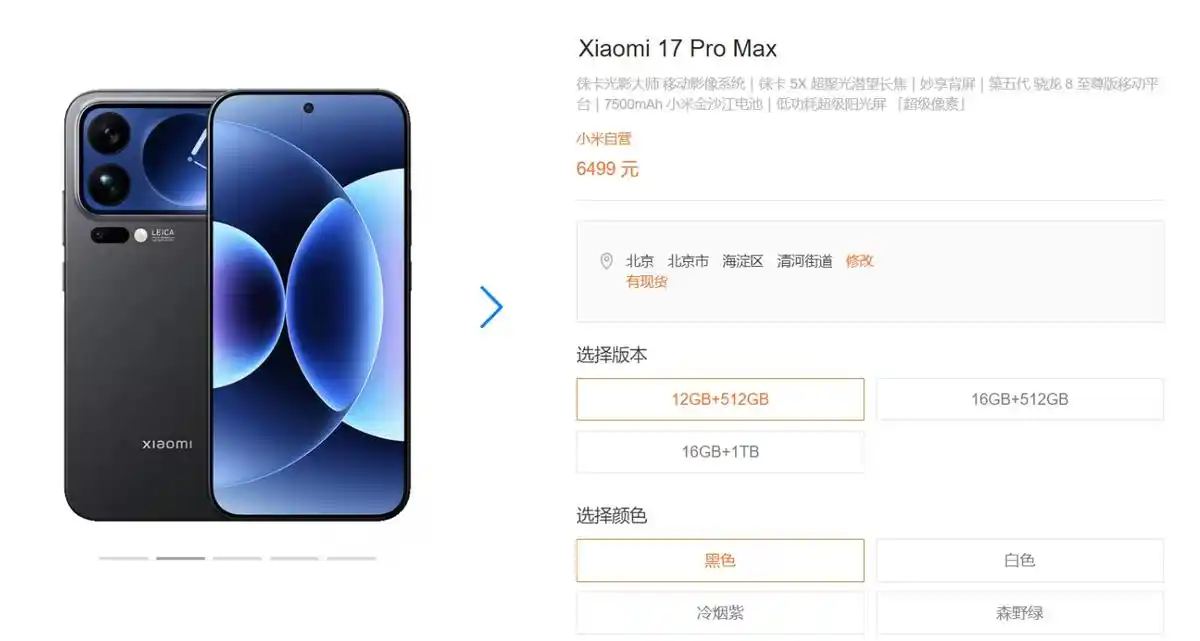
Xiaomi has raised prices on nine smartphone models across the Xiaomi 17, REDMI K90 and Turbo 5 series, extending a pricing cycle that has already run through entry-level and mid-range devices this year. Xiaomi Mall updated pricing on Aug. 2, with flagship Xiaomi 17 models rising by 400 yuan to 500 yuan. The top-tier Xiaomi 17 Pro Max now starts at 6,499 yuan, up from 5,999 yuan. Across two REDMI product lines, prices were lifted by 300 yuan, pushing entry prices above 2,500 yuan.
This is Xiaomi’s third round of price adjustments in 2026. According to the report, the first round in March focused on entry-level phones, the second in June covered mid-range models, and the latest increase in August has reached the flagship lineup, tracing a clear pass-through of upstream cost pressure from lower-end products to higher-end devices.
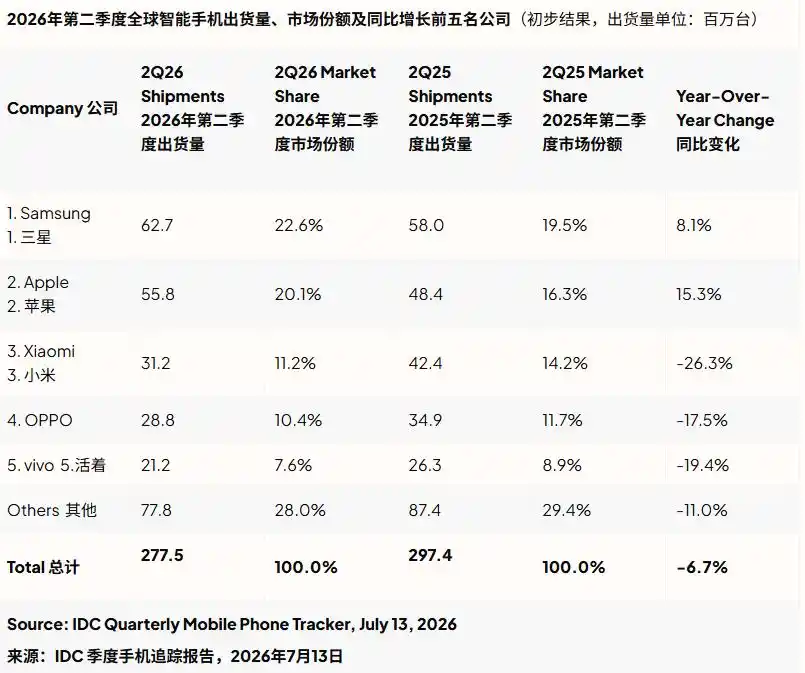
The price increases are arriving at a time when Xiaomi’s phone shipments are under pressure. IDC said global smartphone shipments totaled 277.5 million units in the second quarter of 2026, down 6.7% from a year earlier. Xiaomi shipped 31.2 million units, good for an 11.2% market share and third place globally, still the top-ranking Chinese vendor. But its shipments fell 26.3% year over year, the largest decline among the top five vendors.
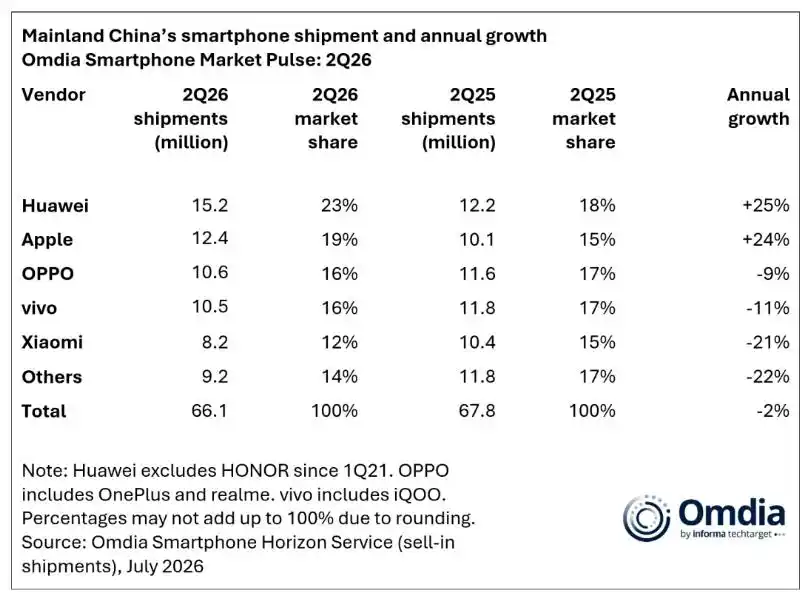
Pressure was heavier in mainland China. Omdia reported that Xiaomi shipped 8.2 million units in the mainland market in the second quarter, taking a 12% share and ranking fifth behind Huawei, Apple, OPPO and vivo. Its China shipments were down 21% from a year earlier. The original report said the decline reflected both softer demand after higher retail prices and Xiaomi’s own decision to reduce the share of entry-level phones while upgrading its product mix. Over the same period, Huawei and Apple, the top two brands in that market, each posted shipment growth of more than 24% year over year.
The direct driver behind the latest price increases is the rise in memory chip costs. As demand for AI computing has accelerated, Samsung, SK hynix and Micron have shifted advanced capacity toward higher-margin HBM, or high-bandwidth memory. That has continued to squeeze supply of consumer DRAM and NAND.
Xiaomi Group President Lu Weibing previously said at a public communication meeting that prices for the same memory configuration had jumped nearly fourfold compared with the first quarter of 2025. Using a mainstream 12GB+512GB model as an example, storage cost per handset has risen by about 1,500 yuan. IDC estimated that consumer memory costs were up nearly 300% year over year and now account for more than 65% of bill-of-materials costs in low-end phones priced below $200.
Lu said the smartphone industry is facing its toughest moment in nearly a decade, and that the memory price trend would last at least until the end of 2027, and possibly into 2028. He also said some domestic bar-style flagship phones could cross the 10,000-yuan mark in the second half of this year.
To offset the pressure from rising costs and weaker shipments, Xiaomi is also adjusting its operating strategy. The report said the company is pushing ahead with mass production of self-developed Pengpai chips to reduce reliance on externally sourced core components. It is also changing capacity SKU structures and shipment allocation across different price bands in an effort to smooth the effect of upstream cost swings on retail pricing and product competitiveness.
Xiaomi is not alone in raising prices. Since March, OPPO, OnePlus, vivo and Honor have also raised prices on some models in batches, according to the report. Apple increased prices for iPads and MacBooks in June, and the report quoted Cook as saying price increases were "inevitable."
The same report, citing industry sources, said major domestic brands could face a second round of price increases in the second half of the year, with expected hikes ranging from 200 yuan to 800 yuan. The article describes the sector as entering a broad-based pricing cycle that is forcing both manufacturers and consumers to recalibrate their decisions.