
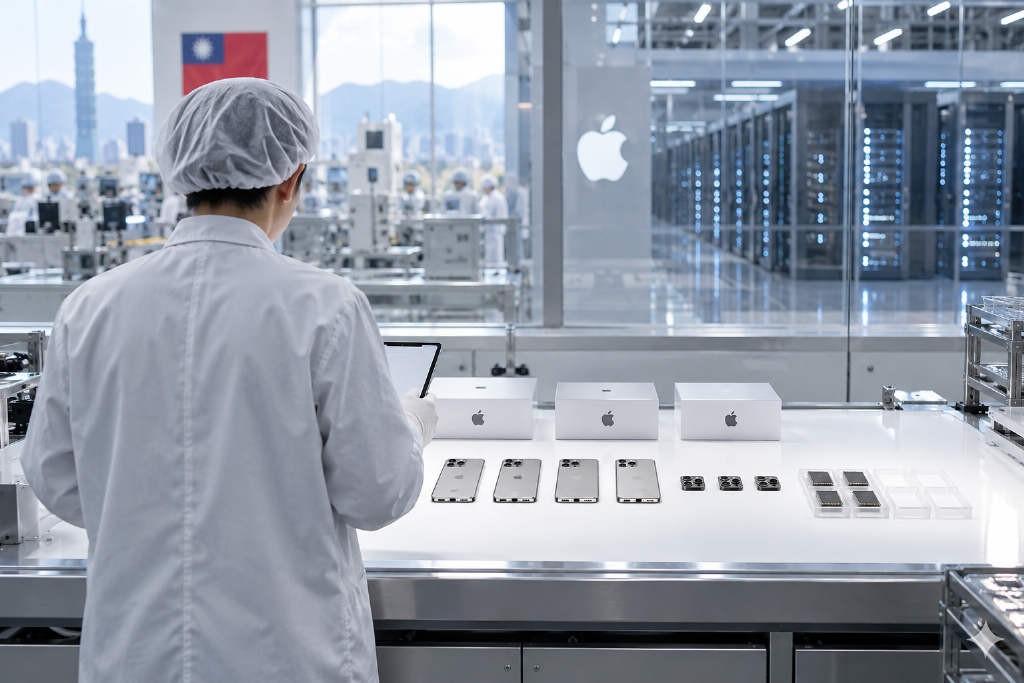
Apple has told suppliers to cut component orders for the newly launched iPhone 18 Pro and iPhone 18 Pro Max by 15% to 20%, according to Nikkei Asia.
The report said Apple this year adopted a staggered release schedule, pushing its lower-priced standard models to early 2027. That has left some potential buyers on the sidelines. Supply chain companies expect component cost pressure tied to server-related crowding-out effects to last through the end of 2027. The market is now watching the standard models due early next year to see whether Apple’s pricing can revive broader sales momentum.
Higher costs and softer demand weigh on Pro models
Strong global demand for advanced chips used in artificial intelligence infrastructure has boosted data center spending and indirectly squeezed capacity for general memory. Apple raised retail prices for the iPhone 18 Pro and Pro Max to reflect higher procurement costs, but the price increase weakened replacement demand and left sales of the premium models below earlier expectations.
Nikkei Asia said Apple has already notified the supply chain of a 15% to 20% reduction in related component orders, pointing to real sales pressure on its flagship devices as higher costs are passed on to consumers and price sensitivity rises.
Largan signals a more cautious outlook
Largan Precision, a major supplier of optical lenses, also pointed to slower order momentum in its latest earnings briefing. Chairman Lin En-ping said the peak smartphone pull-in period has passed. After customers cut orders in September, October is expected to be flat from September, while November will see a clear decline.
Lin did not name any customer directly, but his comments were in line with recent supply chain observations that demand for high-end smartphones has cooled.
Against the backdrop of rising costs for memory and other components and limits on demand, some market participants have speculated that Apple may take a more cautious approach in 2027 to upgrades involving premium hardware such as periscope lenses, as it looks to manage overall production costs.
Launch timing may have delayed purchases
Apple adjusted its product release cadence this year. In September, it introduced only the higher-end Pro series and the new iPhone Duo. The standard iPhone 18 and the thinner iPhone Air were delayed until early 2027.
Based on sales data from the previous generation, the standard models have a broader customer base. With the launch schedule split, some consumers who were considering an upgrade but were more sensitive to price may have chosen to wait. That may be one structural reason current order momentum for the Pro lineup looks weaker.
Supply chain sees pressure lasting into late 2027
On the supply side, memory makers including Micron Technology have said tight memory capacity caused by cloud data center and AI server expansion is expected to continue through the end of 2027 and possibly into 2028.
That suggests smartphone brands will keep facing elevated component costs in the near term. Market attention has now shifted to the lower-priced models set to arrive early next year, with investors and suppliers watching whether Apple can set prices that remain attractive despite cost constraints and help trigger the next replacement cycle.