

Arcus, the decentralized exchange built by the dYdX team, began its Season 1 points program on Oct. 1, with user scores now updated on a weekly basis. Because dYdX previously ran one of the largest airdrops in the sector, Arcus has attracted clear airdrop speculation from the start. The project has also picked up attention from users watching the Perp DEX segment, especially as Variational’s planned Q4 token launch has intensified interest in similar trades.
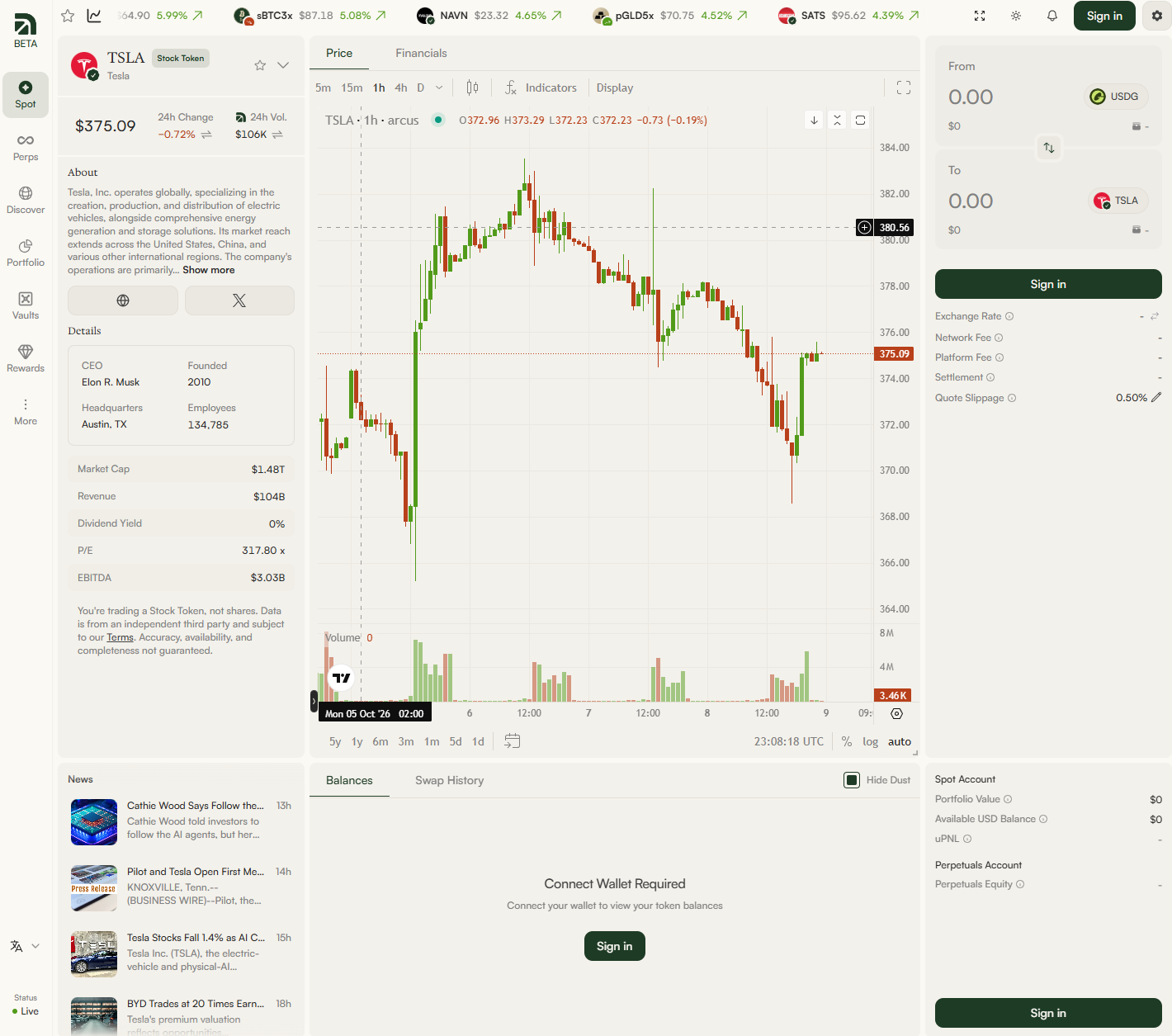
Arcus focuses on 24/7 trading in tokenized stocks and perpetuals
Arcus is a decentralized exchange developed by the dYdX team and deployed on Robinhood Chain. Its core offering is round-the-clock trading in tokenized stocks and perpetual contracts.
For spot tokenized stocks, Arcus offers zero trading fees. Those stock tokens are issued on Robinhood Chain and can be redeemed, held in self-custody, and used across DeFi. Its perpetual products cover stocks, commodities, indexes, and crypto assets.
The platform also plans to support tokenized stocks and crypto assets as collateral for perpetual positions, and it says it intends to offer pre-IPO trading in private companies such as OpenAI.
Built outside dYdX Chain, with a future token allocation reserved for the dYdX community
Arcus is not deployed on dYdX Chain. Instead, it is being developed as a separate product with separate infrastructure on Robinhood Chain.
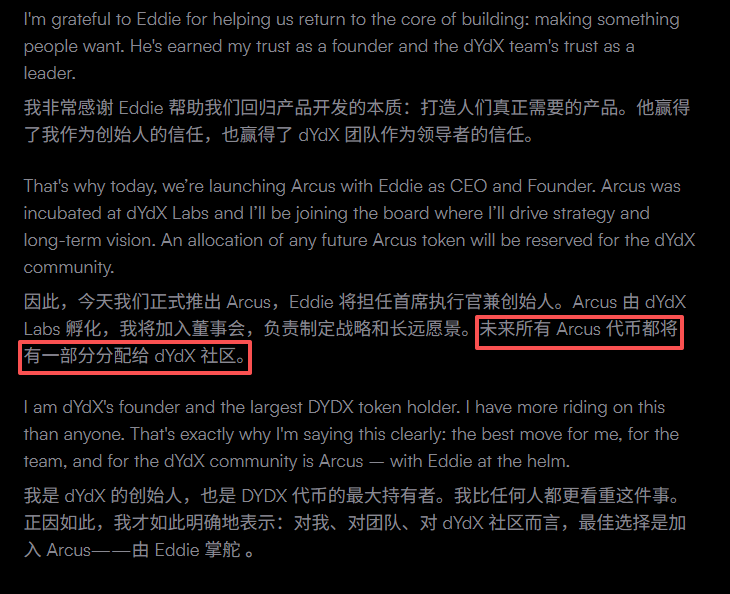
According to the source article, dYdX founder Antonio Juliano said in official dYdX documentation that "a portion of a future Arcus token will be allocated to the dYdX community."
Season 1 started on Oct. 1 with 250,000 points distributed each week
Arcus formally launched Season 1 on Oct. 1. Under the published rules, points are updated every Thursday at 3:00 a.m. Beijing time, and the platform distributes a fixed total of 250,000 points each week. That weekly amount does not change with platform growth. The points program is set to end no later than the end of the first half of 2027, or the end of June.
Users can earn points through four channels:
- Trading on Arcus, where point allocation is driven by multiple factors and is not based only on volume;
- Market making by providing order book liquidity;
- Deposits made on the platform;
- Referrals, by inviting friends to trade on Arcus.
The main point boosts currently available are tied to RWA token trading. The official rules say trading stock tokens and other RWAs can earn more points at this stage.
Users can also receive a boost for trading RWA perpetuals outside regular market hours. Arcus uses U.S. Eastern Time. Regular hours on the platform include extended U.S. stock-market hours, from 4:00 a.m. to 8:00 p.m. ET on trading days. Boosted periods cover all other hours, including the overnight window from 8:00 p.m. to 4:00 a.m. ET, as well as weekends and quoted U.S. stock-market holidays. Daylight saving changes are handled automatically.
Arcus also says users who execute swaps through the Robinhood Wallet via the Arcus platform can receive a spot points boost.
Season 0 points have been allocated but remain hidden
Arcus said it has already distributed Season 0 points to reward early users. That period covers activity from July 1 to Sept. 30.
Unlike Season 1, which updates weekly, Season 0 points are still hidden and no publication date has been announced. Once they are released, users will not need to claim them manually. They will be able to connect a wallet and view their Season 0 points and leaderboard rank through the dashboard.
Week one distributed 250,000 points to more than 9,600 addresses
The first weekly distribution for Season 1 was completed at 3:00 a.m. yesterday, with a total of 250,000 points issued. More than 9,600 addresses received points.
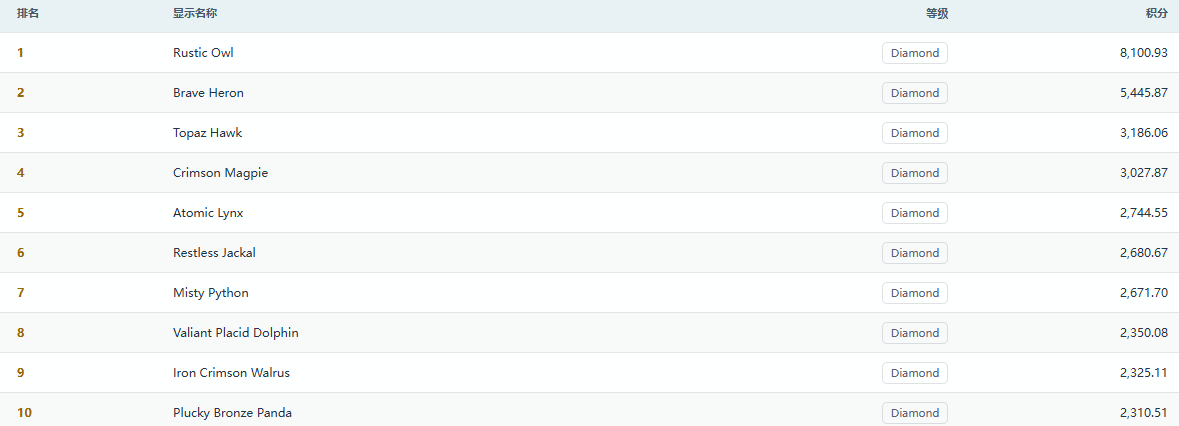
During the same period, total platform trading volume was about $2.94 billion, open interest value was about $64.06 million, and RWA trading volume was about $727.6 million. Of that, roughly $258.8 million came from overnight and weekend RWA trading. The source article also says the top 10 addresses on the leaderboard were disclosed.
The average score was 25.88, while the median was only 1.53
Based on the points analysis tool at boost123.lol, the source article says Arcus is still in an early stage. A total of 9,659 addresses made the first-week points list, and the average score came in at 25.88, far below the figures posted by the top-ranked addresses.
The median was much lower, at only 1.53. There were 4,271 addresses with fewer than 1 point, and 90% of addresses had no more than 37.46 points.
The week-one distribution by score range was listed as follows:
- Addresses with more than 1,000 points received 68,832.73 points in total, or 27.53% of the weekly distribution;
- Addresses with at least 500 but fewer than 1,000 points received 34,346.80 points, or 13.74%;
- Addresses with at least 100 but fewer than 500 points received 76,039.01 points, or 30.42%;
- Addresses with at least 50 but fewer than 100 points received 23,075.62 points, or 9.23%;
- Addresses with at least 10 but fewer than 50 points received 34,934.55 points, or 13.97%;
- Addresses with at least 1 but fewer than 10 points received 11,639.14 points, or 4.66%;
- Addresses with more than 0 but fewer than 1 point received 1,132.15 points, or 0.45%.
The top 100 addresses accounted for 44.78% of all points distributed that week, showing a heavy concentration among leading participants.
The source article frames cost control as the key variable for participants
The source article says Season 1 has only completed its first week and suggests that controlling the cost of farming points may be a practical focus for users considering participation.
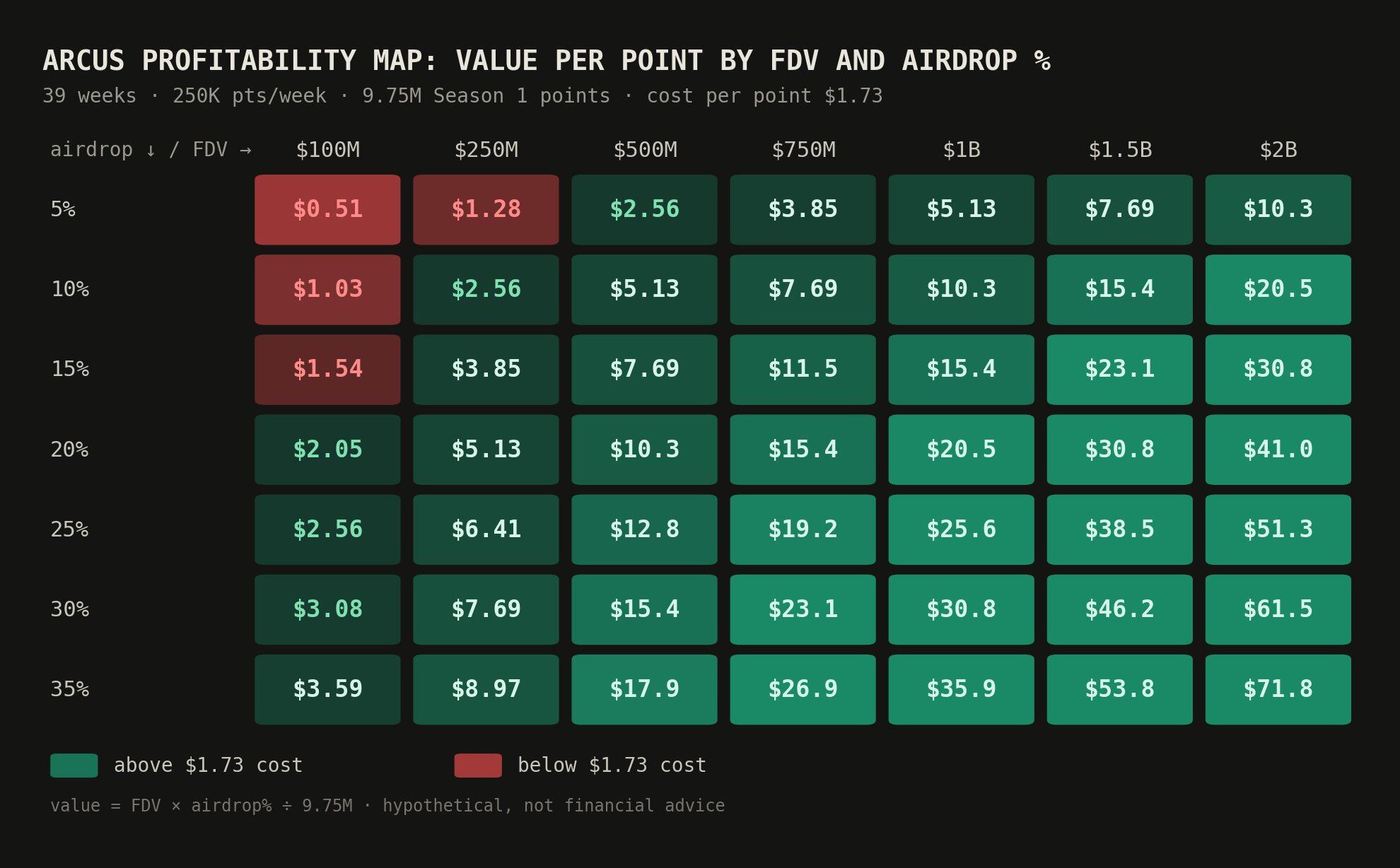
Citing an analysis by Didi, the article says that if Season 1 runs until the end of the first half of next year, it would span about 39 weeks. At 250,000 points per week, that implies roughly 9.75 million points for Season 1. Adding an estimated 3.25 million points from Season 0 would put total points at token generation around 13 million.
The article also includes a cost framework based on different FDV and airdrop ratio scenarios. Using Variational’s 32% airdrop ratio as a reference, placing it in the 30% band, and assuming a pre-market FDV of $1.5 billion, the article arrives at a potential value of $46.2 per point and treats that figure as a cost-control line for participation.