
Chicago Federal Reserve Bank President Austan Goolsbee recently used a Wired program to answer public questions about the U.S. economy and what role the Federal Reserve is supposed to play. His central point was direct: the Fed does far more than print money. He described the institution as an independent part of the U.S. government with two core goals, stable prices and maximum employment.
What the Federal Reserve does
Goolsbee said the Fed operates under U.S. law and uses a range of benchmarks to help keep the economy healthy. In practical terms, he framed the central bank as the top layer of the banking system, setting benchmark rates and distributing reserves and cash to banks below it.
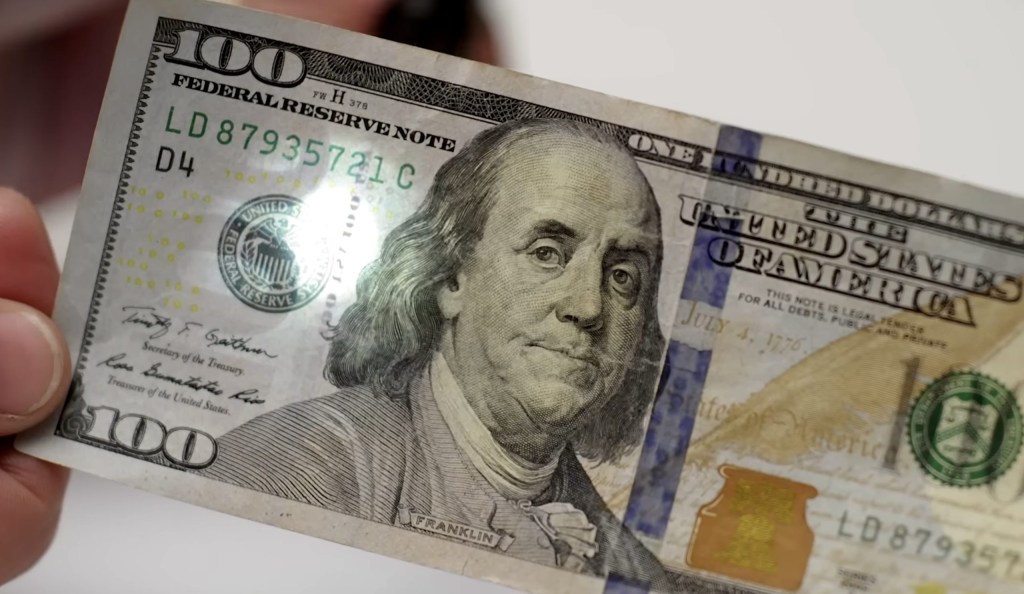
He said cash management is also part of the job. Beyond printing currency, the Fed checks note quality, destroys bills that are damaged or dirty, and sends suspected counterfeits to the U.S. Secret Service for investigation.
How rate decisions are made
On interest rates, Goolsbee said decisions are made through meetings involving seven governors from Washington, D.C., and 12 presidents from Federal Reserve Banks around the country. Those meetings run for two days. The first day focuses on economic conditions; the second is used for voting on rate policy.
Before each meeting, regional Fed presidents gather real-time information from their districts to build a picture of local economic conditions. During the meeting, participants compare views and debate the outlook before voting on the policy statement. Goolsbee said consensus is often reached, but the purpose is to agree on a decision that balances the Fed’s dual mandate of maximum employment and price stability.
Why Goolsbee rejected the gold standard
Goolsbee said a gold standard is not an ideal choice. In his view, gold has no intrinsic value and its price is still set by supply and demand. He said modern money rests on public trust in the government: as long as the U.S. government accepts dollars for taxes and people believe it will not inflate away its debt, the currency can retain value.
Why the Fed cares about employment and inflation
Goolsbee said employment is built into the Fed’s mission because monetary policy has to support economic stability across the business cycle, not just address prices. The central bank is trying to avoid two extremes: high unemployment and high inflation.
He said inflation becomes especially damaging when prices rise faster than wages, because real income falls and households grow more anxious about spending. He also warned about a wage-price spiral, where rising wages push companies to raise prices and those higher prices then create more pressure for wage gains. To respond, the Fed uses monetary policy to control inflation and aims to keep annual inflation around 2%, a level he described as low enough for consumers to handle while helping prevent inflation from running above target.
Why home prices are high and what moves mortgage rates
Asked about housing, Goolsbee pointed to several drivers behind elevated home prices. One is a structural trend: over the past 20 to 40 years, housing prices have kept rising relative to other goods. Another is limited housing supply.
He also stressed that the Fed does not directly control mortgage rates. Mortgage borrowing costs, usually discussed in terms of 30-year loans, depend on borrower credit and broader market conditions, along with factors influenced by the Fed’s short-term rate settings. In other words, the Fed matters, but it is not the sole or direct setter of mortgage rates.
Why stock gains do not define the economy
Goolsbee drew a sharp line between the stock market and the economy itself. Stock prices, he said, reflect expectations for future corporate profits. They do not necessarily describe current economic conditions or the state of employment. He noted that history has seen periods when stocks rose even as the economy weakened sharply, showing that equity valuations and the national economy are not the same thing.
He said a more useful definition of economic health comes from several areas:
- the labor market, including unemployment, hiring and layoff rates;
- consumer spending, which makes up more than 70% of the U.S. economy;
- productivity, which he described as a sign of a healthy economy when it remains strong.
On the recent rise in U.S. stocks, Goolsbee said prices are tied to what investors think future profits will look like. Optimism around artificial intelligence was one example he gave for why stock prices may move higher.
How the Fed reads economic conditions
Goolsbee said inflation and unemployment are essential measures, but economists look for a wider set of signals when judging the health of the economy. He outlined several tools the Fed uses.
- Regional feedback: Before each meeting, the Fed collects information from businesses and community leaders across its districts and compiles it into the Beige Book. If similar concerns appear in multiple places, such as pressure from land costs or supply issues in a specific industry, that can trigger closer review.
- Productivity analysis: Strong productivity suggests the economy is growing.
- Real-time consumer data: The Chicago Fed analyzes private-sector credit card spending data, which he also referred to as shopping cart data, to track consumer behavior in real time. Because consumer spending accounts for more than 70% of the U.S. economy, he said this is a critical window into overall economic conditions. If U.S. consumers maintain healthy spending habits, the broader economy can remain resilient.
How to identify fake U.S. dollars
Goolsbee also explained how counterfeit bills are handled. The Fed uses high-speed machines to verify cash, automatically flagging and isolating suspicious notes. Those notes are then sent to the Secret Service so investigators can track counterfeit producers. If a bank is found to be the source of the fake bill, the amount is deducted from its account, meaning the bank does not receive corresponding credit.
For the public, he listed several manual checks:
- look for the plastic security strip embedded in genuine notes;
- feel the raised texture, such as on Benjamin Franklin’s portrait;
- hold the bill up to light to see the watermark;
- check the color-shifting ink, including the Liberty Bell on the $100 bill changing from green to orange when tilted;
- inspect microprinting, especially the tiny text around the collar area, which is difficult to reproduce in counterfeit settings.
Across the discussion, Goolsbee’s message was consistent: the Fed’s responsibilities reach well beyond money printing and include rate setting, inflation control, labor-market support, economic monitoring, cash management and counterfeit detection.