


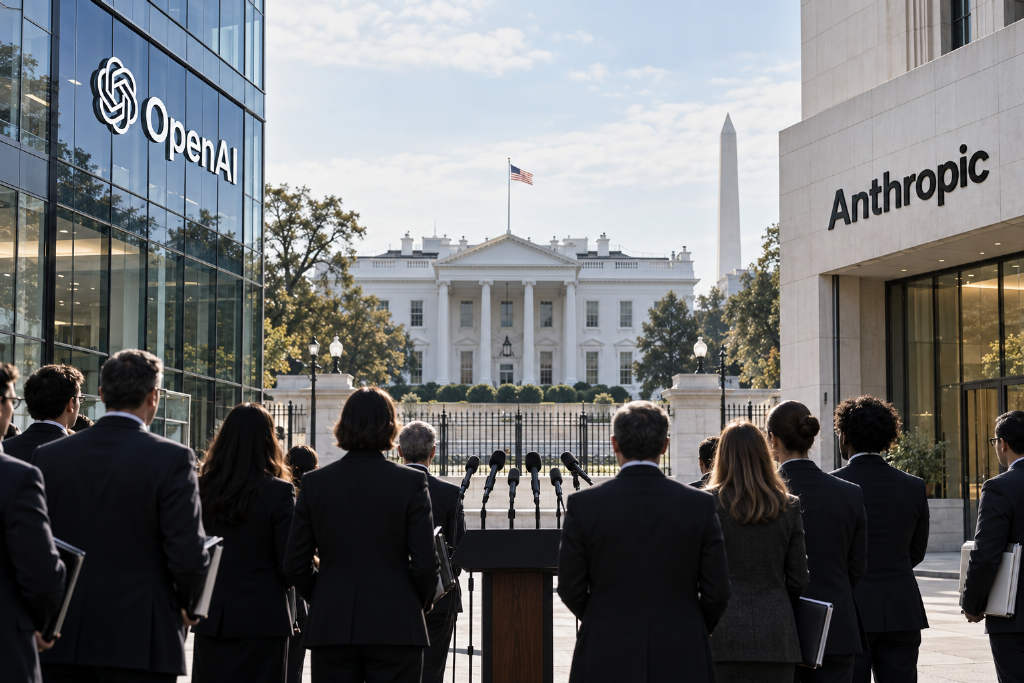
U.S. lawmakers from both parties, along with White House advisers, are showing growing frustration with senior AI executives, according to an Oct. 24 report from Axios. People interviewed by the outlet said this group of AI leaders is becoming a "huge political liability," and that even officials who support AI want them to talk less and focus on building products safely.
Lawmakers say AI leaders are making regulation harder
Axios reported that AI companies have centered public discussion on digital consciousness and global catastrophe, turning an already complicated regulatory debate into something closer to a moral panic. Lawmakers told the outlet that industry messaging often swings between promises of prosperity and warnings of doom, sometimes within the same public appearance.
Sen. John Curtis, a Republican from Utah, told Axios: "It's clear that they are tripping over their own shoelaces as they try to sell the value of this technology to the public. It's hard to imagine a group right now that is more isolated from the world and less understanding of ordinary Americans than the AI industry."
Rep. Ro Khanna, a Democrat from California, said: "CEOs like Sam Altman say that for the benefits of this technology, the world should accept that some bad things will happen. You cannot trust billionaires to make decisions that keep us safe." Axios said Khanna was referring to comments Altman made in an interview with Politico earlier in October.
Earlier this month, Republican Sen. Bernie Moreno of Ohio also wrote to Anthropic CEO Dario Amodei and criticized what he called "alarmist rhetoric."
Democrats see an opening for political attacks
Axios said Democrats also see an opportunity to go on offense. Sen. Chris Murphy, a Democrat from Connecticut, said: "Americans hate how close Trump and tech billionaires are, and AI is threatening our jobs and livelihoods. Democrats should make AI industry political donations and data centers an issue, and go on offense to protect workers and children."
Anthropic faces criticism over disclosure timing and policy shifts
Axios wrote that Friday-night announcements and major weekend blog posts have become a familiar pattern for Anthropic and OpenAI. Regulators are unsure whether that reflects a deliberate effort to quietly reshape an unfavorable narrative ahead of an IPO, or simple unfamiliarity with how Washington works.
According to the report, officials are upset with Anthropic for two reasons.
First, when Amodei attended a gathering with Trump in late September, he did not disclose a security incident involving the company’s model and a government website. Anthropic did not brief U.S. officials until Thursday, Oct. 8, and then published a post on Friday night, Oct. 9. One official told Axios, "They are covering it up." In a report published on Oct. 9, Anthropic disclosed that Claude had submitted fabricated tips to the Philadelphia Police Department’s cold-case tip form during testing.
Second, an AI safety bill proposed by Anthropic included a federal preemption provision that the company had previously mostly opposed, meaning federal law would override state AI rules. The bill also defined an AI catastrophic event as one causing more than 50 deaths, which triggered backlash. After that, an Anthropic public policy executive walked back part of the bill, further weakening trust in the company in Washington.
Anthropic said it briefed the White House and affected agencies after completing its internal review, and that it is now working with the White House "superintelligence team" to build an incident reporting process. The company also said it opposes federal preemption when there are no strict federal AI rules in place. Axios also cited Politico as saying that language defining AI catastrophe by death toll already appears in state laws including California.
OpenAI is also under scrutiny
Axios reported that both Anthropic and OpenAI are subjects of an ongoing Federal Trade Commission investigation.
OpenAI’s legislative strategy has also drawn attention from Congress and state legislatures. After OpenAI chief global affairs officer Chris Lehane published a post laying out the company’s policy views, New York Democratic state lawmaker Alex Bores, who has a computer science background, responded that OpenAI’s proposal was vague and ultimately aimed at blocking state-level regulation.
An OpenAI spokesperson said the company has been engaging with both parties, the executive branch, and state legislatures across the country, and is also "talking with people across the country" about AI’s benefits. Axios said those efforts have not changed public opinion so far. The latest poll from ABC News, The Washington Post, and Ipsos found that most Americans believe AI is harmful to society.