
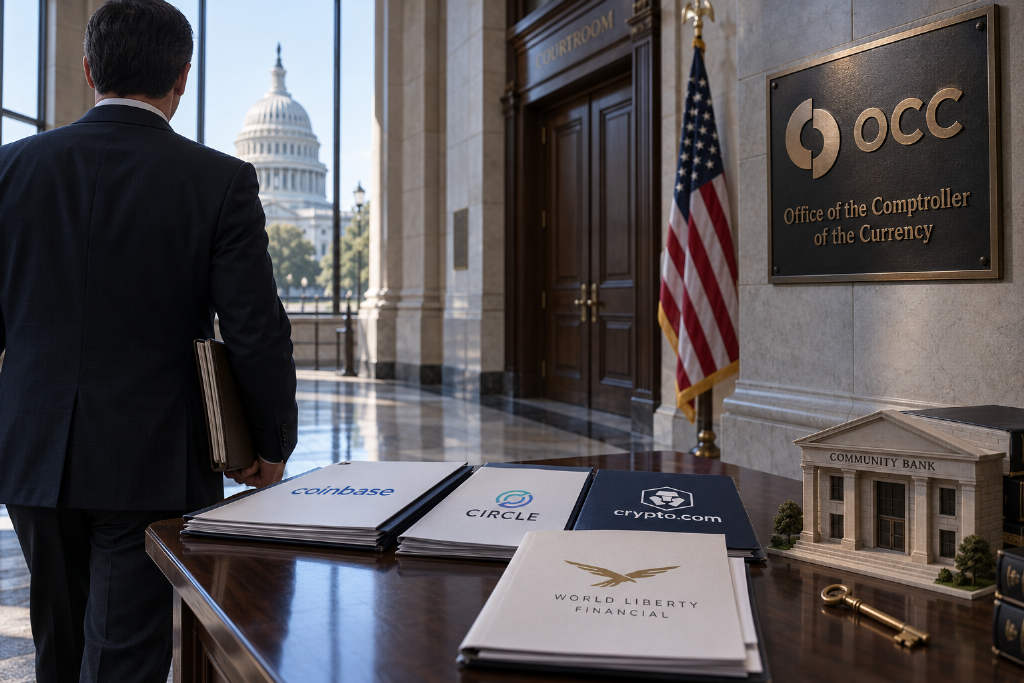
A major U.S. community banking trade group has sued the Office of the Comptroller of the Currency (OCC), accusing the federal regulator of going beyond its legal authority by granting national trust bank charters to crypto firms.
The lawsuit, filed in federal court on Friday by the Independent Community Bankers of America (ICBA), argues that the OCC is pushing "sweeping new powers to charter national trust banks that are not authorized by the National Bank Act" and is letting those companies into the U.S. banking system without subjecting them to the same level of oversight faced by community banks.
ICBA says crypto trust banks are not being regulated like traditional banks
At the center of the case is the OCC's authority to issue national trust bank charters, a tool the agency has used to bring a number of digital asset firms into the regulated banking framework. ICBA said that influx has created a double standard: crypto trust banks gain access to the system, while smaller traditional banks remain subject to stricter requirements.
The group said the firms do not carry the same obligations on capital, liquidity, supervision, or insurance from the Federal Deposit Insurance Corp. (FDIC). In its view, that leaves community banks at what it called a "severe competitive disadvantage."
"Congress did not create the national trust charter as a side door into the banking system for crypto firms seeking the credibility of a federal bank charter," ICBA President and CEO Rebeca Romero Rainey said in a statement. She added that the companies are not subject to the same obligations on capital, liquidity, supervision, and FDIC insurance.
Asked by CoinDesk for comment, an OCC spokesperson said the agency "does not comment on litigation."
The fight focuses on trust charters as a route into banking and payments
The OCC has been granting a steady stream of trust charters to crypto firms. Those companies, according to the report, do not operate on the same business model as typical community banks and do not plan to offer the same services.
One example is deposit-taking. These firms do not offer the same kinds of cash deposit accounts for which FDIC insurance is designed and required. That distinction has helped shape the argument around whether trust charters for crypto firms should be treated the same way as charters for more traditional banks.
At the same time, banking regulators have pointed to the industry's interest in national trust charters as evidence of a revival in new banking names after a long dry spell. ICBA is now directly challenging that path, framing the trust charter as an entry point into the U.S. banking and payments system.
ICBA had also pushed back on digital asset legislation last month
ICBA is one of the largest banking advocacy groups in the U.S. and usually represents smaller institutions. The group also played a significant role in opposing the Digital Asset Market Clarity Act, which failed to advance in the U.S. Senate last month.
According to the report, part of the banking industry's objection was that the bill's stablecoin provisions did not protect community banks against direct competition with deposit accounts, a core part of their business. That earlier fight has now given way to a challenge aimed at crypto firms seeking trust charters from the OCC.
Crypto names cited include Coinbase, Circle, Crypto.com, Protego and Erebor
Some of the trusts cited in the report were formed as crypto-focused banks, including Protego and Erebor. Others came from established crypto companies such as Coinbase, Circle and Crypto.com.
A more recent addition is World Liberty Financial, the company partly owned by President Donald Trump and his family. Its charter approval drew criticism from opponents including Democratic Senator Elizabeth Warren, who accused the agency of allowing presidential corruption and wrote on X that the new charter was "giving him and his family a new way to profit."
Last month, the OCC also granted a full national bank charter to OpenReserve Bank, a blockchain bank funded by several crypto investors, including Andreessen Horowitz, Jump Capital and Coinbase Ventures.
The case challenges the legal limits of OCC chartering power
The lawsuit goes beyond any single approval. It asks whether the OCC can use existing law to grant national trust bank status to crypto firms while not imposing the same regulatory obligations borne by community banks.
For now, the agency has not responded publicly on the substance of the case. Its only comment to CoinDesk was that it does not comment on ongoing litigation.