
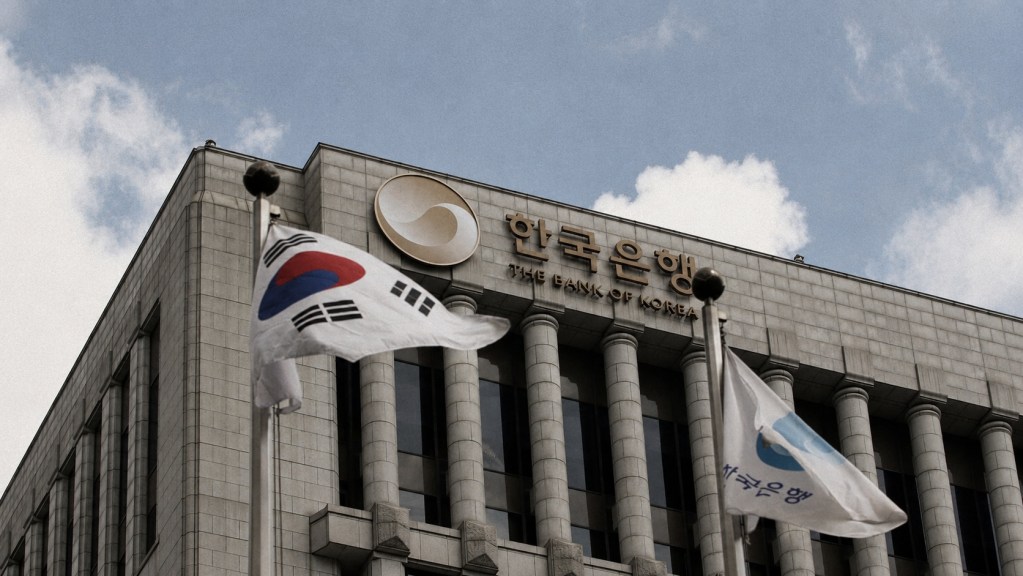
The Bank of Korea, or BOK, raised its benchmark rate by 25 basis points to 2.75% on July 16, its first increase since January 2023. The move restarts the central bank’s tightening cycle, with policymakers pointing to inflation and a weaker won as the main concerns.
BOK cites inflation and currency weakness
In its statement, the BOK said inflation has remained elevated and the won has continued to weaken. South Korea’s June consumer price index rose 3.2% from a year earlier, the highest level since 2023 and well above the central bank’s 2% target.
The bank said the pass-through effect from higher energy prices is expected to keep inflation elevated for “a considerable period of time.” It now sees headline inflation at around 2.7% in 2026, while core inflation is expected to come in “slightly above” its previous 2.4% forecast.
On the currency side, the won touched 1,561.5 per dollar on June 5, its weakest level in 17 years. Earlier this month it again approached that mark, falling to 1,559 before recovering to around 1,484.86 after hawkish comments from BOK officials.
BOK Governor Shin Hyun Song recently told South Korea’s National Assembly that the won still had “ample room for appreciation.” He also said the country’s large current-account surplus could help attract foreign capital as rates rise, lending more support to the currency.
Semiconductor strength gives the central bank room to tighten
Strong semiconductor exports helped create the conditions for the rate increase. South Korea’s GDP grew 3.8% year over year in the first quarter, the strongest quarterly performance since the fourth quarter of 2021, driven by expanding chip exports and capital investment.
The BOK said full-year GDP growth is likely to “significantly exceed” its May forecast of 2.6%. The South Korean government has also raised its growth target for this year to 3.0%, the highest level in five years.
Gareth Leather, an economist at Capital Economics, said the case for more tightening over the coming months is strong. He expects South Korea’s full-year GDP growth to reach 4.0%, above the broader market consensus. At the same time, he warned that private consumption remains weak and retail sales are still shrinking in real terms.
KOSPI tumbles and leveraged retail accounts face more strain
South Korean stocks sold off sharply on the day, with the KOSPI dropping more than 6%. Samsung Electronics and SK Hynix, following weakness in U.S. chip shares, fell 8.6% and 11.1% respectively.
The sell-off added pressure to already stretched leveraged retail investors. According to data from the Financial Supervisory Service as of July 13, more than 1.2 million margin accounts across the country had received margin calls. Of those, about 320,000 to 360,000 accounts were forcibly liquidated, and some were left with negative balances owed to brokerages.
With the BOK’s rate hike set to raise financing costs further, pressure on highly leveraged accounts is likely to increase.
Markets look for another move this year
Expectations for the policy path have started to converge. Most analysts expect the BOK to deliver one more 25 basis point hike before the end of this year, taking the policy rate to 3.00%. The median economist forecast sees rates rising again to 3.25% in the first quarter of 2027 and staying there at least through the end of next year.
Elsewhere in the region, the Bank of Japan has recently lifted its benchmark rate to a 31-year high. Central banks in Australia, New Zealand, Indonesia and the Philippines have also tightened policy. According to ABMedia, the BOK’s latest move points to a broader tightening trend still running across Asia-Pacific as inflation pressure persists globally.