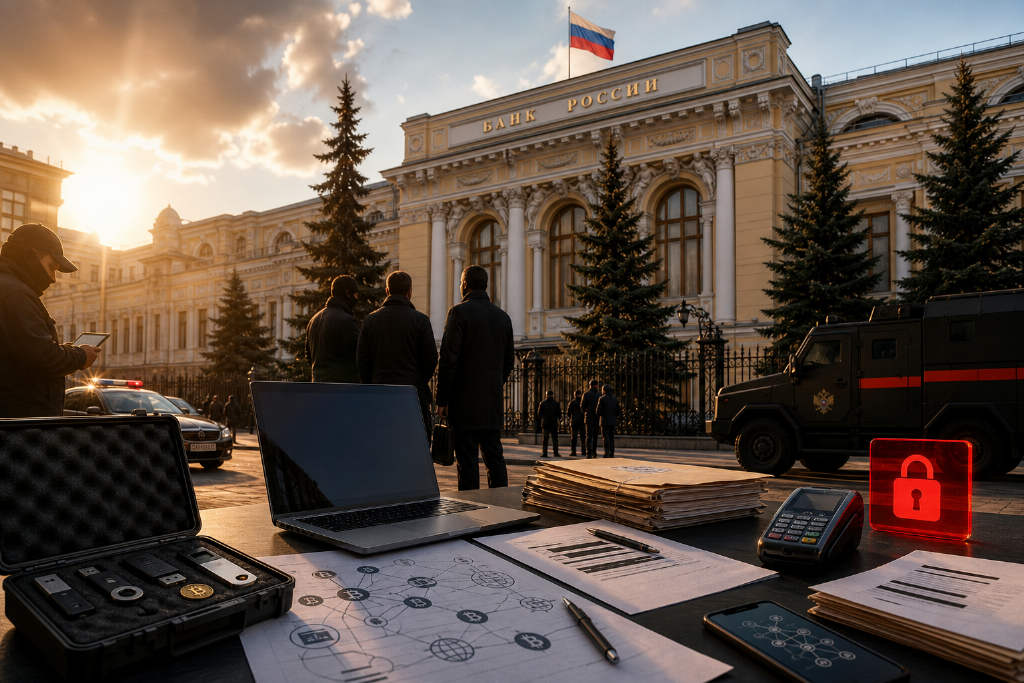
The Bank of Russia has added 2,600 cryptocurrency wallet addresses suspected of involvement in illegal activity to a dedicated information system, according to Bits.media as cited by ChainCatcher. The addresses are linked to legal entities, project teams and individual entrepreneurs, and have collectively received about 1 billion rubles in crypto assets. The system is already open to government agencies and law enforcement bodies. The central bank said that if a banking transaction is found to be connected to any of the listed addresses, that transaction is highly likely to be frozen. It also said 74% of the flagged addresses are tied to financial pyramid schemes and fraud. Reported schemes include fake crypto investment offers, fabricated data center projects and illegal crypto lending involving the USDT stablecoin.
According to Bits.media, as cited by ChainCatcher, the Bank of Russia (ЦБ РФ) said it has added 2,600 cryptocurrency wallet addresses suspected of illegal activity to a dedicated information system.
The addresses involve legal entities, project teams and individual entrepreneurs, and have collectively received about 1 billion rubles in crypto assets. The system has already been opened to government agencies and law enforcement bodies.
The central bank said that once a banking operation is found to be linked to those addresses, the related transaction is highly likely to be frozen.
It added that 74% of the addresses in question are connected to financial pyramid schemes and fraud. Common methods include fake crypto investment programs, fabricated data center projects and illegal crypto lending involving the USDT stablecoin.
This article was originally published by Bit.Fan. For more cryptocurrency news and market insights, visit www.bit.fan. Disclaimer:
The market information, project data, and third-party content displayed on this platform are for industry information sharing only and do not constitute any form of investment advice or return commitment.
Cryptocurrency trading carries high risks. Users should fully assess their risk tolerance and make independent decisions. All profits, losses, and legal responsibilities are borne by the users themselves.