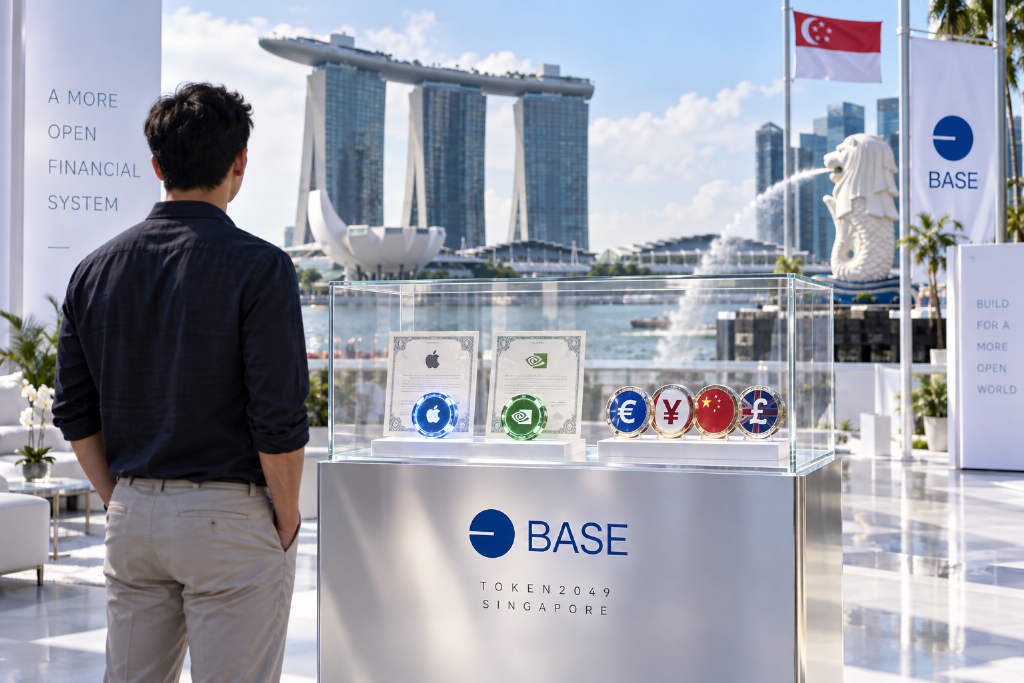
Base founder Jesse Pollak said the coming "tokenization supercycle" is likely to be driven mainly by tokenized stocks and non-dollar stablecoins. Speaking during Token2049 in Singapore, Pollak said the market is underestimating the growth potential of non-dollar currencies. He argued that countries will continue to maintain monetary sovereignty, while most everyday payments will still be made in local currencies rather than in U.S. dollars. In that setting, non-dollar stablecoins could take on a more important role over time. The comments were reported by The Block and carried by Odaily as a newsflash item. Pollak’s remarks focus on two areas he sees as key to the next phase of tokenization: bringing equities on-chain and expanding stablecoin use beyond dollar-pegged products. He did not frame the trend around a broad shift away from domestic money use. Instead, his point was that local-currency demand is likely to remain strong, which may create room for stablecoins tied to currencies other than the dollar.
Base founder Jesse Pollak said the coming "tokenization supercycle" will be driven mainly by tokenized stocks and non-dollar stablecoins.
Pollak points to tokenized equities and local-currency stablecoins
Speaking during Token2049 in Singapore, Pollak said the market is underestimating the growth potential of non-dollar currencies.
He said countries will continue to maintain monetary sovereignty, and that most payments in daily life will still be made in local currencies. On that basis, non-dollar stablecoins could end up playing an important role in the future.
The comments were reported by The Block.
This article was originally published by Bit.Fan. For more cryptocurrency news and market insights, visit www.bit.fan. Disclaimer:
The market information, project data, and third-party content displayed on this platform are for industry information sharing only and do not constitute any form of investment advice or return commitment.
Cryptocurrency trading carries high risks. Users should fully assess their risk tolerance and make independent decisions. All profits, losses, and legal responsibilities are borne by the users themselves.