

Beijing’s GDP grew 5.4% in the first half of the year, after reaching 5.9% in the first quarter. That left the first-half reading 0.5 percentage points lower than the earlier pace. Officials described the trend as a “strong start and steady follow-through,” and the MarsBit report argues that the city’s economic support came less from consumption or property and more from hard-tech fields such as semiconductors, robotics, computing power and large AI models.
For the second-quarter slowdown, the official explanation was that policy support was front-loaded early in the year and that the shift from old growth drivers to new ones naturally creates friction. The report says that judgment is difficult to verify through headline statistics alone, but notes that Beijing’s general public budget revenue rose 6% in the first half, with taxes accounting for 89.3% of the total, a structure it described as relatively solid.
National science awards and investment flows point in the same direction
Beijing-based teams won 58 prizes in the 2025 National Science and Technology Awards, the highest total in the country. One cited example came from the Huairou Science City “Cross Platform for Light-Element Quantum Materials,” where a Peking University team received the first prize in the National Natural Science Award.
The awards themselves do not directly add to GDP, but the report links them to where money is moving. In the first half, investment in high-tech manufacturing in Beijing rose 36%, while investment in technology services climbed 87.2%. Overall fixed-asset investment grew just 3%, making the tilt toward innovation spending much clearer.
Capital markets showed a similar pattern. Beijing added 15 newly listed companies in the first half. The Beijing Stock Exchange added 36. Venture investment doubled from a year earlier, and nearly 90% of that capital went into hard-tech sectors. In the article’s reading, investors looking at Beijing companies were largely chasing chips, robotics and AI, while other tracks were quieter.
That trend aligns with a policy structure built on two pillars: strategic scientific capability and technology finance. At one end are top research institutions and national laboratories, including Tsinghua University and Peking University. At the other are venture funds willing to follow with real capital. Haidian district was also selected in the first batch of national practice sample areas for technology finance in capital markets, adding another link to that chain.
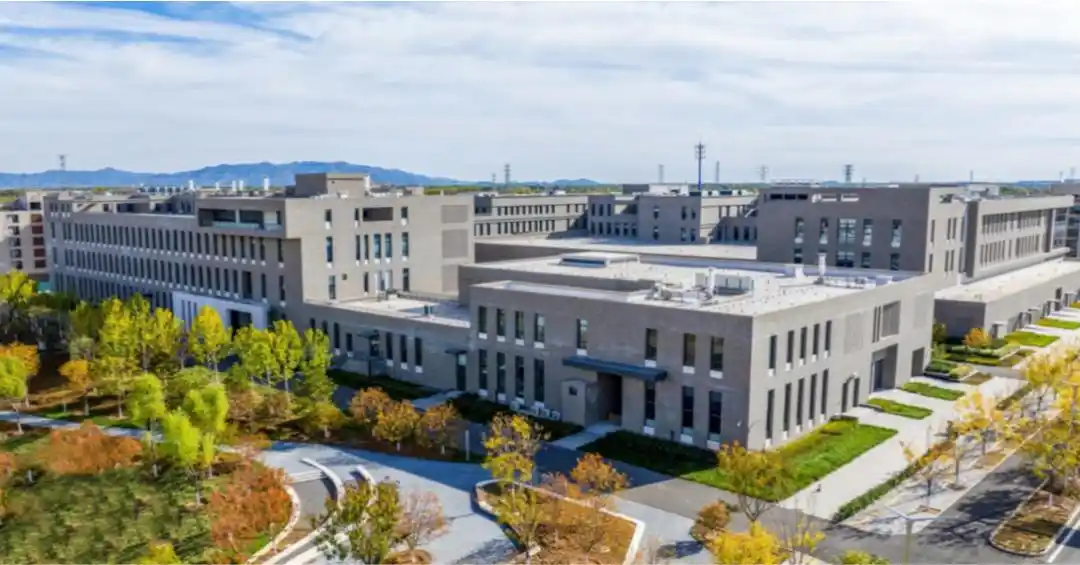
Production data show Beijing is building hardware, not only writing code
If investment data show where money goes, production data show whether products are actually coming out. In the first half, Beijing’s integrated circuit output rose 17.8%, industrial robot output increased 75.5%, and service robot output jumped 2.3 times. Taken together, those figures suggest the city is not focused only on software, algorithms and research papers. It is also producing equipment.
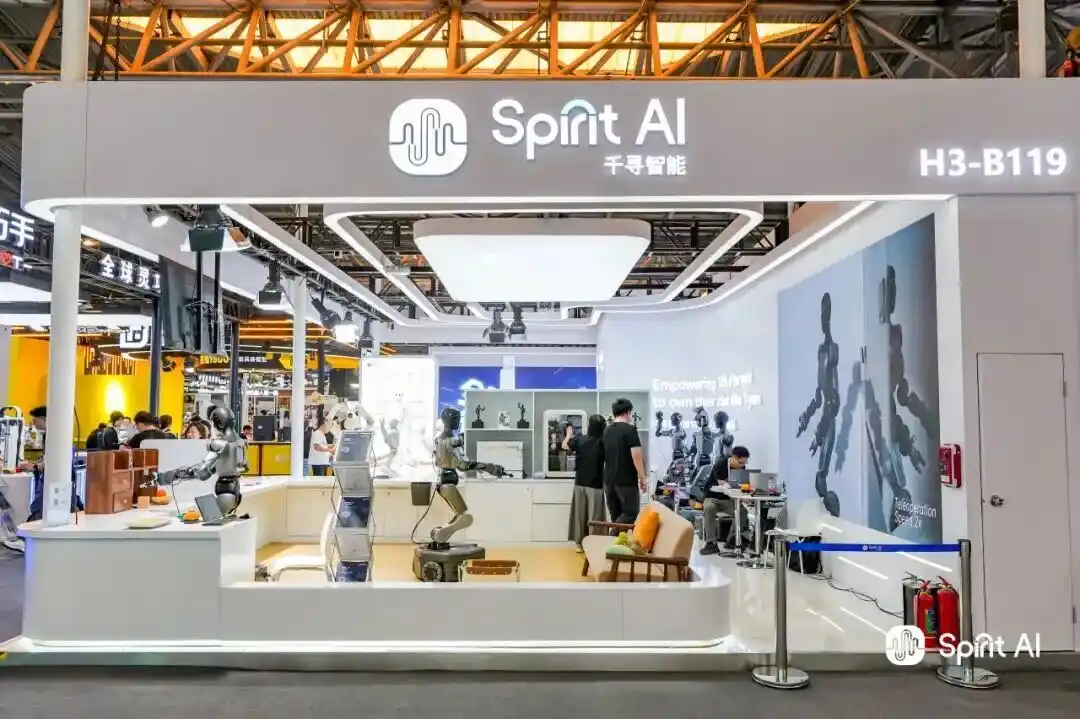
The report points to a concrete case from embodied intelligence startup Qianxun Intelligence. Its Mozi robot has entered JD.com smart retail scenarios this year and is also working on production lines at CATL. The company said those capabilities rely on more than 200,000 hours of real-world data accumulation. Tasks that sound simple, such as folding clothes or moving items, came from repeated trial and error in actual operating environments rather than from one-off showroom demos.
Services are shifting in the same direction. Beijing’s value added in services rose 6.1% in the first half. Within that, software and information services grew 9.4%, finance rose 10.2%, and technology services increased 5.2%. Both finance, often seen as a “heavy” sector, and software and information services, usually viewed as lighter, outpaced the overall services figure.
In the digital economy, value added rose 7.8%. Revenue in the green economy is expected to grow about 5.5% in the first half. New-energy vehicle ownership topped 1.4 million, with 140,000 added in the period. On the policy side, Beijing has already pushed forward a medical AI pilot platform that produced agents for whole-body chronic disease and early retinal screening, while a manufacturing AI pilot platform is working on intelligent systems covering the full life cycle of automotive R&D and design.
AI funding, model infrastructure and standards work are all moving
The article says much of the venture capital flowing into hard tech is heading toward Zhongguancun. Embodied intelligence has been especially active this year, with funding rounds arriving one after another and often reaching the 10 billion yuan level. Galaxy General raised 2.5 billion yuan in a new round in March, with investors including the National Artificial Intelligence Industry Investment Fund, Sinopec and CITIC Group Investment Holdings. Its cumulative fundraising has reportedly exceeded 5 billion yuan.
The report stops short of saying whether future commercialization can justify current valuations, saying only that it is too early to draw a firm conclusion.
On execution, Galaxy General has framed its target as making robots able to work, work well and work at scale. The company developed AstraBrain, an end-to-end embodied large model, and AstraData, a data foundation designed to improve autonomous learning and generalization. It also recently released WAM-TTT, a proprietary technology that it says can keep reducing the cost of training and deployment while helping robots adapt quickly across scenarios.
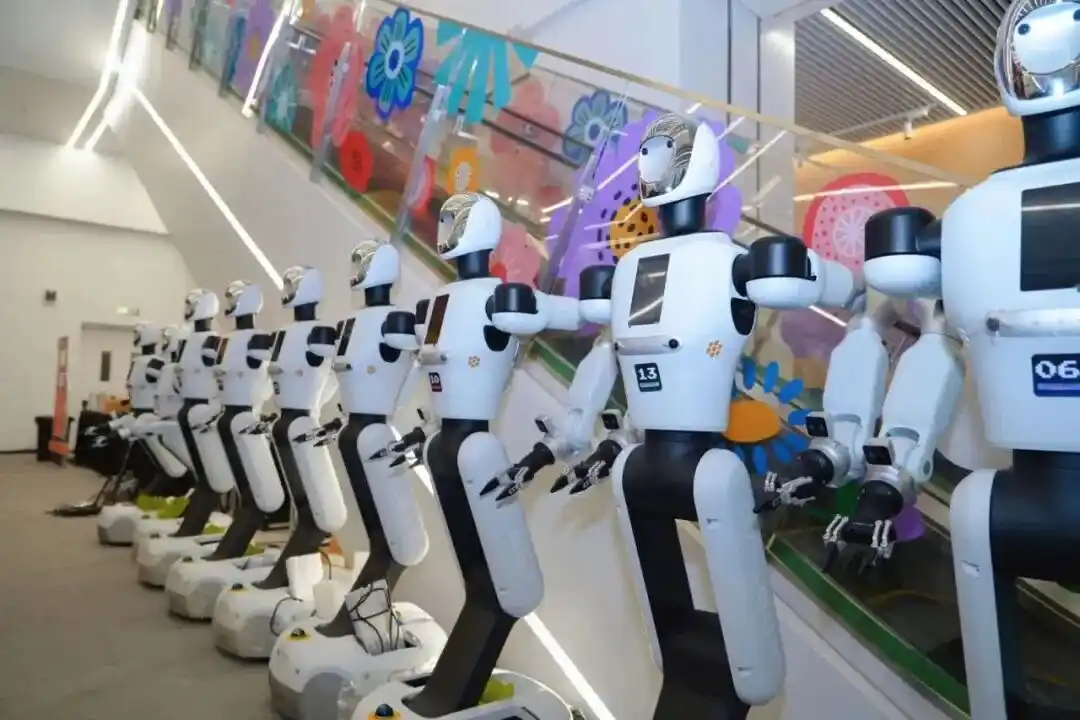
Galbot is now operating on a 7×24 continuous basis at CATL and is gradually entering core production processes at automotive manufacturers, including logistics handling, material sorting and quality inspection. In consumer service settings, the company’s humanoid robots have also been deployed in smart pharmacies and Galaxy Space Capsule scenarios.
On large models, Beijing released what the report described as the world’s first general world foundation model and the first self-evolving 5D world model in the first half. The city’s domestic AI ecosystem, FlagOS, has more than 80 members and has been downloaded more than 375,000 times globally. The article argues that, at the company level, those advances translate into a group of neutral providers of computing and model services that are laying groundwork for the broader ecosystem.
One example is Jiuzhang Yunji, a cloud computing provider that does not build its own large model. Instead, it offers compute and ready-made foundation models to small and mid-sized AI teams, allowing them to avoid being locked into a single cloud platform or one model path. The report calls that a “selling shovels” role and suggests it could influence whether Zhongguancun can truly attract and retain AI builders.
Rules and standards are moving as well. Qianxun Intelligence is a member unit of the Ministry of Industry and Information Technology’s standardization technical committee for humanoid robots and embodied intelligence, and it has participated in preliminary research on standards including methods for testing robot joint performance. The article treats that as another important line inside the Zhongguancun ecosystem, alongside technology and products.
Compute spills into Hebei and Tianjin as pilot platforms fill the commercialization gap
Computing power remains a central target for the second half. Beijing added 22,000P of intelligent computing capacity in the first half and is aiming for more than 70,000P of new capacity for the full year, pushing toward a supercomputing scale measured in tens of thousands of P. That may sound like a purely technical metric, but in practice it comes down to dispatch and location. Not all of that compute can sit inside Beijing.
Jiuzhang Yunji’s answer has been to route demand flexibly to neighboring nodes in Hebei and Tianjin, testing a model described as “Beijing for R&D, surrounding areas for training,” while also moving into smart manufacturing in Tianjin and industrial internet scenarios in Hebei.
That fits with the broader Beijing-Tianjin-Hebei coordination agenda for the second half. In the first half, Beijing had already relocated 77 general manufacturing companies. Beijing Tongzhou railway station started operation. The region also launched its first loop high-speed rail service. On Metro Line 22, which links Pinggu and Hongmiao, the main structure of 20 stations was topped out. Projects tied to Xiong’an campuses and branches for institutions including University of Science and Technology Beijing and Peking University People’s Hospital are also moving ahead.
The report says transport links now give Zhongguancun’s innovation resources a physical channel to radiate outward, at least in theory. But it also cautions that the process is still in an early stage: the corridor has only just opened, and whether traditional industries in Hebei and Tianjin will truly feel the arrival of those innovation “sparks” remains to be seen.
Besides shifting compute outward, Beijing is also trying to fill in a missing link closer to home through pilot-scale testing platforms. In the first half, the city announced the first batch of 29 municipal pilot platforms, covering next-generation information technology, biomedicine and health, and future industries. In plain terms, the report says, these platforms are meant to provide a middle station between lab results and mass-produced products.
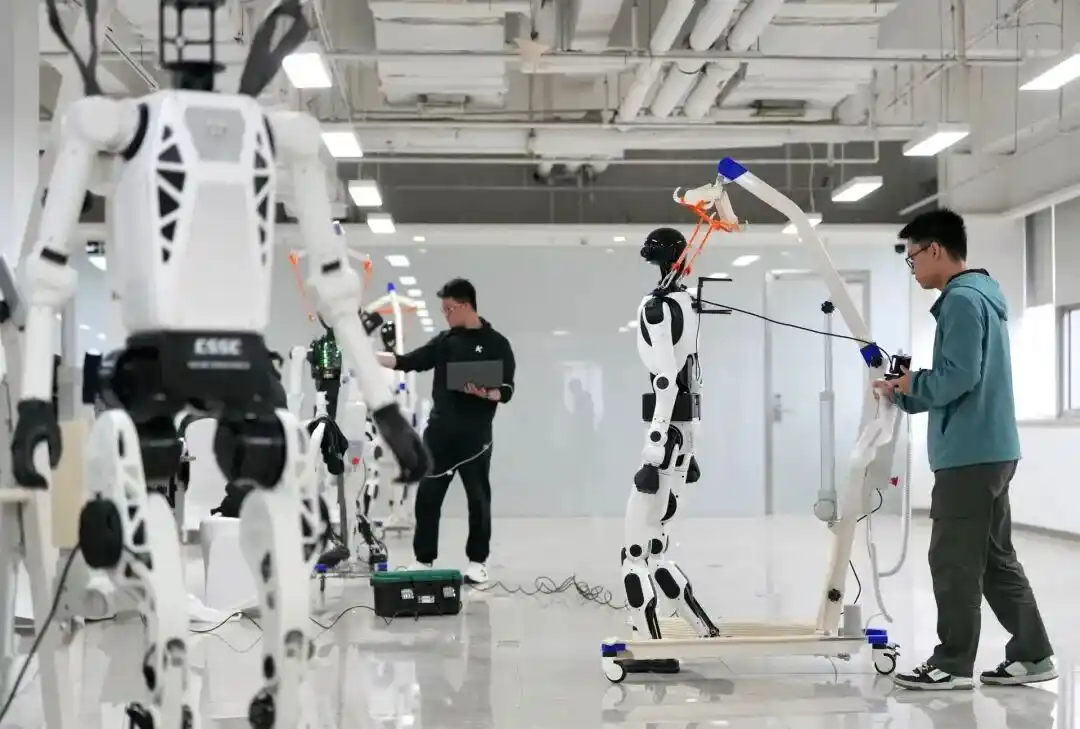
A second batch is scheduled for the second half. Combined with scenario-development policies that have already identified domestic demand expansion and urban governance as priority fields, the logic is to find use cases for technology and markets for those use cases.
What supports the “global high ground” narrative
The article’s bottom line is that Beijing’s first-half economic performance did not come from a single blockbuster policy. It came from a series of smaller advances in compute, models, applications and capital that, taken together, produced what it calls a technology-market run.
The second-half targets are direct: push intelligent computing capacity past 70,000P for the full year, roll out a second batch of pilot platforms, and keep expanding application scenarios. Whether those goals are met will depend on whether companies such as Jiuzhang Yunji, Qianxun Intelligence and Galaxy General can turn technical capability into actual orders rather than remaining in funding headlines.
The report notes that Beijing has long been called “China’s Silicon Valley,” but argues that Silicon Valley was never built on one or two star projects. Its strength came from the long-term alignment of compute, talent, capital and real-world demand. In that framing, what Beijing did in the first half was to patch weak links in exactly those areas: sending compute into the wider Beijing-Tianjin-Hebei region, pushing standards into industry, and using pilot platforms to bridge the gap between laboratories and markets.
The original article was published by the WeChat account Jiedian Caijing and written by Cui Dabao.