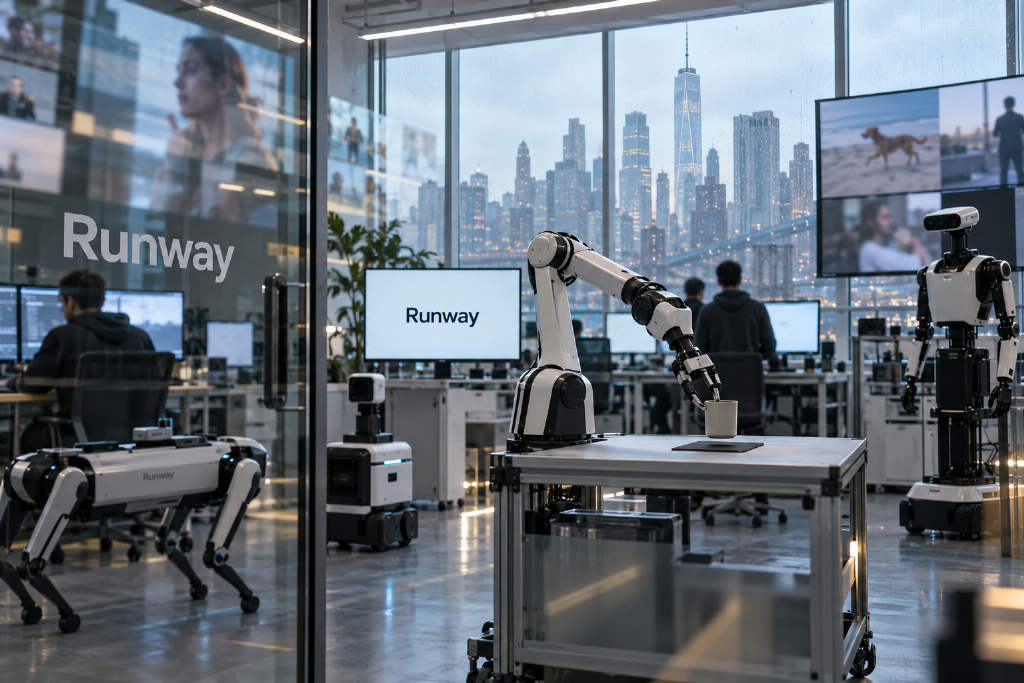
Runway2026-10-01 14:30:53Runway says Praxis-1 brings internet video pretraining to robots with results close to specialist datasetsRunway has introduced Praxis-1, a robotics model that applies techniques developed for AI video training to real-world robots. The system learns from large volumes of ordinary internet video, using those clips to model how objects move and how people complete tasks, then converts that knowledge into robot actions. In an object placement test, Runway said robots pretrained on internet video posted an average error of 16.1 centimeters. When trained instead on specially collected robot teleoperation video, the average error was 16.0 centimeters. The company said the benchmark covered 93 evaluations, with the two training approaches finishing nearly even. Runway argued that if this approach scales, the amount of usable training data for robotics could expand by orders of magnitude, since teleoperated robot data requires hardware, physical space, and human labor, while ordinary video is already abundant online. Praxis-1 has been tested on multiple robots from Noble Machines, Standard Bots, and Ultra, including robotic arms, dual-arm systems, and mobile robots. The company also showed the same policy continuing a task after moving from a studio setting to a kitchen. Praxis-1 is currently available only through an early access application, while model weights are planned for release in the coming months. Parameter count and fuller independent evaluations have not yet been disclosed.50
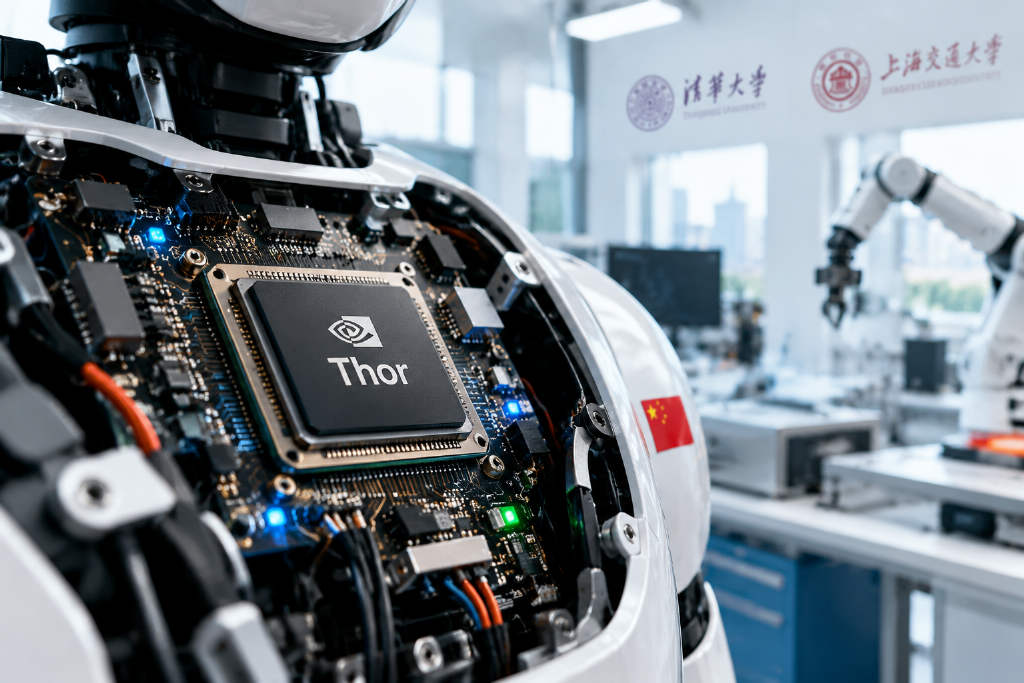
Embodied AI2026-09-29 04:37:11Tsinghua, Infinigence AI and Shanghai Jiao Tong University open-source APXInf for embodied AI inferenceTsinghua University, Infinigence AI and Shanghai Jiao Tong University have open-sourced APXInf, an on-device inference engine built for embodied AI models running on robot hardware. The project targets a problem that is becoming harder as robot models iterate faster and commercial deployments move closer to real-world delivery: how to run large embodied models efficiently and reliably on devices with tight limits on compute, memory and power. According to the project description, APXInf cut inference latency for the π0.5 model on NVIDIA Thor in FP8 mode from 278 ms to 26 ms without changing the model itself, a roughly 10.7x end-to-end speedup. That pushed control frequency to 38.46 Hz, placing it in the real-time range for robot control. The team also said the engine reached 92.2% success on Thor FP8, 92.8% on Thor BF16 and 92.0% on Orin BF16 in a LIBERO-10 evaluation, compared with 92.4% for the π0.5 reference implementation. Beyond raw speed, APXInf is positioned as reusable infrastructure. The repository turns model adaptation, optimization and validation into a workflow that can be reused over time and called by agents. The project has already added support for π0-fast, GR00T and Qwen Drive, with AMD and Chinese chip backends listed on the roadmap.230
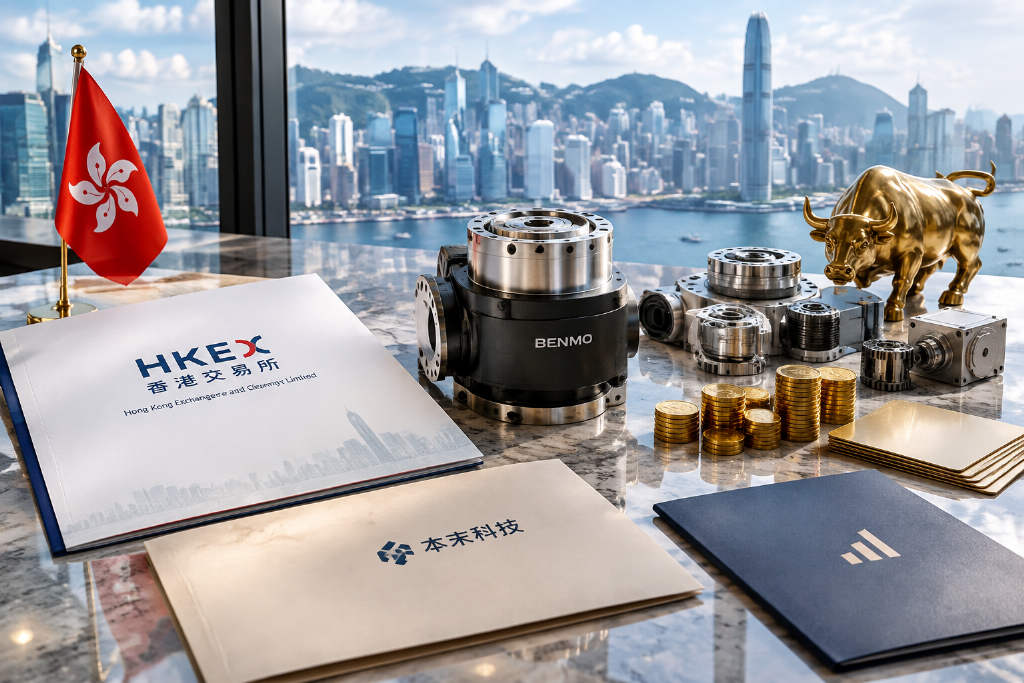
Benmo Technol2026-09-29 03:35:17Benmo Technology lists in Hong Kong with valuation above HK$8 billion, giving Li Zexiang’s early bet a paper return of more than 1,000xBenmo Power (Beijing) Technology Co., Ltd., known as Benmo Technology, made its debut on the Hong Kong Stock Exchange on Sept. 29 at an offer price of HK$21.6. The stock opened higher, pushing the company’s market capitalization above HK$8 billion. According to its prospectus, the company’s post-money valuation in its 2020 seed round was about RMB5 million, meaning its valuation has increased by more than 1,000 times in roughly six years. Founder Zhang Di, born in 1994, studied mechanical engineering at Beijing Institute of Technology before moving to the Hong Kong University of Science and Technology to pursue robotics systems and control engineering under professor Li Zexiang. Benmo’s early development centered on direct-drive technology for robot power modules, after Zhang explored removing the traditional reducer component from robotic systems. The prospectus shows Songshan Lake Robot Research Institute invested RMB300,000 in the seed round as the sole investor, while Yunhe Investment and MiraclePlus joined the angel round with RMB3 million. The article says both Songshan Lake Robot Research Institute and Yunhe Investment are ultimately controlled by Li. Over six years, Benmo completed 12 funding rounds and attracted a long list of investors. The report frames the company’s listing not only as a capital-market milestone, but also as part of a broader pattern of professor-student startup teams in China’s robotics sector.200
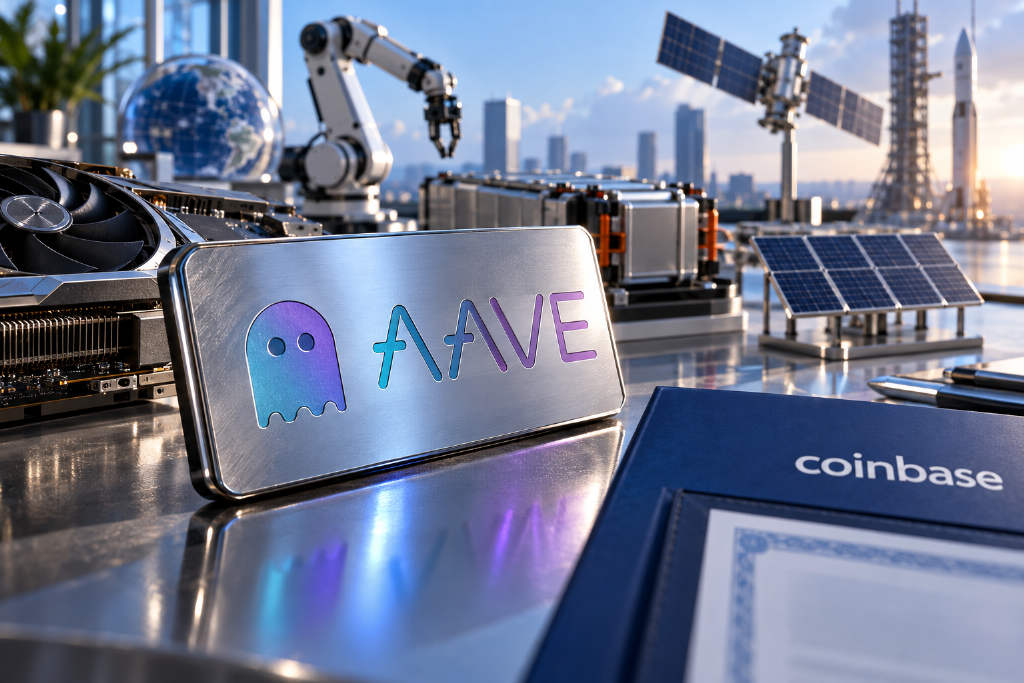
Aave2026-09-28 04:08:11Aave says collateralized lending could expand to GPUs, robotics and space infrastructureAave founder and CEO Stani Kulechov said the protocol’s addressable market should be measured by the range of assets that can be used as collateral. In his view, a broader set of collateral translates into a larger lending market. Aave started with crypto assets, then expanded into securities through Coinbase tokenized stocks and Horizon RWA, according to his post. Kulechov added that the next phase could extend collateral-backed finance into sectors tied to what he called an "abundance economy," including solar, batteries, GPUs, robotics and space infrastructure. He said that transition will continue through 2050. Aave’s goal, he wrote, is to finance assets that drive that shift and bring the timeline forward by 10 years.250
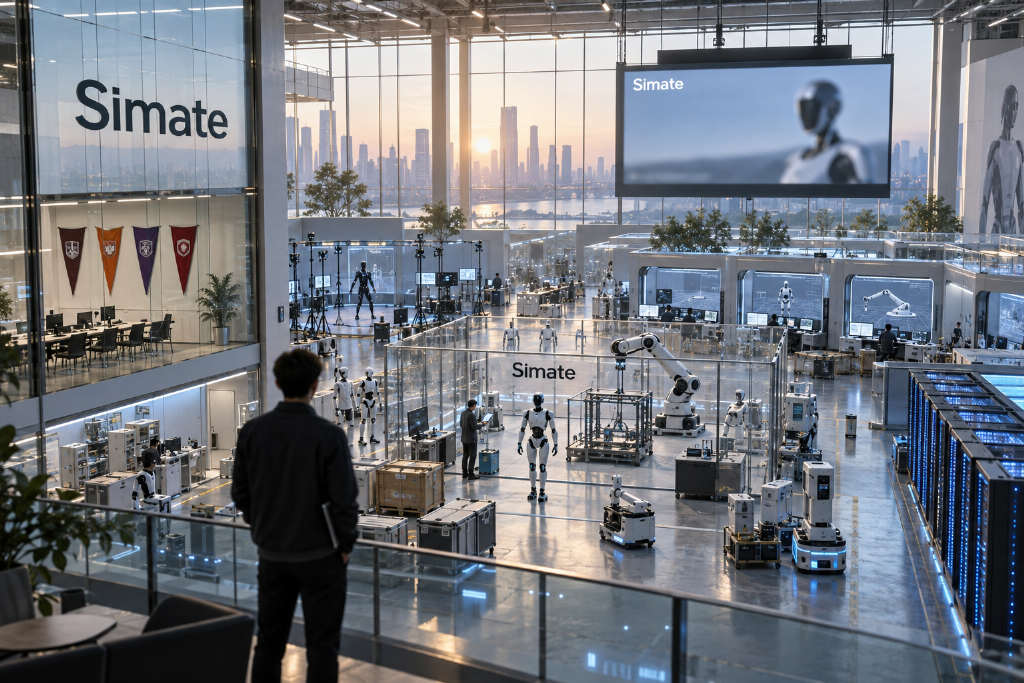
Physical AI2026-09-28 02:37:07Simate unveils Simate-beta and says its first Physical AI model topped RoboDojo within three monthsSimate, a three-month-old company also known as Silicon Mate, has introduced Simate-beta, its first general-purpose fast system for Physical AI, and said the model ranked No. 1 on the RoboDojo leaderboard updated on Sept. 23, 2026. According to figures provided by the company, simate-beta posted an average score of 33.95 and a success rate of 27.96%. Simate said the base model submitted to the benchmark was not specially tuned for the leaderboard. The company is pitching more than a single benchmark result. It says its broader approach is "AI for Physical AI," a development framework in which AI systems take part in the research and iteration process for physical intelligence itself. That stack includes a pluggable model framework called SiPAI, an automated research engine called AutoResearch, and an in-house AI-native infrastructure layer covering training, simulation, inference, evaluation and hardware testing. Simate also said researchers from MIT, Caltech, Tsinghua University and Peking University have joined the AutoResearch private test, while the company has completed multiple funding rounds worth several hundred million yuan each. The team says it plans to release staged results by year-end, publish papers and technical reports on the model and automated research work, and open-source related outputs in phases.260
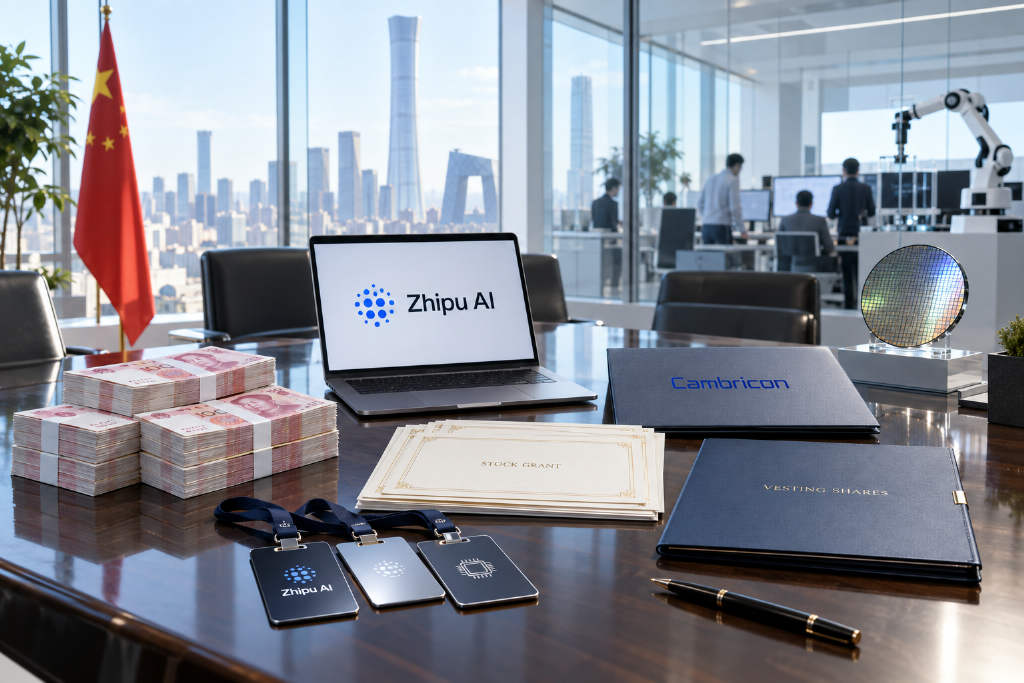
AI talent2026-09-21 09:46:10Pay for key talent is rising across China’s AI sector, with Zhipu’s executive average topping TencentChinese technology companies tied to the AI supply chain are paying sharply higher compensation to secure key talent, even before some businesses turn profitable. A compensation review covering 30 listed companies across large AI models and AI applications, AI chips and semiconductors, and robotics and embodied intelligence, plus three major internet firms as benchmarks, shows how salary design and equity incentives now reflect each company’s stage of development and hiring strategy. The figures cited in the report are striking. Zhipu posted 2025 revenue of 724 million yuan and a net loss attributable to shareholders of 4.698 billion yuan, yet Chairman Liu Debing received total annual compensation of 157 million yuan, including 156 million yuan in share-based payment. Cambricon’s 2026 restricted stock incentive plan proposes granting 5 million restricted shares to 945 employees, equal to an 85.37% coverage ratio based on its 1,107 employees at the end of 2025. The report also points to a wider AI labor boom. According to 36Kr, PhD interns in core teams at ByteDance, Tencent and Alibaba can earn 5,000-6,000 yuan a day. Maimai’s September AI talent mobility report said newly posted AI jobs rose 789.47% year over year in January-July 2026, with average monthly pay at 63,160 yuan. Across the three sectors, executive average monthly pay was highest in large-model and AI application companies, followed by chipmakers and then robotics firms.370
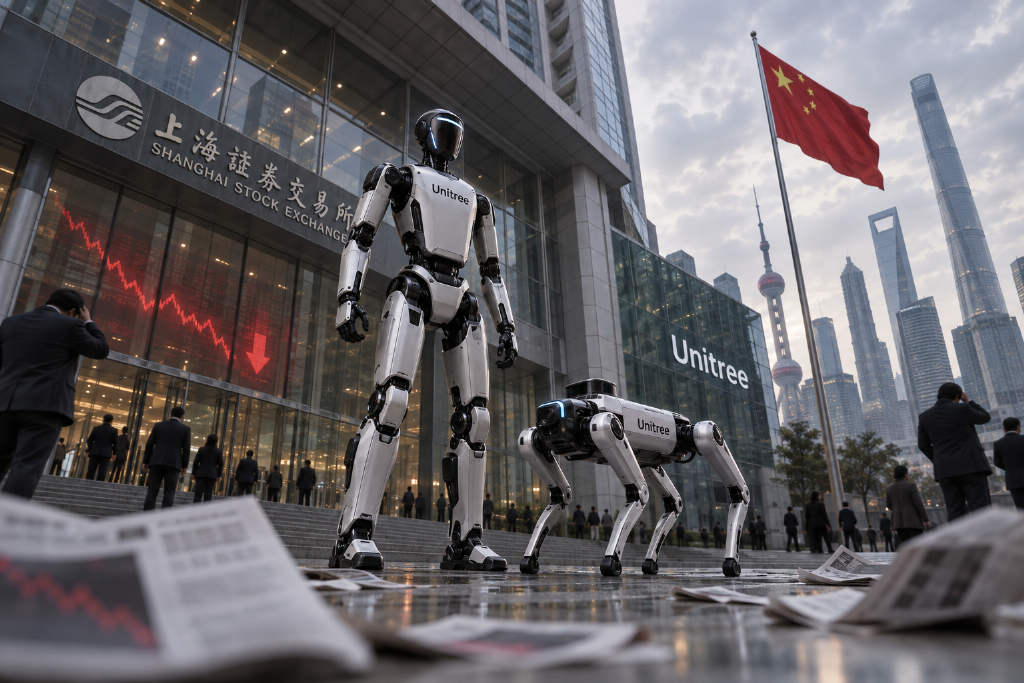
Unitree Robot2026-09-21 04:12:05Unitree Robotics shares fall more than 50% from opening price one month after listingUnitree Robotics, a Chinese robotics startup, has seen its share price drop by more than 50% from its opening price one month after listing on the Shanghai Stock Exchange, according to Nikkei Asia. At the opening price, the company’s market capitalization reached $66 billion. The report said that as the initial public offering boom has cooled, investors are reassessing the future of humanoid robots. Retail investors are also watching the sector more closely and weighing the potential of humanoid robotics. Unitree Robotics develops robot products including quadruped robots and humanoid robots. The move in its stock comes as market attention shifts from listing momentum to a closer review of business prospects in the humanoid robot segment.290
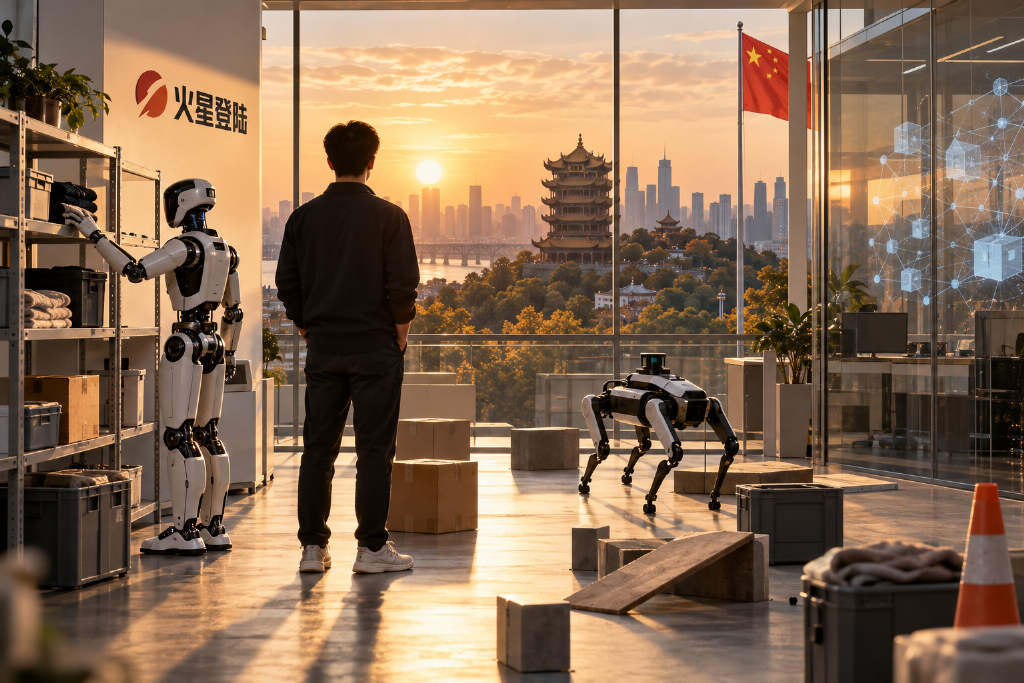
Mars Landing2026-09-21 01:27:07Mars Landing raises two funding rounds to build a brain-like architecture for robots in the physical worldMars Landing, a Wuhan-based robotics startup founded in April 2025 by post-2000 founder Zhu Yuhan, has completed two consecutive funding rounds worth tens of millions of yuan, according to the article. The investors named are Leaguer Venture Capital, Optics Valley Financial Holding, Ruijiang Investment and Wuhan Hi-Tech Group, while existing backer MiraclePlus added more capital. Rather than training a larger embodied foundation model, the company is betting on what it calls a brain-like architecture built on spatial intelligence. Zhu argues that a model can provide capabilities, but that does not amount to a full robotic brain. In his view, the harder problem is how to organize memory, task state, skills, action and feedback so a machine can keep operating autonomously over long time horizons in changing real-world environments. The startup is focusing on open and complex settings such as underground spaces, tunnels, forests, emergency response, and eventually homes, eldercare and commercial services. It has also built a product lineup consisting of Xingqing M1, Xingqun M2 and Xingmang M3, covering spatial understanding and memory, task organization and coordination, and on-device skill execution.350