
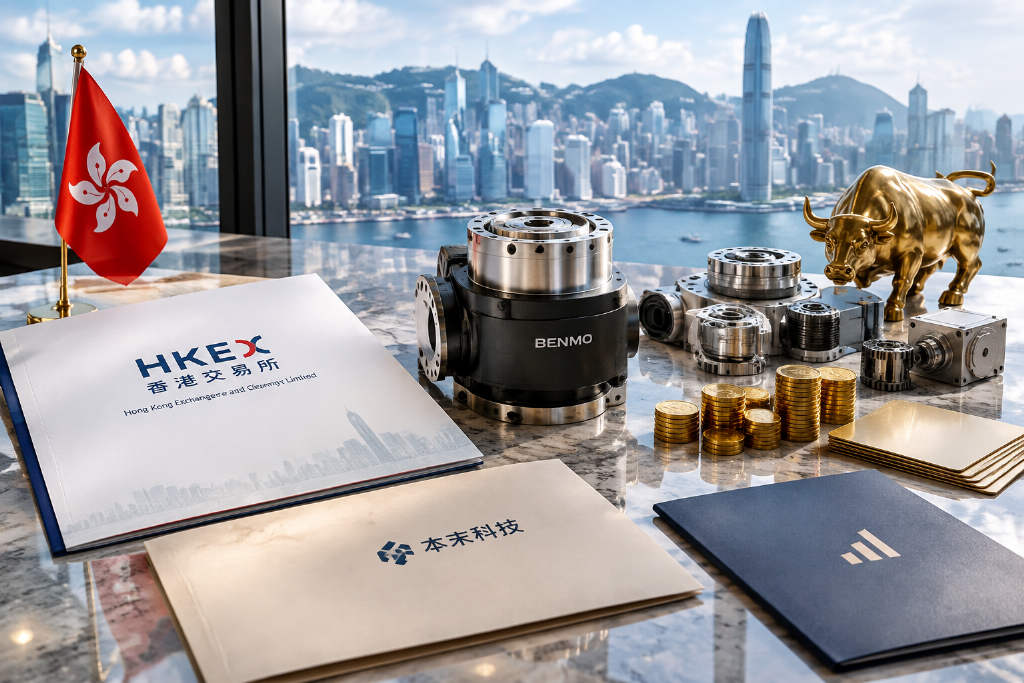
Benmo Power (Beijing) Technology Co., Ltd., better known as Benmo Technology, officially went public on the Hong Kong Stock Exchange on Sept. 29. The offer price was HK$21.6. The stock opened up, pushing the company’s market capitalization past HK$8 billion.
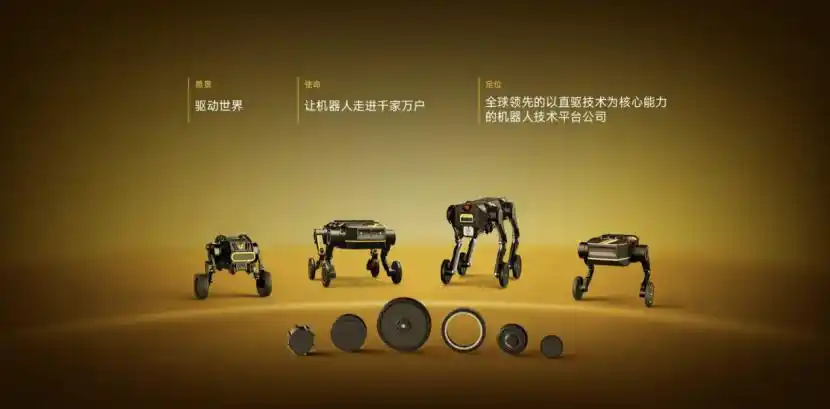
The prospectus says Benmo’s post-money valuation in its 2020 seed round was about RMB5 million. Just six years later, the company’s market value had climbed more than 1,000-fold from that starting point. Put simply, Li Zexiang’s early investment through entities under his control is now sitting on a hefty paper gain.
Zhang Di’s path to founding Benmo
Benmo founder Zhang Di was born in 1994. He took his undergraduate degree in mechanical engineering at Beijing Institute of Technology, then moved to the Hong Kong University of Science and Technology, where he studied robotics systems and control engineering under Li Zexiang.
Zhang said, “I am especially grateful to Professor Li. Whether in my studies or in starting a business, he was the one who recognized my potential and brought me from Beijing Institute of Technology to HKUST.” The quote makes clear that Zhang sees Li as a backer in both academics and entrepreneurship.
According to the article, Zhang once experimented with removing the reducer, one of the traditional core components in robots. Reducers had been standard across the industry for years. But they also had problems: bulky structure, high noise, shorter lifespan. That test turned out better than expected. It helped shape the idea of building robot power systems around direct-drive technology.
In March 2020, Benmo’s predecessor was set up in Dongguan, with a focus on direct-drive power modules for robots. Later, the company built out its business around direct-drive technology, spanning robot power modules and robotics operations. The team came together at the Songshan Lake XbotPark robotics base in Dongguan, a hard-tech incubation platform started by Li Zexiang, Gao Bingqiang and Gan Jie.
Seed round at RMB5 million valuation
The prospectus shows that in April 2020, the company closed both a seed round and an angel round.
- In the seed round, Songshan Lake Robot Research Institute put in RMB300,000 as the sole investor, at a post-money valuation of RMB5 million.
- In the angel round, Yunhe Investment and MiraclePlus invested another RMB3 million.
The article says Songshan Lake Robot Research Institute and Yunhe Investment are both ultimately controlled by Li Zexiang.
From a seed-round post-money valuation of roughly RMB5 million to a listed market capitalization above HK$8 billion, Benmo’s jump in value is the clearest way to size up the return on that first investment.
Products and fundraising
In 2021, Benmo finished development of its M6 and M15 direct-drive motor series and launched Diablo, which the article describes as the world’s first commercially deployed wheeled-legged robot of its kind.
Zhang had previously said Benmo’s first commercial order came from AgileX Robotics, another company inside Li Zexiang’s robotics startup network.
The prospectus shows Benmo went through 12 funding rounds over six years. Investors named in the article include the Beijing Advanced Manufacturing and Intelligent Equipment Industry Investment Fund, Legend Capital, Shunxi Fund, Lenovo Capital, Lenovo Star, Beijing State-owned Capital Operation and Management, Cowin Capital, MiraclePlus, 5Y Capital, XBOT PARK Fund, Huatai Zijin, Liwan Venture Capital, Xinghang Capital, Cuiwei Fund, Dami Venture Capital and Haisong Capital.
Li Zexiang’s professor-student investment model
Benmo is hardly the only example. Li has long been tied to a professor-student model for incubating hard-tech startups. The article says he has pushed students to turn research into companies and has personally funded some of them.
One of the best-known examples is DJI. Li once said, “I believed in Wang Tao because he was exceptionally strong at hands-on work. I guided him to compete in robotics contests and win awards, and I made an exception to admit him as my master’s student.” In 2006, at age 26, Wang Tao returned to Shenzhen and founded DJI in a warehouse of less than 20 square meters, encouraged by Li.
In November 2014, Li, Gao Bingqiang, Gan Jie and other startup mentors jointly launched the Dongguan Songshan Lake International Robot Industry Base, also known as XBOT PARK. The article says the base was built with proceeds from the sale of part of their DJI holdings.
Around the same time, the XBOT PARK Fund was created to invest in robotics and smart hardware. On the talent side, Shenzhen Institute of Technology Innovation acts as an extension of that setup. According to the article, it is now incubating more than 900 entrepreneurs and more than 90 startup teams.
The report also says Li personally helped found companies including Googol Technology and CIDI Auto, both now preparing for listings. As an investor, he has also backed a long list of student-led ventures. At the end of last year, four post-90s Harbin Institute of Technology alumni showed up at the bell-ringing ceremony when AiSleep completed its IPO. The article says AiSleep entered the XBOT PARK incubation system early and also received investment from the XBOT PARK Fund.
Data cited in the article show that by 2025, Li’s incubation system had incubated more than 280 hard-tech companies with a combined valuation above RMB500 billion. Of those, four were already listed, and 12 had reached unicorn or near-unicorn status. The companies named include Narwal, Hai Robotics, EcoFlow and Benmo Technology.
Professor-student teams in robotics startups
The article puts Benmo’s rise into a bigger pattern. Its argument is simple: professor-student founding teams are becoming common in robotics entrepreneurship.
It points to several cases. At the end of August, Jiazhi Technology filed for a Hong Kong listing. The company is led by Xiong Rong, a professor at Zhejiang University’s College of Control Science and Engineering. In July 2016, Xiong founded the company in Hangzhou with several students, including Chen Shouxian, who later became CEO. Chen had competed in robotics contests with Xiong as a student and won a world championship with the team.
RoboSense is another example cited in the article. Founder Zhu Xiaorui had been a professor at the Shenzhen graduate school of Harbin Institute of Technology. Qiu Chunxin had been her student, and Liu Letian came from the same lab. Later, the company moved from a university lab into the automotive lidar market and listed in Hong Kong in 2024.
The article also brings up Daimon Robotics. Founder Duan Jianghua earned a PhD in robotics and automation at HKUST and had worked in Wang Yu’s research team. Wang, the founding dean of the HKUST Robotics Institute, has long focused on tactile perception and dexterous manipulation. When Duan started the company, he brought his professor into the team.
Younger founders are showing up too. In August this year, post-2000 Tsinghua PhD student Hu Yucheng founded Qianjie Technology and closed a seed round worth several hundred million yuan. The investor list included Xingdong Jiyuan, founded by Chen Jianyu, a tenured associate professor at Tsinghua University’s Institute for Interdisciplinary Information Sciences and also Hu’s advisor.
The article argues that robotics startups naturally stay close to universities because the field depends on tightly connected layers: algorithms, control, hardware bodies, supply chains and scenario delivery. Often, when a team gets started, the market still has no clear answer. So what keeps it going? A technical judgment built over years. And a group already used to working together.
On professor-student entrepreneurship, Li is quoted as saying, “Professors may not necessarily have the answer. A professor’s job is to guide, to accompany, and to help entrepreneurs connect the dots.”
The original article was published by the WeChat account Touzijie (ID: pedaily2012) and written by Wu Qiong and Wang Lu.