Galaxy Genera2026-09-11 07:29:12Galbot parent Galaxy General raised about RMB 7 billion in 34 months as funding pace tests its commercial caseGalaxy General, a Chinese embodied AI and robotics company founded in May 2023 by Peking University researcher Wang He, has raised about RMB 7 billion across six rounds in 34 months, with its valuation surpassing RMB 20 billion, according to the source article. The company has become the most heavily financed player in China’s embodied intelligence sector. The report says Galaxy General built its strategy around a “heavy brain, light body” approach, centering on its self-developed AstraBrain embodied foundation model while using mature hardware platforms from partners such as Unitree. Its disclosed product line includes the industrial Galbot S1, the service-focused Galbot G1, and the household biped robot ET1. The company has also expanded into factory, retail, pharmacy and medical settings, while signing a global strategic cooperation agreement with Ningjia Service, a CATL affiliate. Its investor base has shifted over time. Early market-driven venture capital firms were followed by state-backed funds, industrial investors and national-level capital. The article argues that this transition has given the company stronger backing and access to deployment scenarios, but it has also raised questions about governance, valuation logic and whether investment-led orders can translate into durable revenue. Industry criticism surfaced on Sept. 10, 2026, and Galaxy General later issued a statement defending what it described as real R&D, real scenarios and a real commercial closed loop.910
Apple foldabl2026-09-11 02:53:08Apple foldable phone puts Lingyi iTech in focus, but margin pressure remainsLingyi iTech drew renewed market attention after Apple unveiled its first foldable phone, with the company identified as a supplier of three critical components: hinge precision structural parts, screen support plates and ultra-thin vapor chambers. The story has put a spotlight on a manufacturer that started in die-cutting, spent years building out stamping, CNC, injection molding and metal injection molding capabilities, and now positions itself as a broad precision-components platform across consumer electronics, liquid cooling and robotics. Yet the company’s financial profile shows the other side of the business. Revenue has continued to expand, but gross margin has trended lower, customer concentration has risen and exchange-rate swings have cut into earnings. The article notes that Lingyi’s top five customers accounted for 57.5% of revenue, with Apple alone contributing 19.2%, while first-half overseas revenue reached 68% and foreign-exchange losses swung sharply. Investors are now weighing whether new projects can offset those pressures. The next growth pillars discussed in the source are foldables, liquid cooling for AI servers and robotics. Analysts cited in the original piece see upside in higher content per device, NVIDIA-certified liquid-cooling capacity and growing order books, while skeptics point to valuation, execution risk, yield ramp-up and ongoing dependence on large customers.340
Skild AI2026-09-10 16:35:21Skild AI unveils S1 robot foundation model that learns new tasks from a single videoSkild AI has introduced S1, a robot foundation model designed to learn and carry out previously unseen tasks after watching a single video demonstration. According to the company, the model can handle new tasks lasting up to 10 minutes without updating model weights or applying task-specific post-training. Skild AI said the technology has already led to more than 60 deployment partnerships across manufacturing, logistics, and food preparation. Co-founder and CEO Deepak Pathak said learning from experience rather than pre-programming represents a major shift in robotics. The company also said NVIDIA Isaac Lab and Cosmos helped generate the large-scale and diverse experience needed for robot learning. In factory settings, Skild has worked with NVIDIA and Foxconn on high-precision assembly for NVIDIA Blackwell systems. Citing NVIDIA Blog, the report added that Skild AI reached a $100 million annual recurring revenue run rate 10 months after its first commercial deployment. In testing, S1 posted about a 66% per-step success rate on new multi-step tasks, compared with 9% for similar AI systems.840
Jiazhi Techno2026-09-10 02:45:10Zhejiang University professor-founded Jiazhi Technology files again for Hong Kong IPOJiazhi Technology, an industrial mobile robotics company founded by Zhejiang University professor Xiong Rong and members of her lab, has filed again for a main-board listing in Hong Kong under Chapter 18C. The company traces its roots to the university’s early robotics work, where Xiong led students in building Zhejiang University’s first FIRA soccer robot in 2001 and later guided teams that won four small-size robot soccer World Cup titles, including a 1-0 final victory over Germany’s ER-Force in 2019. In March this year, the International Federation of Robotics named Xiong to its list of the 11 Women Shaping the Future of Robotics 2026, where she was the only Chinese honoree. Jiazhi was founded in Hangzhou in July 2016 with registered capital of 5 million yuan. Its prospectus shows revenue of 74.95 million yuan, 110 million yuan, and 260 million yuan in 2023, 2024, and 2025, respectively. Revenue in the first half of 2026 reached 169 million yuan, up 25% year over year, with 891 robots shipped and contracts on hand of about 500 million yuan at period end. Robot solutions generated 147 million yuan, or 87.3% of total revenue, in the first half of 2026.970
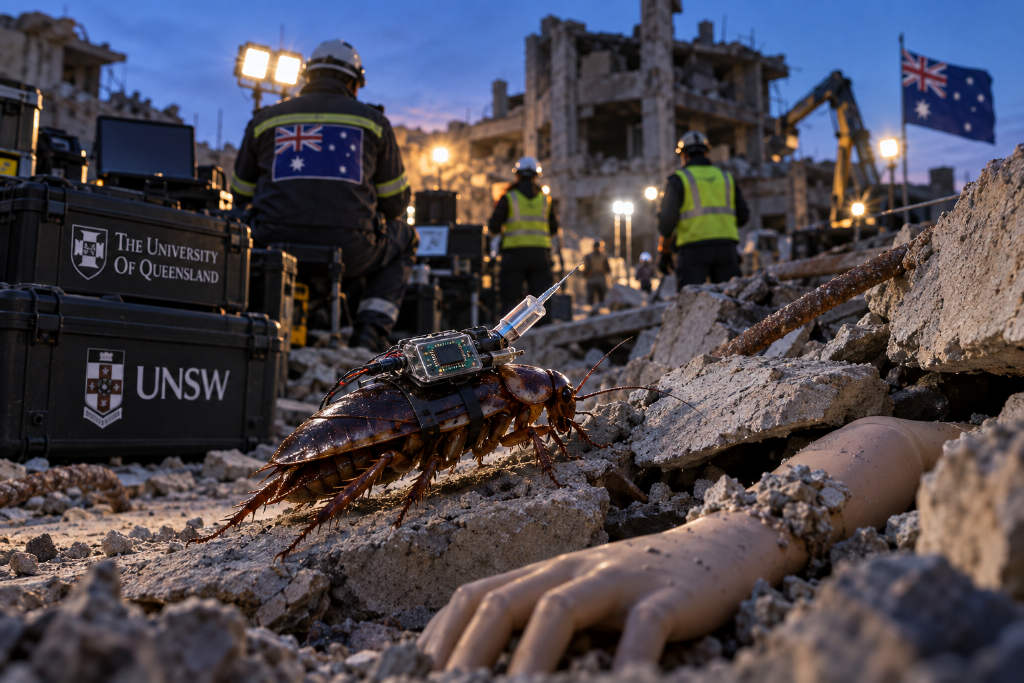
Technology2026-09-09 09:03:30Australian researchers turn giant burrowing cockroaches into cyborg rescue injectorsResearchers at the University of Queensland and the University of New South Wales have built a cyborg insect platform called Paraborg, combining the words Paramedic and Cyborg, by implanting electrodes and a microchip into giant burrowing cockroaches. The project is aimed at disaster rescue scenarios where conventional responders cannot easily reach trapped victims. In lab tests, the system achieved a 95% success rate for short-range injections at distances within 15 centimeters. When the full mission was counted, from departure through checkpoints to final injection, the success rate fell to 72%. The team also demonstrated a two-insect workflow, with one cockroach using a camera to locate a victim and another carrying an automatic injector to complete the task. Project lead and biorobotic engineer Thang Vo-Doan said the goal was to move beyond simply finding people in confined disaster spaces and enable insects to actually assist them. The work was published in Advanced Science. Even so, the researchers said the system remains far from field deployment, and Vo-Doan estimated that cyborg insect rescue teams would still need 5 to 10 years before they could be used in real disaster zones, assuming research funding and field testing continue.750
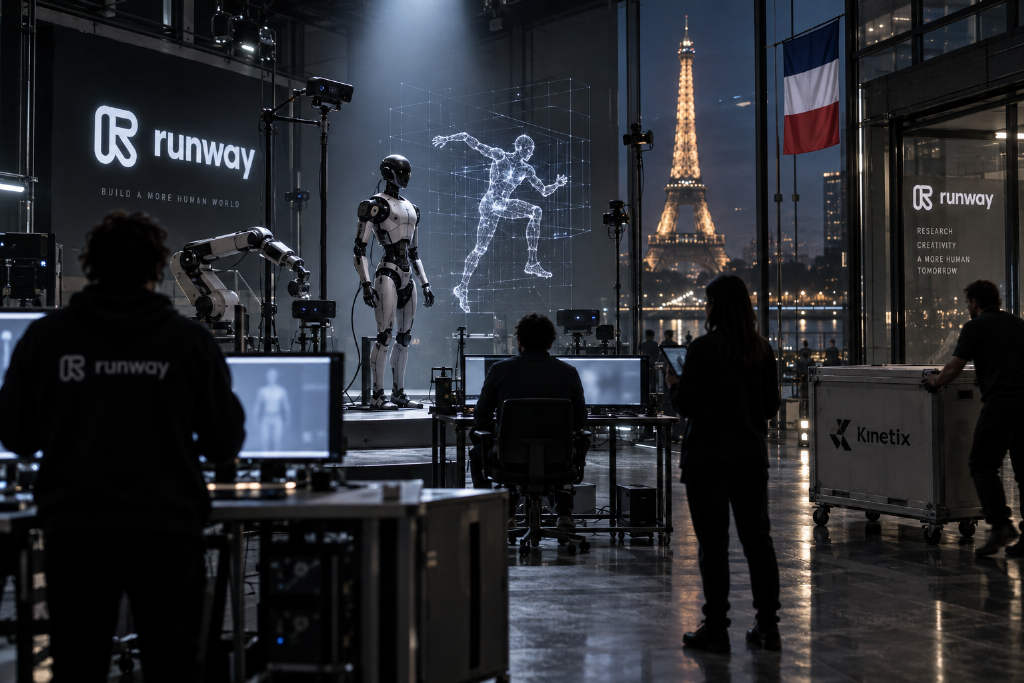
Runway2026-09-09 07:50:26Runway acquires Paris-based AI research firm Kinetix for robotics world model workRunway, a company focused on AI video and world models, has acquired Paris-based AI research firm Kinetix, according to BlockBeats. The deal value was not disclosed. As part of the acquisition, seven Kinetix employees will join Runway. Kinetix has been working on 3D human motion and video generation that follows physical rules. That team will move into Runway’s Paris research center, where its work will center on building world models for robots. The announcement ties Runway’s existing work in AI video and world models to a more specific robotics research direction. No additional transaction details were provided in the brief.870
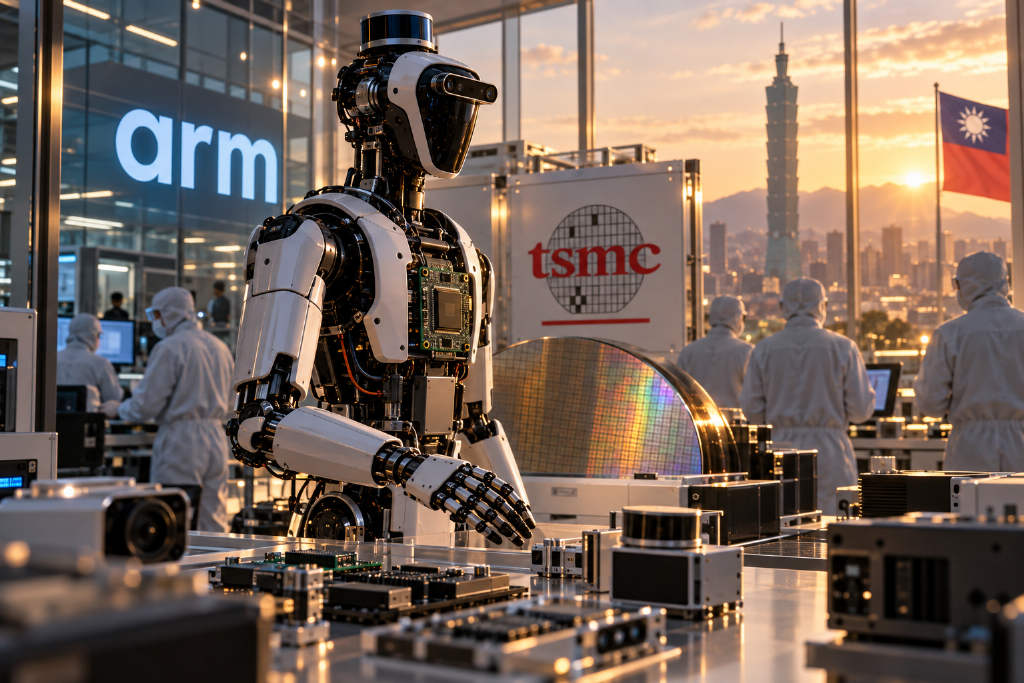
Arm2026-09-09 05:15:06Arm launches Physical AI design program as reports name nine Taiwanese partnersArm on Sept. 8 unveiled Arm Total Design for Physical AI, a new program that links more than 80 companies across the Physical AI stack to target robotics and autonomous systems. According to Commercial Times and other media reports cited in the source article, nine Taiwan-linked companies are among the first group, including TSMC, Realtek, ATL, Insyde, AAEON, Adlink-related names listed in Chinese, Silicon Motion, and NEXCOBOT under NEXCOM. Arm said the initiative spans software stacks, AI models, sensors, compute hardware, virtual platforms, and digital twins, with the aim of moving solutions earlier into development and validation while lowering integration risk. The company also introduced a Robotics Capability Framework with six levels, RL0 through RL5, to give the industry a shared way to describe and compare machine capability. Arm estimates Physical AI could create about $200 billion a year in compute opportunities in the 2030s. CEO Rene Haas said AI is likely to drive broader humanoid robot adoption within five years, though he also pointed to cost hurdles, unproven business models, and chip supply shortages that are slowing AI and data center deployment.1040
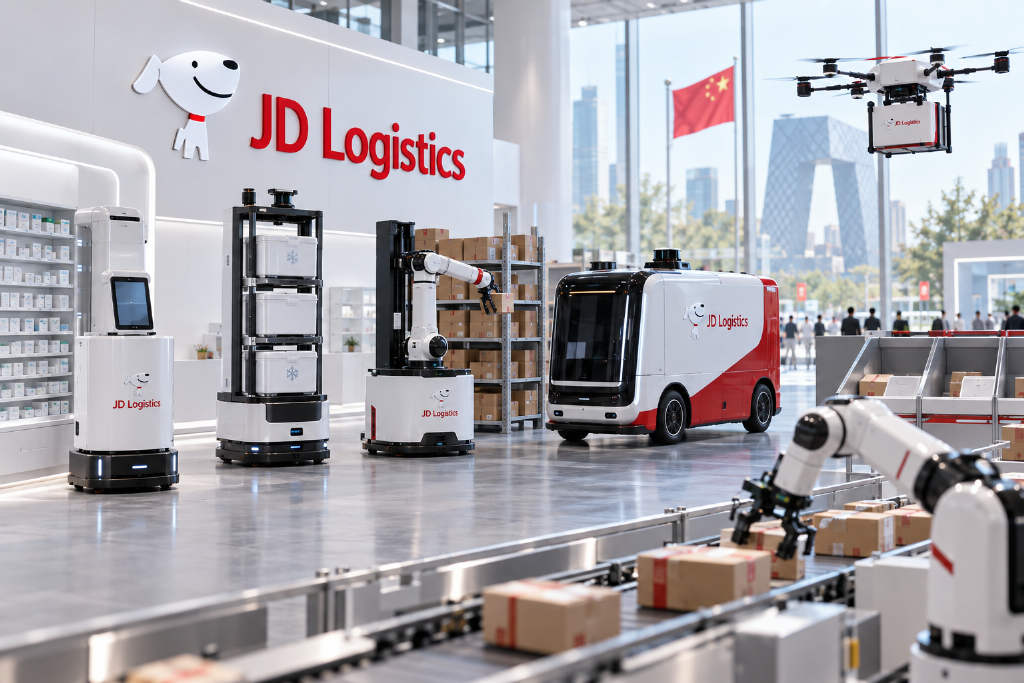
JD Logistics2026-09-09 03:58:50JD Logistics Unveils Five New "Wolf Pack" Robotics Products at JDD ConferenceJD Logistics introduced five new "Wolf Pack" robotics products and technologies at the JDD JD Global Explorers Conference, expanding its lineup across pharmacy automation, cold-chain logistics, warehouse picking, last-mile delivery, drone operations, and sorting. The release includes "Mother Wolf" for 7x24-hour unmanned pharmacy operations, the low-temperature version of "Smart Wolf" for cold-chain goods-to-person scenarios, and "Warehouse Wolf," a new embodied picking robot. JD Logistics also presented the Plus version of its sixth-generation "Lone Wolf" smart delivery vehicle with L4 autonomous driving capability, "Flying Wolf" L05, described as the industry's first logistics drone supporting fully unmanned operations, and "Alien Wolf," an embodied dexterous robotic arm already deployed at scale in sorting scenarios. JD Logistics said it is working to build the world's largest embodied robotics application fleet.750