
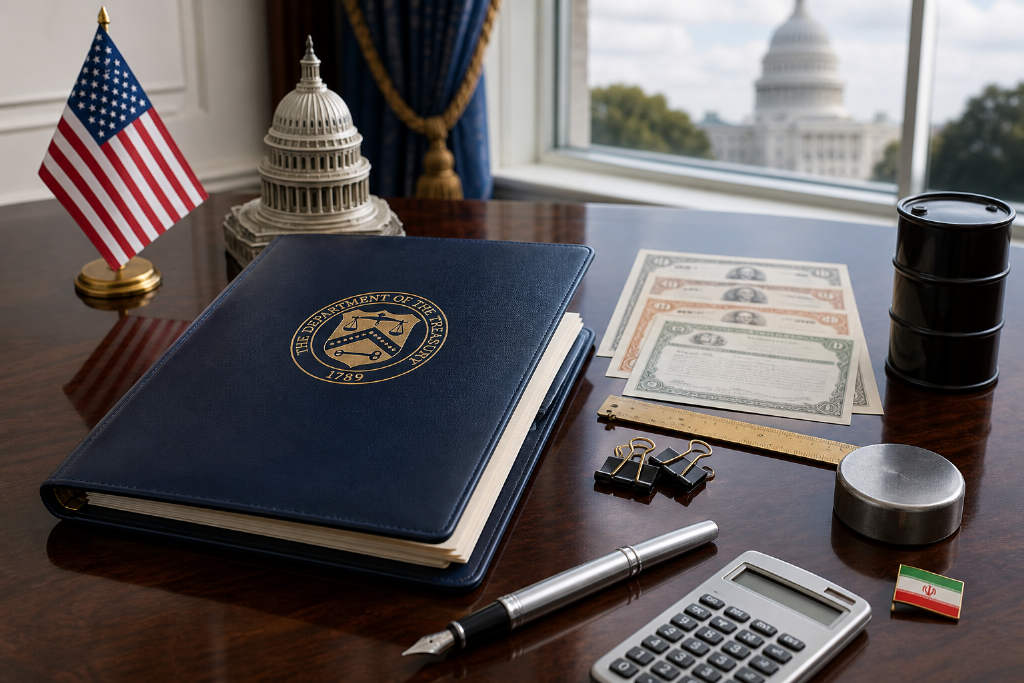
U.S. Treasury Secretary Bessent delivered a broad set of policy signals on Aug. 20, spanning the Treasury market, fiscal tightening, the dollar, corporate borrowing and Iran. The remarks came one day after the Treasury Department said it would double the size of its liquidity-support buybacks for longer-dated government bonds. The market response did not last long. By Thursday, long-dated Treasury yields had resumed their climb, and Bessent answered by saying the department still has many tools available, with the size of a single long-bond buyback potentially going beyond $4 billion.
He also said President Donald Trump had instructed him and Office of Management and Budget Director Russ Vought to lead a new fiscal consolidation plan, which he said could be announced this weekend or early next week.
Buyback relief faded in less than a day
On Aug. 19, the U.S. Treasury said it would at least double the size of liquidity-support buybacks for Treasuries in the 10- to 20-year and 20- to 30-year sectors. The cap for a single operation was lifted from $2 billion to at least $4 billion. The department framed the move as an effort to improve liquidity in the long-dated Treasury market.
After the announcement, Treasury yields briefly moved lower and the broader global bond market got a short-lived lift. That move reversed on Thursday. The 30-year Treasury yield rose about 7 basis points to 5.26%, back to the level seen before the Treasury announced the larger buybacks. The 10-year yield also touched 4.71%.
Bessent brushed off the move in an interview with CNBC, saying, 「Anything that happens in 24 hours is noise.」 He said the Treasury’s goal is to restore balance in a market that has turned weak and illiquid, so investors focus on fundamentals rather than headlines in thin trading.
Reuters said the relief produced by the buyback measure may only be temporary, with markets still focused on the U.S. fiscal deficit, inflation expectations and pressure from long-dated bond supply. TD Securities strategist Howard Du had said earlier that investors were not fully convinced Bessent could truly cap long-end yields. Franklin Templeton fixed income head Andrew Canobi said several forces are pushing yields higher and steepening the curve, including fiscal strain across major developed economies and stubborn inflation.
Bessent says the Treasury’s toolkit is far from exhausted
Asked whether the Treasury could step in again, Bessent gave a clear answer. He said the Treasury market is currently a thinly traded segment and that the department has a strong toolkit at its disposal. His phrasing was: 「We have a big toolbox, so stay tuned.」
He said part of the effort is to send a signal that the department believes current yields do not reflect underlying fundamentals. Bessent placed special emphasis on the 30-year Treasury market, which he described as suffering from very poor liquidity.
He did not set a hard ceiling on how large buybacks could become and said the scale would depend on conditions. Market reports cited in the source material said he even indicated that a single operation could exceed the newly announced $4 billion threshold. That left open the possibility of additional action rather than suggesting the Treasury had finished adjusting its approach.
Bessent also said the United States can work its way out of its debt burden through growth. In that framing, Treasury market operations may ease financing pressure at the long end, but the lasting answer still lies in stronger growth and higher productivity.
New fiscal tightening plan could be unveiled within days
Beyond market operations, Bessent flagged a more structural policy step. In the CNBC interview, he said, 「We may announce enhanced fiscal consolidation measures this weekend, early next week.」
He later told reporters that Trump had personally directed him and Russ Vought to co-lead the initiative. Bessent did not spell out the full contents of the plan, but he suggested it could include saving 「hundreds of billions of dollars」 through a fraud task force and cutting federal program money sent to states that he said had been wasted.
The timing is notable. Treasury data released Wednesday showed total U.S. public debt had surpassed $40 trillion for the first time.
Markets are divided on how much practical impact a fiscal consolidation package would have. Evercore ISI chief strategist Sarah Bianchi wrote in a Thursday note, 「We are skeptical that the administration can take meaningful action on the deficit. This week’s surprise buyback announcement had an effect that vanished quickly, and we think any deficit-related announcement would likely have similarly limited impact.」
Bessent, though, said the U.S. fiscal deficit has 「very likely」 peaked. He tied that view to a recovery in tariff revenue. According to his explanation, the government is rebuilding the import tax system after the Supreme Court overturned most of Trump’s tariff increases from last year, and tariff income is now recovering.
Speaking about the plan, Bessent said, 「Put it all together, the next several weeks and months are going to be very exciting because we are moving this plan forward.」
Short-bill funding and the debate over a fiscal version of QT
Another question raised by the expanded buyback program is where the money would come from. The Treasury statement issued on Aug. 19 did not specify a funding source. When it needs flexibility around financing, the department usually relies on Treasury bills with maturities of less than one year.
If the department is effectively issuing more short-dated bills to fund purchases of longer-dated Treasuries, the result could resemble a fiscal version of an Operation Twist-style maturity shift: more short-term debt, less long-term supply, and a change in the maturity structure of the market.
The Financial Times had previously cited market participants discussing that possibility. Bloomberg, also cited in the source material, referred to a Deutsche Bank strategist report that described the shift as 「QT has arrived.」
That does not make it conventional quantitative easing. Unlike the Federal Reserve, which can create bank reserves, the Treasury cannot simply create bills and use them directly as payment for long bonds. If short-dated issuance is used to finance buybacks, investors still have to absorb that short-term paper.
For that reason, some market participants argue the operation may add only limited net demand for long-duration assets. A Bloomberg opinion piece cited in the source said that even if buybacks grow, the additional demand would still be small relative to the enormous stock and issuance volume of long-dated U.S. debt, making it hard to change long-end supply and demand on its own.
That is one reason long-term yields moved back up so quickly on Thursday. The Treasury may be able to influence market liquidity and maturity structure, but buybacks alone are unlikely to erase concerns about deficits, debt supply and inflation risk.
AI investment is making companies less sensitive to borrowing costs, Bessent says
Bessent also addressed the rapid expansion in corporate bond issuance and the effect of AI investment on credit markets. He said companies appear 「almost insensitive」 to yields when issuing debt because they believe AI spending will generate strong returns.
He added that long-dated corporate issuance is interesting and said that if he were a corporate executive, he would pay closer attention to the middle of the yield curve, the so-called belly.
In his view, corporate investment will eventually lift productivity, which is why many issuers are not changing financing behavior much in response to short-term yield moves. That matches another source of pressure now facing bond markets: AI infrastructure buildout requires heavy capital spending, and technology companies and related supply-chain firms continue to tap bond markets, adding to credit supply.
Bessent’s emphasis, however, was on the longer-run payoff. In his framework, if AI spending does turn into higher productivity and stronger growth, then today’s relatively high financing costs may ultimately be offset by better returns on investment.
Bessent reiterates strong-dollar policy
On the dollar, Bessent’s message was more direct. He said the currency has been very stable and is returning to where it was two months ago.
Asked about dollar weakness after the Treasury expanded its buyback program on Wednesday, he repeated: 「We will continue to maintain a strong-dollar policy.」
The comment came after concerns had surfaced that direct Treasury intervention in the long-bond market could deepen investor unease over policy interference and risks around dollar assets. Bloomberg reported that some investors even saw the dollar as a potential casualty of the bond-market intervention. Bessent’s message pointed the other way: Treasury market operations do not mean the U.S. is abandoning a strong-dollar stance.
Iran plan to be detailed on Aug. 24, with more economic pressure in focus
Bessent also signaled a separate policy move on Iran. According to China Central Television, he said the U.S. would hold a press conference on Aug. 24, next Monday, to explain its action plan toward Iran.
CCTV cited him as saying, 「We have asymmetric information. I am not sure why oil has become the focus. If we apply maximum economic pressure, that means a large-scale military conflict is less likely.」
According to Xinhua, Bessent said the Trump administration would intensify economic pressure on Iran and threatened 「unprecedented economic isolation」 for the country. Xinhua also said he told U.S. allies, 「We want to overthrow this regime,」 and warned that they must either stand with the United States or stand against it.
Xinhua further said Bessent described the coming campaign in an interview with NBC as 「the largest, coordinated economic isolation in history」 and said the United States would impose the 「harshest sanctions in history」 on Iran.
Based on the Xinhua account cited in the source material, Washington is trying to force concessions from Iran by tightening economic, financial and trade pressure. One day before Bessent’s comments, Trump wrote on social media that Iran had missed its chance to reach a deal with the United States and announced what he called the most destructive economic action ever imposed on a country.
A closely watched part of Bessent’s latest remarks is that he linked stronger economic pressure to a lower probability of military escalation. Xinhua cited him as saying, 「If we apply maximum economic pressure, that means a large-scale military conflict is less likely.」
That points to a clearer shift in the administration’s tools on Iran, from military means toward economic and financial sanctions. Xinhua also cited U.S. media analysis saying an economic campaign against Iran would not be easy. Iran has lived under U.S. sanctions for a long time and has developed some ability to adapt, while the issue is also tied to global energy supply and shipping security through the Strait of Hormuz. That means tougher sanctions could still produce complicated spillover effects.
Bessent’s statement that more details will come on Monday suggests markets may soon get clearer information on the scope, targets and enforcement of the sanctions plan.
Bessent says he does not understand the oil price jump
Even as Washington prepares to increase economic pressure on Iran, Bessent said he was surprised by Thursday’s rise in oil prices. 「We saw oil surge today, and I really do not understand it,」 he said.
He added that the U.S. economic action set to be announced would make oil prices 「fall back faster.」
Oil has become an important variable for U.S. policymakers. Higher crude prices raise energy costs for households and businesses and can also push inflation expectations higher, which in turn can lift long-dated Treasury yields.
That links directly back to Bessent’s effort to stabilize the long end of the Treasury market. If developments around Iran keep energy supply risks elevated, rising oil prices and inflation expectations could offset part of the impact from the Treasury’s buyback operations.
Thursday’s market move, with the 30-year yield back at 5.26%, offered an early test. Treasury operations can change short-term trading sentiment quickly, but the broader direction of long-term yields still depends on wider fundamentals including the fiscal deficit, inflation, growth, energy prices, and supply-demand conditions in U.S. government debt.