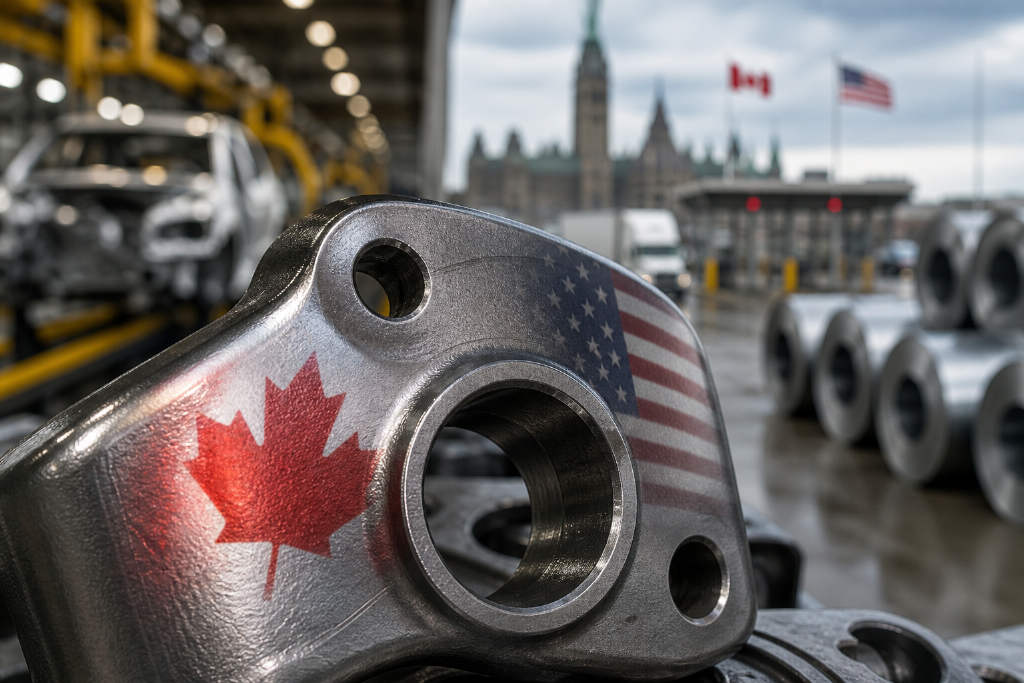
U.S. Treasury Secretary Scott Bessent said Donald Trump wants Canada to sit down for sincere negotiations after announcing higher tariffs on Canadian autos and steel. Trump said tariffs on cars, trucks, auto parts and steel would rise to 50% starting Jan. 1, 2027. He also said Canada had been "taking advantage" of the United States for years and pointed to what he described as a $60 billion trade deficit. Trump added that goods made in the U.S. would not face tariffs, and that Canada would no longer be treated "like a state." He said Canada conducts 95% of its business with the U.S., while the reverse is not true.
U.S. Treasury Secretary Scott Bessent said on Aug. 25 that Donald Trump wants Canada to sit down for sincere negotiations after Trump announced higher tariffs on Canadian autos and steel.
Trump said earlier in a post that Canada had been taking advantage of the U.S. for years. He said Canada imposed what he called outrageous tariffs on U.S. farmers and agricultural products, making it hard for those farmers to make a living, and said the policy had long created a $60 billion trade deficit between the two countries.
Trump also said tariffs on all cars, trucks, large and small, as well as auto parts and steel, would rise to 50% starting Jan. 1, 2027. He added that goods produced in the U.S. would not face tariffs.
He wrote that Canada would no longer be treated "like a state," and said Canada is one of the hardest countries in the world to deal with in trade and other matters. Trump added that Canada believes it deserves special treatment, but the U.S. does not need Canada and Canada needs the U.S. He said 95% of Canada’s business is with the U.S., while the situation is the opposite for the U.S. and Canada.
This article was originally published by Bit.Fan. For more cryptocurrency news and market insights, visit www.bit.fan. Disclaimer:
The market information, project data, and third-party content displayed on this platform are for industry information sharing only and do not constitute any form of investment advice or return commitment.
Cryptocurrency trading carries high risks. Users should fully assess their risk tolerance and make independent decisions. All profits, losses, and legal responsibilities are borne by the users themselves.