
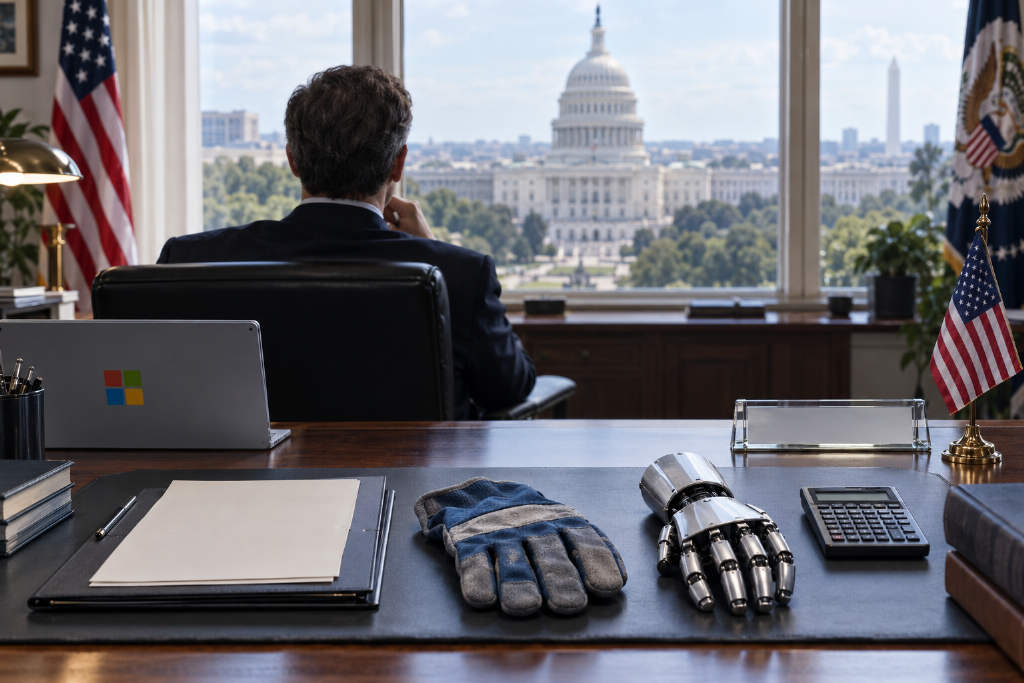
Microsoft co-founder Bill Gates has renewed his call to tax robots, arguing that machines or AI systems replacing human workers should pay the same Federal Insurance Contributions Act, or FICA, tax as people.
In an interview aired on Sept. 30 on the Ezra Klein Podcast, Gates proposed defining a "unit of labor" and then applying the same tax regardless of whether that work is done by a human or a robot.
Gates ties the proposal to tax continuity and social protection
According to the report, Gates said on X that the world has not yet fully recognized the threat posed by AI technology or the choices people will have to make. He added in the interview that taxing robots that replace human labor could both provide citizens with economic security and ensure the government continues to receive tax revenue.
In that framing, the proposal is not only about charging AI. It is also about keeping the tax pipeline in place so workers displaced by automation do not lose the social safety net tied to payroll-based contributions.
What FICA means in this context
FICA stands for the Federal Insurance Contributions Act, the U.S. payroll tax that funds Social Security and Medicare. A portion of an employee's wages is withheld each month, and employers are required to contribute an equal amount.
Gates' argument is that if a robot performs the same work as a human worker, that robot, or the company operating it, should be subject to the same tax.
Not a new idea for Gates
This is not the first time Gates has pushed the idea of a robot tax. The report says he first raised the concept in 2016, when he argued that many occupations could eventually be replaced by computers and that automation should be taxed to fill the gap left behind.
This time, he presented a more concrete path for implementation. Rather than taxing a "robot" in a loose sense, he suggested taxing a defined unit of labor, with the same tax applied no matter who or what completes the work.
Crypto tax legislation was also mentioned the same day
The report also says that on the same day Gates made the remarks, Republican members of the U.S. Senate formally introduced a cryptocurrency tax bill. In the article's wording, that points to two tax policy tracks moving in parallel in the second half of 2026 in the United States: AI tax and crypto tax.