


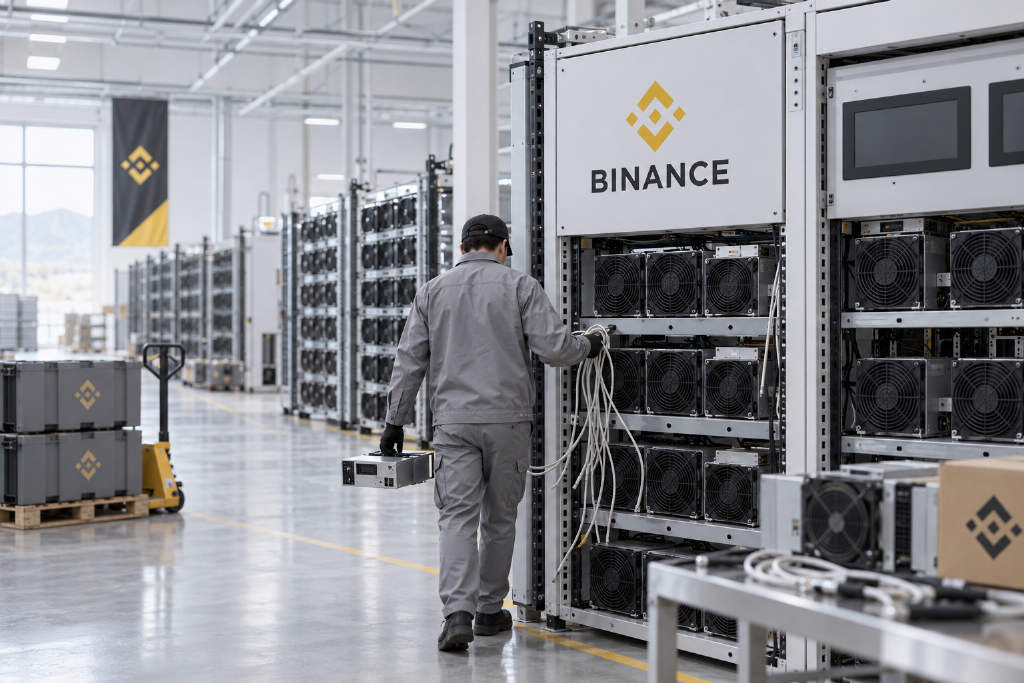
Binance will shut its bitcoin mining pool and related services on Nov. 10, giving miners about four weeks to move their computing power to another provider.
The closure comes as the pool’s share of the network has dropped sharply. According to Hashrate Index, Binance Pool was estimated at 26 EH/s in December, equal to 2.3% of Bitcoin’s network. Its latest table shows the pool at about 9.2 EH/s, less than 1% of the network and ranked 11th. That is a decline of roughly 65%.
CoinDesk reported that Binance launched the bitcoin mining pool in April 2020. Since the end of last year, the computing power pointed at the service has fallen by nearly two-thirds.
Shutdown timeline and customer deadlines
Earlier this week, Binance said Binance Pool, Pool Savings, Cloud Mining, its transaction accelerator and related services will close at 7 a.m. UTC on Nov. 10. The exchange said the decision followed an ongoing review of its products and services. It did not provide a financial explanation.
For miners, the immediate issue is where to send their machines next. After the cutoff, Binance will stop crediting mining shares, the records of work used to calculate payouts.
Pool Savings users must redeem their positions. Anyone still waiting for a final payout must complete the required identity verification by 11:59 p.m. UTC that same day.
Binance also said pool pages will disappear permanently on Nov. 24, leaving customers another two weeks to download records and check payout status.
Why the pool’s hashrate matters
One exahash per second means a quintillion guesses every second at the computational puzzle that leads to a bitcoin block reward. A mining pool combines work from many machines so operators receive more regular payouts instead of waiting to mine a block on their own.
Binance used the full pay-per-share, or FPPS, payout model. Under that structure, the pool pays miners for the work they submit and takes on the risk that the pool finds fewer blocks than expected.
From expansion plans to exit
Four years ago, Binance was still offering to finance miners’ expansion. In October 2022, it announced a $500 million lending program through the pool, offering secured loans with terms of 18 to 24 months and interest rates of 5% to 10%.
The closure notice does not mention that lending program and does not disclose whether any loan balances remain outstanding.
Fewer pool operators remain
Binance is not the only company to leave the business. SBI Crypto shut its mining pool on July 31 after accounting for roughly 2% of Bitcoin’s computing power. Crypto exchange OKX ended its mining pool services in February 2024.
In a December report, Hashrate Index described Binance Pool as the last surviving pool from the period when exchanges were expanding into mining.
Poolin, once the largest mining pool with nearly a fifth of global hashrate, also filed for bankruptcy in July, owing about $173 million. The report said its problems involved frozen wallet funds and stalled Texas mining sites, while its share of pool hashrate had already been near zero for years.
Block production is becoming more concentrated
As the number of pool operators shrinks, the largest firms are taking a bigger share of block production. Hashrate Index’s latest table shows Foundry USA, AntPool and F2Pool together account for about 64.2% of Bitcoin’s network. In December, the top three controlled 61.4%, and ViaBTC held the third spot instead of F2Pool.
Traditional mining pool operators decide which transactions the machines in their pools work to confirm. A pool shutdown narrows the list of providers available to miners in a business that influences which bitcoin payments are included in blocks.
Miners can still redirect their hardware to smaller providers, and pool shares do not determine ownership of the machines themselves.
If all of Binance’s remaining computing power moves to the three largest pools, their combined share would rise to roughly 65%, assuming the rest of the network stays unchanged. Binance has not said where its remaining miners are expected to go.