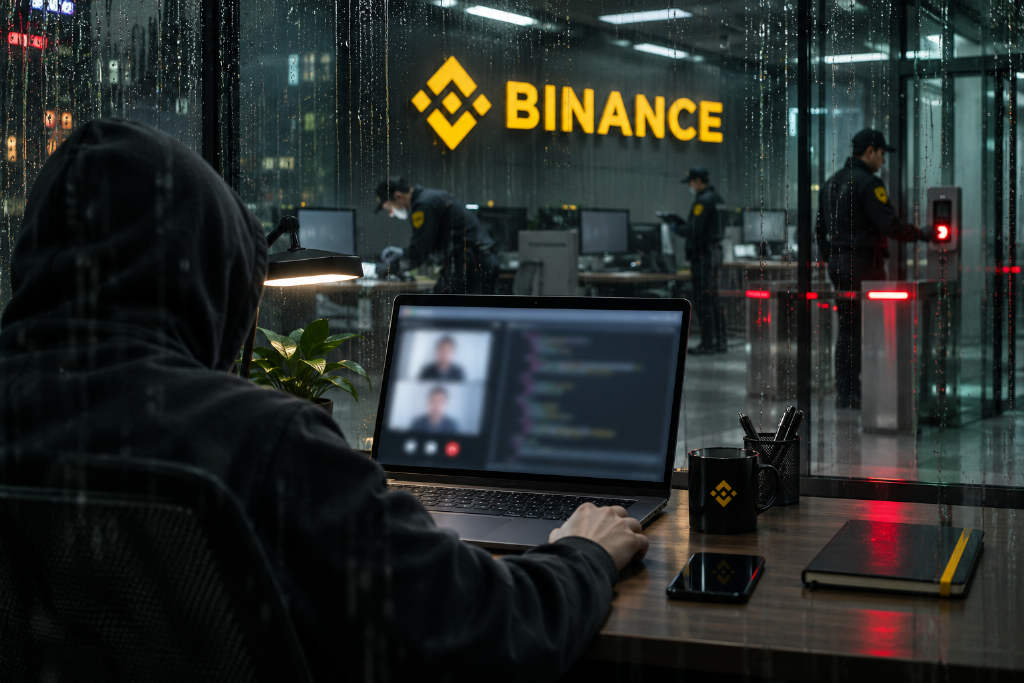
Binance Chief Security Officer Jimmy Su said in a July interview that fake job interviews can lead employees to run malicious code on company devices. The code may give attackers control of a device, steal credentials and help them penetrate internal networks. In September, a Binance software engineer downloaded a malicious programming assignment to a work computer during a fake interview. Binance's preliminary investigation found that the incident formed one stage of the multi-stage attack behind an October theft. Su said attackers may disguise malicious activity as routine technical assessment steps to evade antivirus tools. Binance's later investigation found that obfuscation and other evasion techniques allowed the malicious assignment's installer to bypass endpoint security tools. The exchange said it had blocked 57 suspected cyber threats linked to North Korea so far this year, or about one every five days. After the October attack, Binance said it strengthened device and access controls, rebuilt affected wallet systems and internal AI tools, and increased investment in endpoint protection and development-environment security. ChainCatcher reported Su's remarks and the findings Binance provided about the incident.
Binance Chief Security Officer Jimmy Su said in a July interview that fake job interviews can trick employees into running malicious code on company devices. The code can give attackers control of a device, expose credentials and help them breach internal networks.
In September, a Binance software engineer downloaded a malicious programming assignment to a work computer during a fake interview. Binance's preliminary investigation found that the incident became one stage of the multi-stage attack behind an October theft. Su said attackers may present malicious steps as routine technical assessments to get around antivirus tools. Binance later found that obfuscation and other evasion techniques helped the assignment's installer bypass endpoint security tools.
Binance said it had blocked 57 suspected cyber threats linked to North Korea so far this year, at a rate of about one every five days. After the October attack, the company said it strengthened device and access controls, rebuilt affected wallet systems and internal AI tools, and increased investment in endpoint protection and development-environment security.
This article was originally published by Bit.Fan. For more cryptocurrency news and market insights, visit www.bit.fan. Disclaimer:
The market information, project data, and third-party content displayed on this platform are for industry information sharing only and do not constitute any form of investment advice or return commitment.
Cryptocurrency trading carries high risks. Users should fully assess their risk tolerance and make independent decisions. All profits, losses, and legal responsibilities are borne by the users themselves.