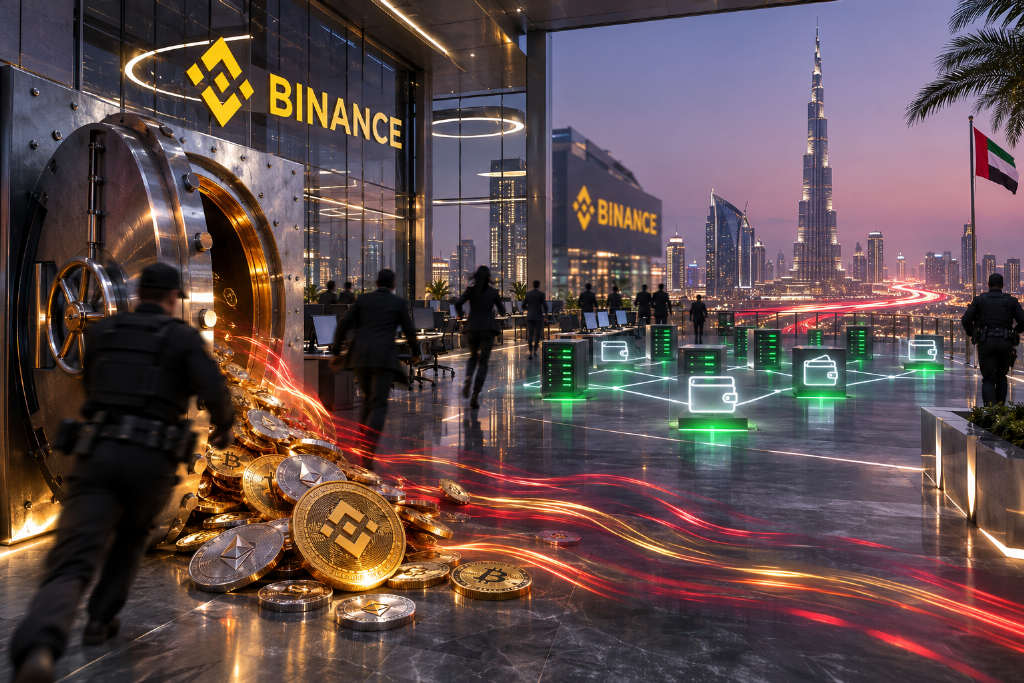
Foresight has published an opinion piece by Daoshuo Blockchain on the fallout from last week’s Binance theft incident. The article says the amount involved was assessed as the largest theft in the history of the crypto ecosystem, that a broad range of assets was caught up in it, and that prices across a sizable group of crypto assets were hit hard. On that basis, the author writes that the episode can be viewed as a crisis for the crypto ecosystem.
Even so, the author says the incident did not affect any of his decisions or alter his judgment on the future development of crypto. Using the same framework he says he applied in a previous discussion of the macro economy and economic crises, he breaks the issue into two questions: what it means for the broader crypto ecosystem, and what it means for Binance.
Short-term damage, no long-term change to crypto’s direction
On the wider ecosystem, the article’s conclusion is blunt. In the short run, it says, the impact is real and clear, touching morale, market conditions and confidence. In the long run, the author says, the impact is zero because the future of crypto does not lie with Binance, but with decentralized platforms and decentralized ecosystems.
He then turns to what he sees as the more important question for readers: the effect on Binance’s own future development.
Whether Binance becomes “another FTX” depends on its business model
The article says many people online are focused on whether Binance could become a second FTX. To judge whether that concern is justified, the author argues that investors should start with the company’s business model.
That means looking at cash flow, liabilities and leverage. The questions he lists are straightforward:
- Can Binance generate enough cash flow in the future, and can its current reserves absorb the loss from this incident?
- Does it have liabilities, and if so, could those liabilities worsen because of the incident and affect ongoing operations?
- Does the company use leverage in daily operations or investments, and if it does, could that leverage become more dangerous after the incident and lead to a “brittle break” in the business?
If none of those issues exists, the article says the conclusion is simple: there may be short-term effects, but no long-term damage. If even one of those points is unclear, the conclusion is also simple: there may be short-term effects, and the long-term outlook deserves a high degree of caution.
The author adds that if the final judgment is that long-term development warrants caution, then investors should be very careful.
Using BNB as an example for post-incident decision-making
The article then shifts to how investors might deal with Binance’s token after the incident, using BNB as an example. The author notes that he does not own BNB and will not buy BNB, and says the example is only meant to illustrate the framework.
He says any decision on how to handle Binance’s token should be based on three factors: business model, corporate culture and price. The business-model part has already been discussed, so the next step is corporate culture.
Corporate culture means whether token holders’ interests were protected
According to the article, corporate culture should be judged by whether the company has historically placed a high priority on the interests of token holders. The author suggests asking several questions:
- Has the company used its own reserves in the past to cover losses suffered by token holders?
- Has it gone through similar cases before?
- If it has, did it publicly release detailed crisis-response measures and put related safeguards in place?
If those issues were handled well in the past, the author says the conclusion is again fairly direct: Binance is a company that values shareholder interests. If its handling of those matters was vague, then its commitment to shareholder interests is open to doubt.
He writes that if either the business model or the corporate culture raises concern or suspicion, his own approach would be not to continue holding BNB and certainly not to buy it.
Price matters only after the first two tests
If the business model and corporate culture hold up under review, the author says he would continue to hold the token and might even look at whether the sell-off created by the incident offers a good entry point.
The test, he says, is whether the post-drop price is reasonable — in other words, whether the market capitalization after the decline is far below intrinsic value, defined here as the discounted sum of future free cash flow.
If market value is far below value, the incident may actually have created a strong buying opportunity. If market value is not far below value, then the price decline caused by the incident should be ignored, the article says.
If you cannot understand it, do not buy it
The piece says this process involves many factors and angles, and that some investors may not have thought through the issue in that much detail when they first bought Binance’s token.
By the author’s current standards, those investors should not have bought or held the token in the first place. His rule is that when reviewing the investment value of a company or any asset, if you cannot clearly understand any one of the three pillars — corporate culture, business model or an appropriate price — then you should not buy it and should not invest in it.
He goes on to say that if someone bought under those conditions and is still holding, it remains a mistake whether the position is in profit or at a loss. If it were his own position, he writes, he would sell immediately regardless of the outcome.
The article closes with a simple answer to readers who may feel this kind of analysis is too complicated: if you cannot figure it out, then do not invest. Put the money in a bank time deposit and earn interest instead.
It also cites a line the author attributes in substance to Duan Yongping: earning bank interest may not beat inflation, but it is still better than investing recklessly.
The piece ends with a risk warning, saying the market carries risk and the article does not constitute investment advice. Readers should consider whether any opinion, view or conclusion in the article fits their own circumstances and bear responsibility for their own investment decisions.