
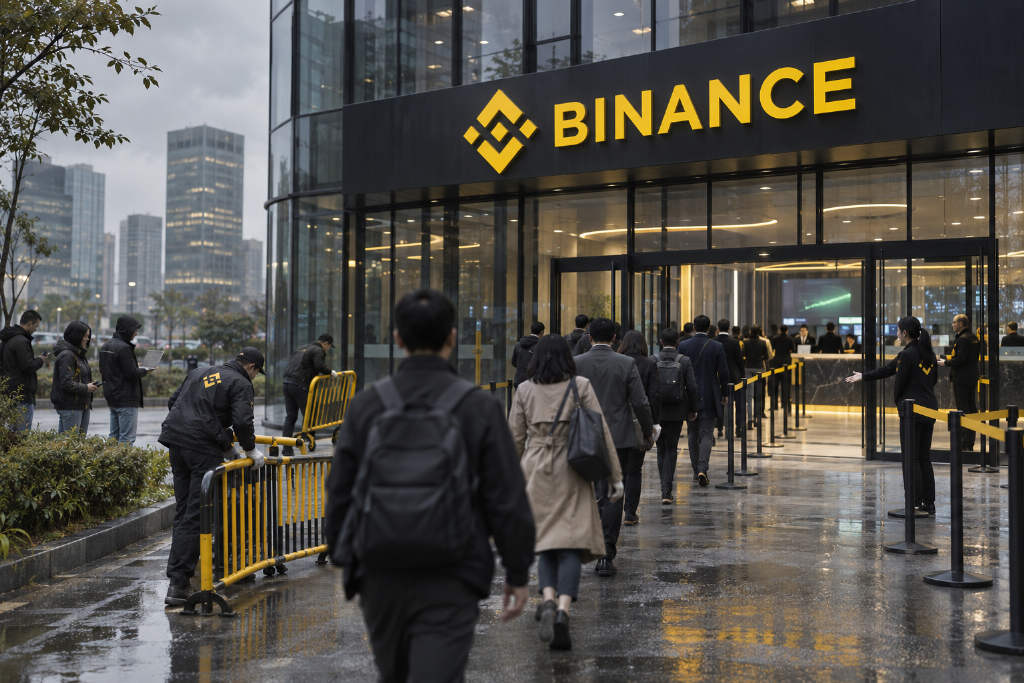
Binance recorded about $2.3 billion in net inflows over the past 24 hours, reversing a run of withdrawals that had followed the reported $6.3 billion theft one week earlier. Data from DeFi platform DefiLlama, which tracks centralized exchange flows, showed Binance ranked first among major exchanges after posting a sharp turnaround from more than $7 billion in net outflows on Monday.
Other exchanges were far behind over the same period. DefiLlama data cited in the report showed Bitfinex with about $280 million in net inflows and Bitget with roughly $127 million. On that basis, Binance alone drew in nearly eight times as much net inflow as second-place Bitfinex.
Binance said on X on Tuesday that, as of 3:00 a.m. UTC, hourly deposits had once again moved above hourly withdrawals. The exchange said that pointed to a pickup in user activity and more stable fund flows.
From withdrawal halt to inflow recovery
The timeline in the report traces the shift over the past week. After news emerged last Thursday that about $6.3 billion in assets had been stolen, Binance halted withdrawals on Friday for security checks. It resumed withdrawals in stages starting at 6:00 a.m. UTC on Sunday, then reopened some fiat withdrawals on Monday. By Tuesday, net flows had turned positive.
In its fourth recovery progress update released on Sunday, Binance said it had replenished about 95% of the affected assets. The remaining roughly 5% consisted of less liquid tokens that would need to be repurchased gradually through market buying and over-the-counter, or OTC, trades, which would take longer. Binance said the losses would be absorbed by the company’s own resources and its Secure Asset Fund for Users, known as SAFU, and would not be passed on to customers.
Political fallout remains unresolved
Even as flows stabilized, the dispute over responsibility for the attack continued. The Federal Bureau of Investigation, or FBI, said last Saturday that North Korea was behind the attack. North Korea denied involvement on Tuesday, and Kim Yo Jong, the sister of Kim Jong Un, called the accusation 「absurd remarks」.
BlockTempo had also previously reported that Binance co-founder He Yi denied online rumors alleging that an engineer had been involved with a North Korean operative.
What comes next
The move back into positive net inflows suggests that panic withdrawals have, at least for now, eased. The report said the more important measure is whether withdrawal capacity itself has normalized, including limits, processing speed, and proof-of-reserves verification.
Binance said on Nov. 2 that it had completed a full zero-knowledge proof for its proof of reserves, or PoR. Users holding 10 major tokens can verify that their balances are backed at at least a 1:1 ratio, according to the report.
The article also contrasted the episode with the collapse of FTX in 2022, when customer funds were wiped out and the exchange went bankrupt. In Binance’s case, the report said the company chose to cover losses in full with corporate funds and SAFU.
Still, several issues remain open. The report said the market will be watching whether the remaining 5% of illiquid tokens can be bought back on schedule, and whether the FBI’s attribution to North Korea leads to tighter regulation or sanctions in the weeks ahead. It also noted that if risk assets become more volatile around the midterm elections, exchanges could face renewed withdrawal pressure, leaving the durability of this inflow rebound uncertain.



