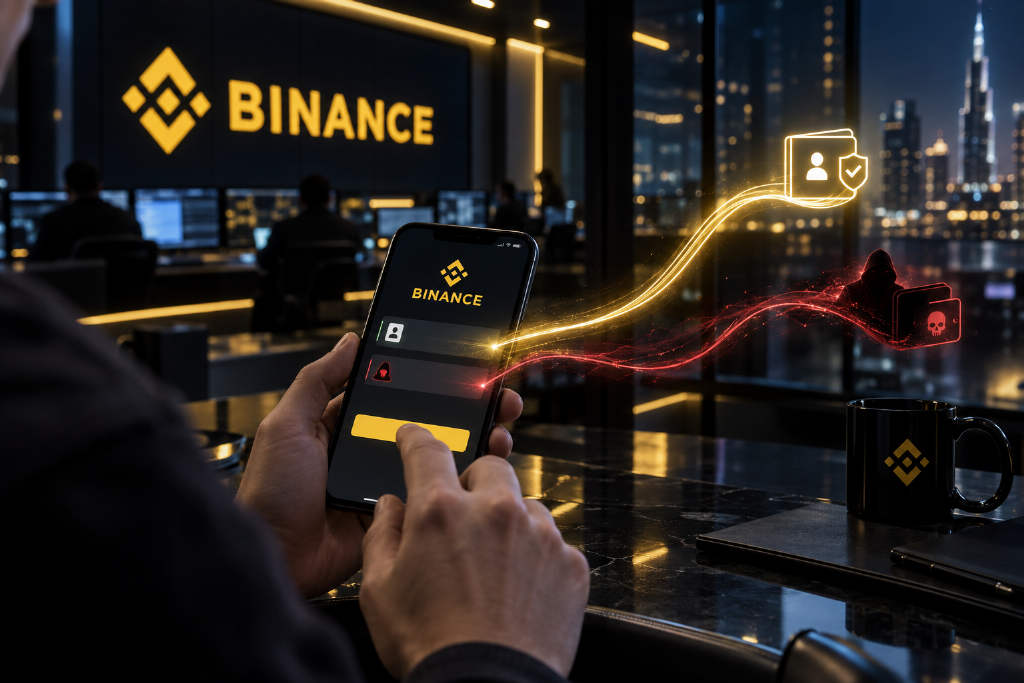
Binance has issued a security warning telling users to watch for an "address poisoning" crypto scam. In this type of fraud, attackers generate fake wallet addresses that closely resemble a user’s real address, increasing the chance that funds are mistakenly sent to the wrong destination during a transfer. The scam can steal assets without relying on a direct hack.
Binance said the tactic works by exploiting user error at the moment of transfer rather than breaking into an account or wallet. Because the fake address looks similar to a legitimate one, users may fail to spot the difference and send assets to the attacker-controlled address.
To reduce the risk, Binance advised users to carefully verify wallet addresses before making transfers and to enable security features such as an address book. The report was cited by U.Today and carried by Techub News.
Binance has put out a security warning telling users to stay sharp for an "address poisoning" crypto scam, according to Techub News.
Here’s how it works. Attackers make fake addresses that look a lot like a user’s real wallet address. The aim is simple: fool someone into sending assets to the wrong address during a transfer, so the money gets stolen without any direct hack.
Binance told users to check wallet addresses carefully before moving funds and to switch on security tools like an address book to cut the risk.
The item cited U.Today.
This article was originally published by Bit.Fan. For more cryptocurrency news and market insights, visit www.bit.fan. Disclaimer:
The market information, project data, and third-party content displayed on this platform are for industry information sharing only and do not constitute any form of investment advice or return commitment.
Cryptocurrency trading carries high risks. Users should fully assess their risk tolerance and make independent decisions. All profits, losses, and legal responsibilities are borne by the users themselves.