


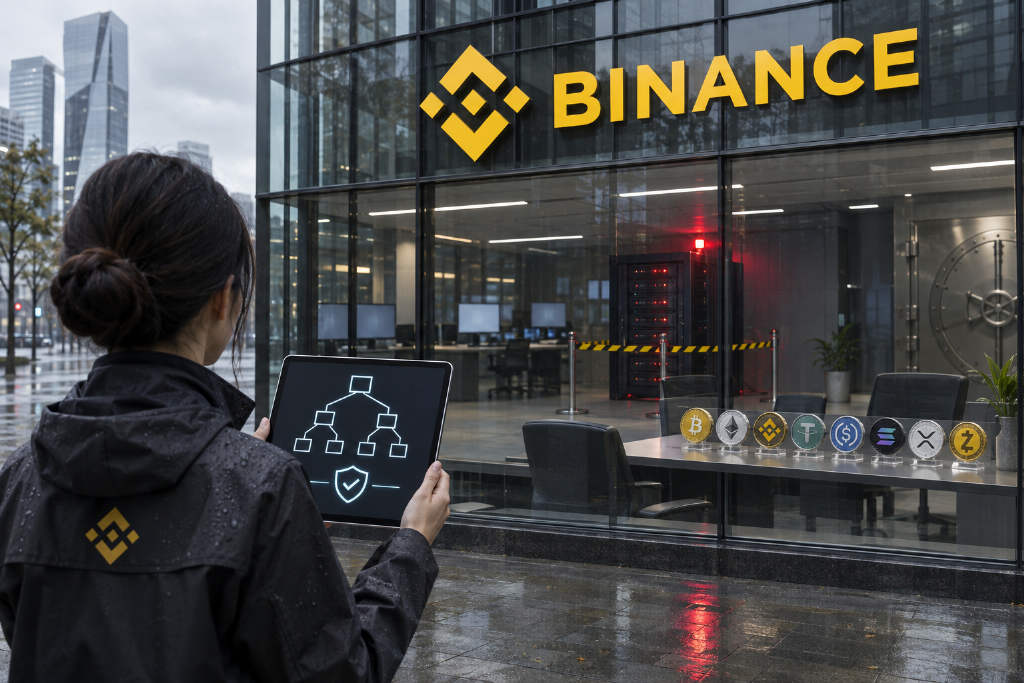
Binance said on Nov. 2 that it had completed the full zero-knowledge proof for its Oct. 31 proof-of-reserves snapshot, giving users holding one of 10 supported tokens a way to check that their balances are backed at least 1:1.
The proof covers BNB, BTC, ETH, RLUSD, SOL, USD1, USDC, USDT, XRP and ZEC. Binance took the snapshot at 00:00 UTC on Oct. 31, two days after attackers drained more than $6.3 billion from its hot wallets on Oct. 29.
How users can verify balances
Binance said its system combines a Merkle tree with a zk-SNARK. The Merkle tree lets a user confirm that their account was included in the snapshot. The zk-SNARK proves that total reserves cover what users are owed without exposing any individual balance.
To run the check, a user logs in, downloads Binance’s open-source verifier and runs it locally. The exchange said the verifier code is available in a public GitHub repository and has been independently audited.
Next snapshot set for Nov. 4
For now, the proof applies only to those 10 tokens. Binance said it plans a fresh snapshot on Nov. 4 that will include more tokens.
Yi He, Binance’s co-CEO, wrote in an X post that producing the proof takes about 40 to 50 hours after a snapshot is completed, with the timing depending on how many tokens are included.
The exchange also said the next phase of reopening withdrawals for more networks and assets was planned for Nov. 3, with a gradual rollout and more details to come.
How the Oct. 29 hack unfolded
According to TRM Labs, attackers drained more than $6.3 billion from Binance hot wallets across several blockchains on Oct. 29, with most of the funds moved in about 20 minutes. The exploit has since been attributed to a North Korea-backed group tracked by the FBI as TraderTraitor.
Binance initially said the breach may have involved a compromised laptop belonging to a DevOps engineer, which allowed the attacker to reach a service container and send unauthorized withdrawals. The exchange added that it had found no sign of a leaked wallet key.
Hours later, Binance CEO Richard Teng wrote that the attacker had not simply used one engineer’s permissions. About an hour after that, the exchange said further investigation had uncovered additional points of breach and described the incident as a complex attack.
On the Unchained podcast on Nov. 2, Pangolin Intelligence founder Jonty said, “It certainly looks like the wallet signing infrastructure inside Binance was compromised.”
On the same show, Opsek founder Pablo Sabbatella compared the incident to a bank’s check-writing pen. “They didn’t steal the check, but they were able to access the pen inside the bank and sign transactions,” he said.
Frozen funds and loss coverage
Binance said about $3 billion had been frozen onchain with help from blockchain partners. That includes funds frozen by stablecoin issuers Circle and Tether, as well as actions by protocols such as Arbitrum, whose Security Council moved assets out of an address tied to the exploit.
Binance halted withdrawals while it carried out security checks, then restarted them in phases on Nov. 1.
The exchange pledged to cover all losses using its SAFU emergency fund and company money, saying it had set aside more than $6.34 billion. Coverage had reached about 90% by Oct. 31 and roughly 95% by Nov. 1, Binance said.
The remaining 5% is held in tokens outside the 10 named in the proof, which Binance said are less liquid and slower to buy in size.
In a Nov. 2 statement, the exchange wrote, “Our commitment is unchanged: Binance will absorb the financial impact of the stolen funds, not our users,” adding that with the proof now generated, the backed portion of that commitment can be publicly verified.
Trust concerns spread beyond one exchange
For Ram Ahluwalia, who runs Lumida and co-hosts Unchained’s Bits + Bips, the breach hit more than one company. On the show’s Nov. 2 episode, he said digital assets as a category had failed to secure customer deposits and called that “incredibly disappointing.”
“It’s all about trust, it’s all about confidence,” he said.