

A string of recent security incidents in the digital asset sector has put platform safety back at the center of market attention. As attack methods keep changing, the risks no longer sit in a single wallet or one technical flaw. They can involve account permissions, private key management, asset transfers and third-party infrastructure at the same time.
For users, the more practical question is no longer simply whether a platform is safe. The harder test is whether abnormal activity can be detected and blocked earlier, whether critical actions carry enough authorization checks, and whether risk controls can still hold when the asset universe expands into U.S. equities, real-world assets, or RWA, and asset management.
Against that backdrop, global digital financial services platform BIT, formerly Matrixport, has released the BIT Trust Whitepaper V2.0. The document lays out the company’s current risk governance, security architecture, compliance oversight and independent verification mechanisms across security, compliance, transparency and verifiability. It also extends those disclosures to business lines tied to U.S. equities, RWA and asset management.
What a platform can do before risk turns into a loss
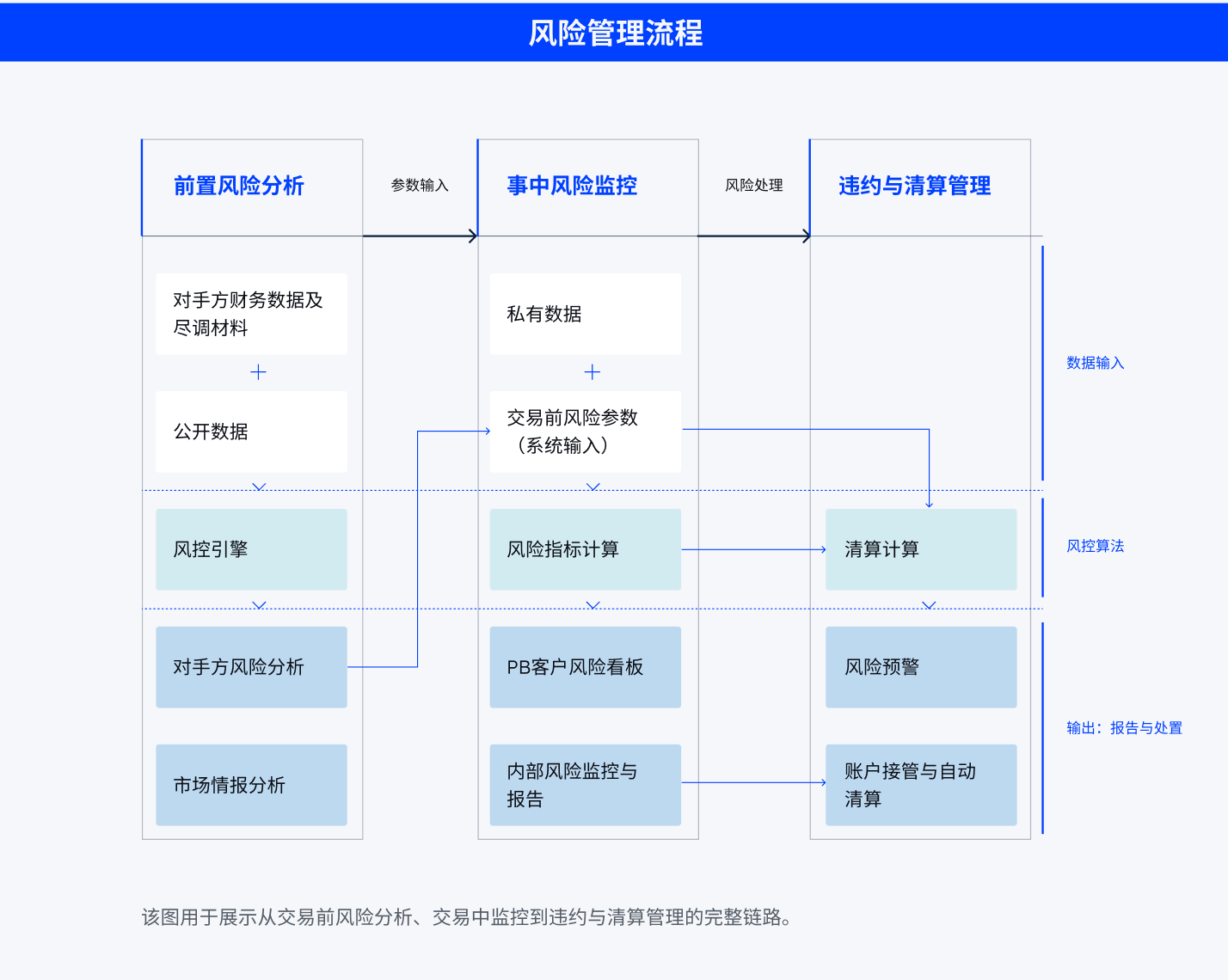
BIT says in the whitepaper that risk management should not be treated only as an after-the-fact response. It should run through pre-trade assessment, in-trade monitoring and post-trade handling. In business scenarios such as financing and collateralized services, the framework is applied through due diligence, risk parameter setting, real-time monitoring, risk alerts, and default and liquidation processes.
Those controls show up most clearly in areas users can feel directly: account and asset protection. According to the whitepaper, BIT conducts 24-hour dynamic monitoring of high-risk behavior including unusual logins, unfamiliar devices and abnormal withdrawals. Depending on the risk level, the system can trigger alerts, delayed processing or manual review. The stated aim is not just to determine what happened after an incident, but to identify warning signs during the event and step in as early as possible.
For digital asset protection, BIT says most assets are held in cold wallets. Private keys are stored in hardware security modules, or HSMs, certified to FIPS 140-3 Level 3, and cannot be accessed or exported in plain text.
The whitepaper also addresses internal decision-making when business goals and security requirements clash. If a product plan, system architecture or launch change presents a material security risk, or fails to meet security baselines and compliance requirements, BIT says its security team has veto power. For critical actions such as asset transfers, permission changes and trading instructions, the platform applies a four-eyes principle, requiring the participation of at least two authorized personnel.
The logic behind that structure is not a promise that risk will never emerge. It is an attempt to move security controls forward in the process by identifying anomalies earlier, building constraints earlier and reducing the impact of a single point of failure.
How security changes as business lines expand beyond digital assets
Once a platform moves from digital assets into U.S. equities, RWA and asset management, the meaning of security changes with it. Users are no longer focused only on whether an account is safe or how crypto assets are stored. They also want to know who operates the business, what kind of regulatory oversight applies, and how assets move through each layer of the structure.
BIT uses its U.S. equities business as one example. In the updated whitepaper, the company provides added detail on regulatory, account, clearing and custody arrangements for that segment. BIT says its securities business is operated by Matrix Gelephu Pte Ltd and supervised by the Gelephu Financial Services Office, or GFSO. It adds that the business is supported by applicable regulatory and licensing arrangements, client asset protection mechanisms and the participation of licensed third-party financial institutions.
From a user’s perspective, what appears on screen as a single buy order connects to a chain of operational, regulatory, execution, clearing and custody processes behind the scenes. BIT’s framing in the whitepaper is that as a financial platform widens its business scope, the matching risk governance and compliance structure must widen as well, rather than stopping at the addition of new product access points.
The same approach is applied to other business lines. The new version of the whitepaper adds regulatory and governance information for Matrixport Asset Management, or MAM, and outlines the compliance presence of BIT group entities across multiple jurisdictions, including Hong Kong, Bhutan, Singapore, Switzerland, the UK, the US and the British Virgin Islands.
From digital assets to traditional financial assets, the document presents not a one-off safety mechanism for a single product, but a risk governance and trust framework designed to extend with the platform’s business boundaries.
Why trust also needs to be independently verifiable
The whitepaper argues that risk control addresses how risks are identified and contained. For a financial platform spanning different assets and business types, though, telling users that risk controls exist is still not enough. If security, compliance and asset arrangements can only be explained by the platform itself, trust remains dependent on the platform’s own account.
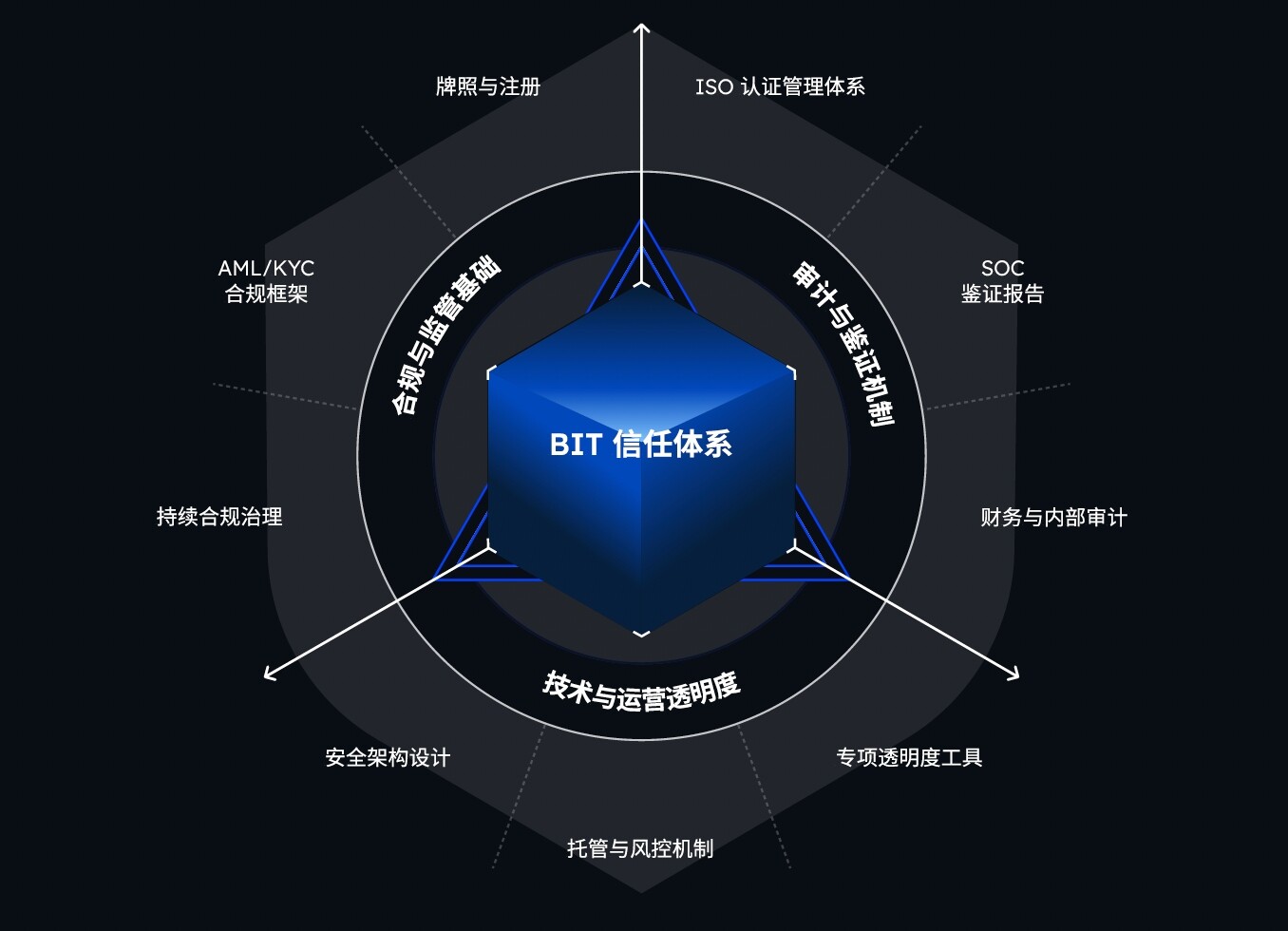
BIT therefore places regulatory and compliance foundations, independent audit and assurance mechanisms, and technical and operational transparency as the three pillars of its trust system. In that structure, trust is broken down into more concrete questions: who regulates the platform, how assets are protected, how risk is controlled, and whether those arrangements can be checked independently.
On audit and assurance, BIT says it uses ISO management system audits, SOC independent attestation, annual financial audits and internal audits. Across different entities and business lines, those measures are intended to form a multi-layered and complementary verification system rather than relying too heavily on any single audit or assurance mechanism.
In the whitepaper’s framing, transparency answers whether information can be seen. Verifiability answers whether that information can be independently checked.
With security once again placed in front of every platform in the industry, BIT’s document is aimed less at repeating a claim of safety than at showing the mechanisms behind that claim. The whitepaper says trust does not come from a single promise or a single audit. It comes more from long-term institutional operation and external verification. Security has to keep running, and trust has to keep being verified.
Full version of the BIT Trust Whitepaper V2.0: https://www.bit.com/whitepaper