


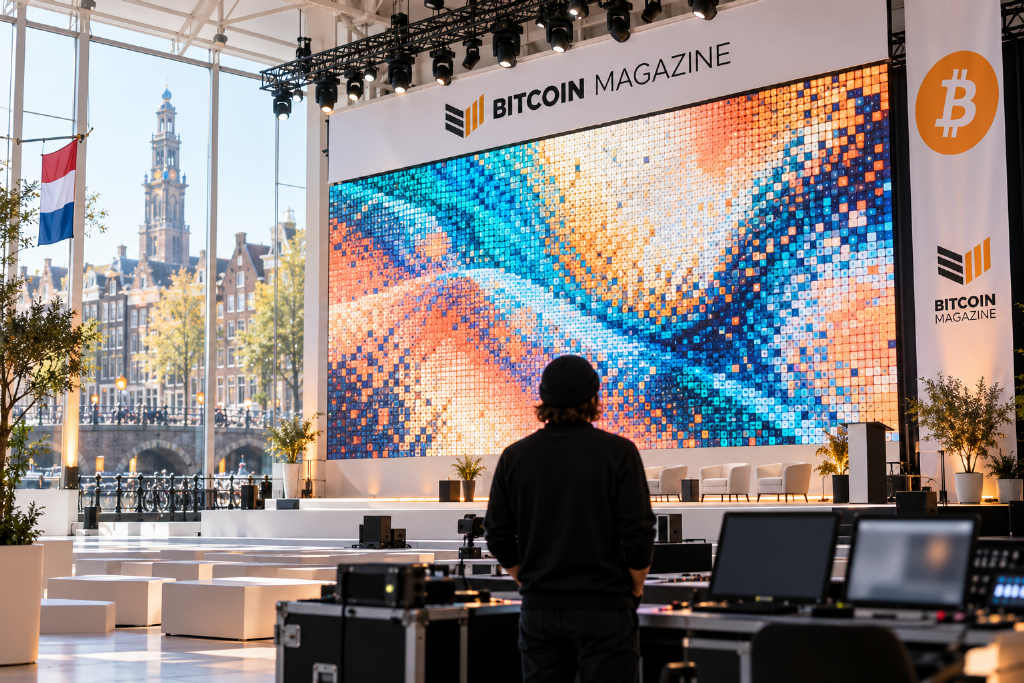
Bitcoin Magazine has published a long profile of “Mosaic,” an evolving artwork by generative artist BitArt that treats the Bitcoin network itself as artistic material rather than illustrating bitcoin through familiar symbols. Developed through Bitcoin Art Society, the project translates the numerical properties of satoshis, or sats, into color and spatial coordinates. As new contributions arrive, the composition keeps expanding into a field of pixels that can resemble digital textiles, early computer graphics, or abstract painting.
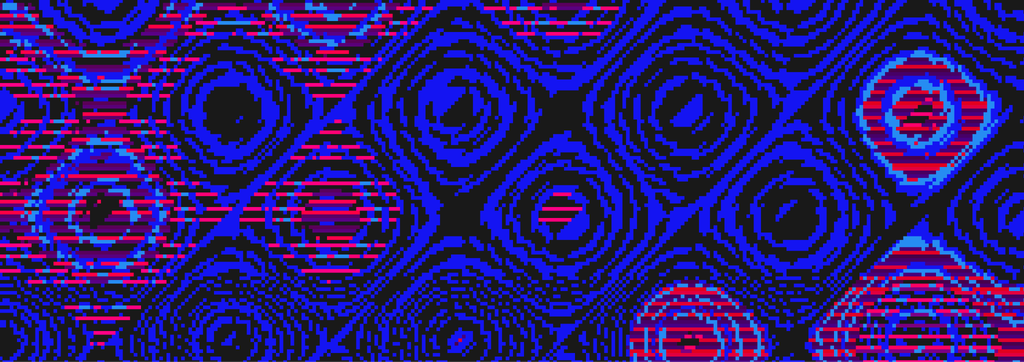
In the system behind the work, satoshi positions and unspent transaction outputs, or UTXOs, serve as inputs for a rule-based structure that determines how the piece appears. The article says BitArt starts with Bitcoin’s underlying data and lets an image emerge from it, instead of beginning with a fixed picture and mapping data onto it afterward. That places “Mosaic” inside a generative framework built from instructions and interpretation rules.
From historical mosaics to satoshis
The report opens by linking the project to the older tradition of mosaic-making. Classical mosaics were assembled from fragments of stone, glass, and ceramic, from Roman floors to Byzantine churches. In BitArt’s version, those fragments are sats, the smallest units of bitcoin. Each contribution adds another element to a composition that keeps growing over time.
Bitcoin Magazine compares the approach to Sol LeWitt’s idea that an artwork can exist as a set of instructions rather than as a single handcrafted object. It also places the work alongside generative artists such as Vera Molnár and Manfred Mohr, who used mathematical systems and computational procedures to produce visual compositions. “Mosaic,” the article argues, extends that lineage into an economic network shaped by transactions and human decisions.
A work with more than 127 million tiles and 1 billion layers
According to BitArt, “Mosaic” now contains more than 127 million tiles and over 1 billion layers. At a viewing speed of one layer per second, seeing every layer would take more than 30 years.
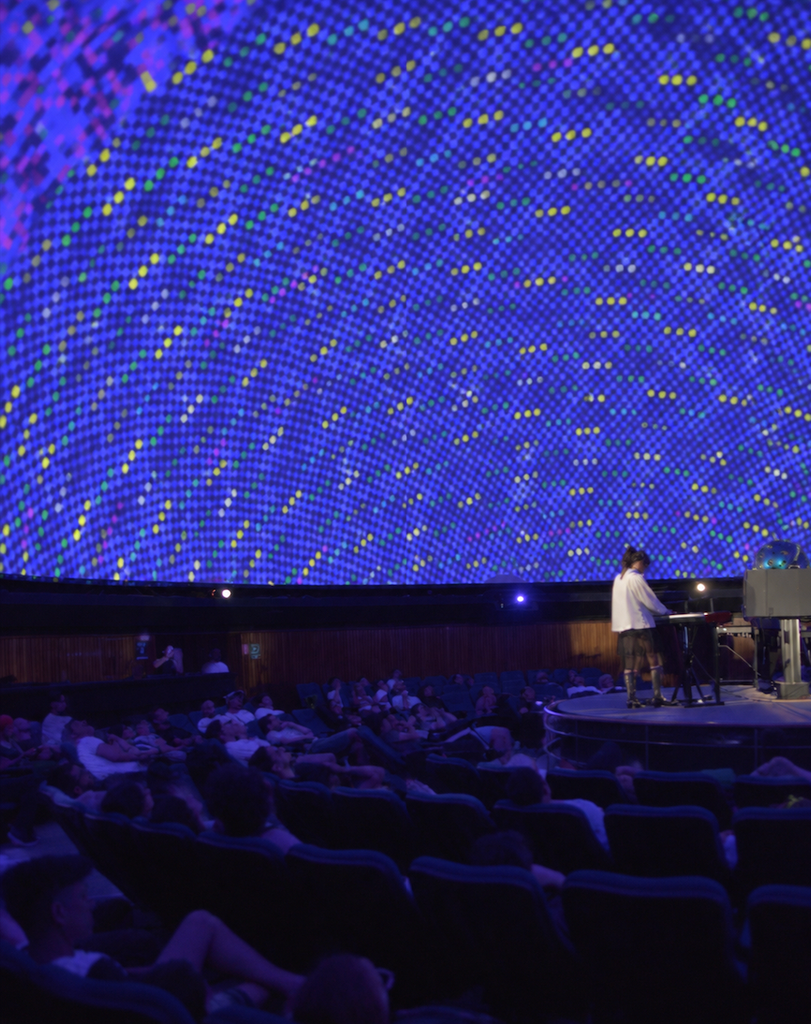
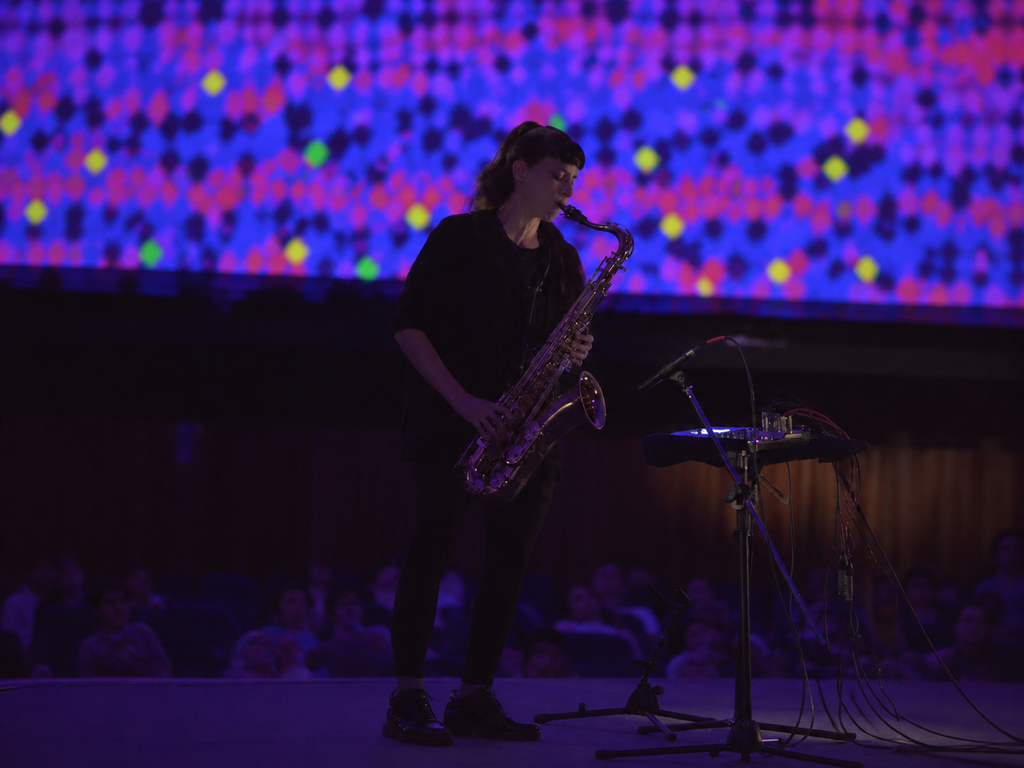
The project has also moved into sound. Its musical component uses the same satoshi data that drives the imagery, turning numerical values into an evolving score. The article presents the visual and sonic sides together as a single audiovisual work shaped by Bitcoin’s underlying structure and by the contributions of participants.
Bitcoin Art Society and the question of preservation
These experiments sit inside the broader mission of Bitcoin Art Society, or BAS, which was founded by Serge Ajamian and Yara Al Chammaa to support the creation, exhibition, and preservation of digital art on Bitcoin.
For Al Chammaa, preservation is tied to personal experience. The article says the 2020 Beirut Port explosion destroyed much of the artwork housed in her family’s gallery, leading her to rethink how cultural heritage might survive physical destruction. That experience helped shape BAS’s interest in bitcoin as a possible medium for preserving cultural works beyond the vulnerabilities of physical institutions.
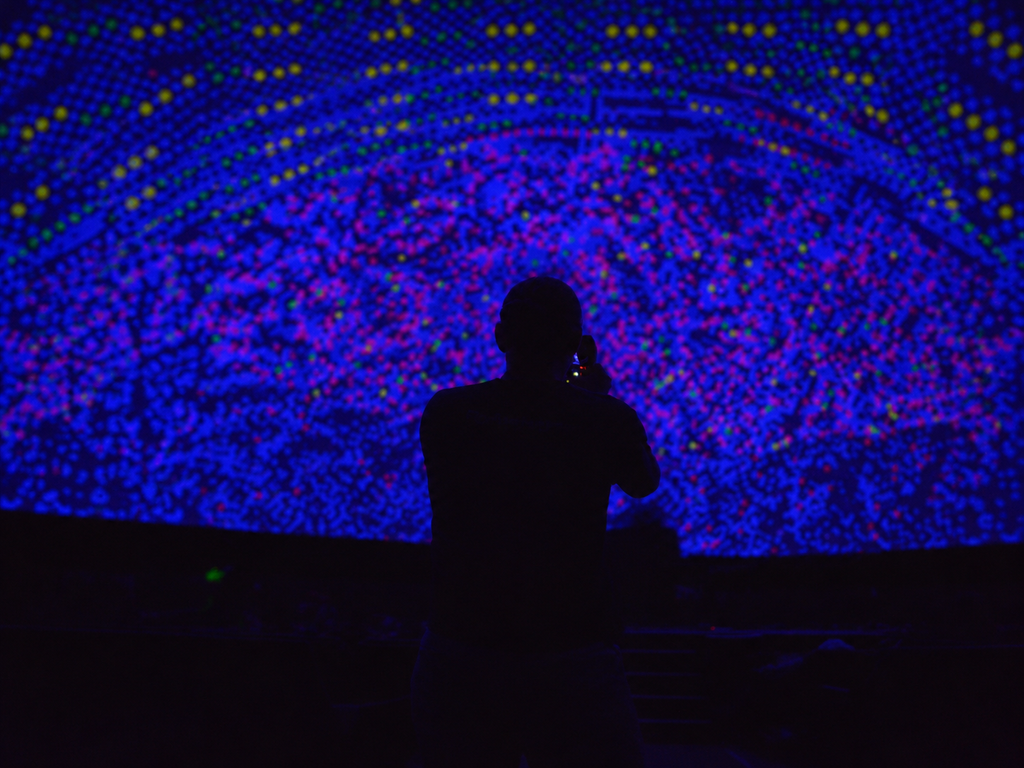
BAS has since presented bitcoin-native digital art internationally, including “Mosaic” with live musicians at the Galileo Galilei Planetarium in Buenos Aires. Its inaugural artist residency includes BitArt and CyberSea, both of whom work with generative systems and blockchain-native artistic production.
What exactly is the artwork?
The article says permanence raises questions that go beyond the durability of Bitcoin’s ledger. Software-based art has long challenged museums because preserving the work can mean preserving not only the underlying material but also the technologies and experiences through which the work is encountered.
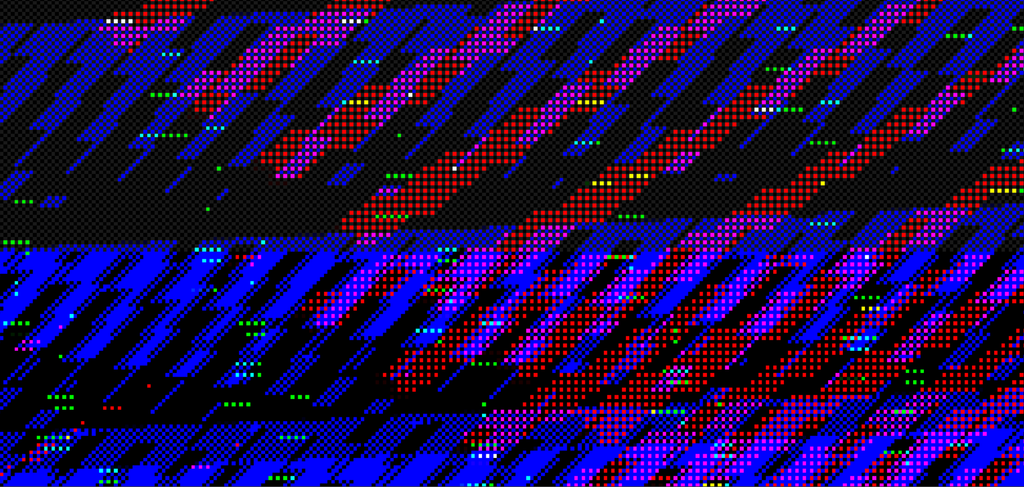
For “Mosaic,” that leads to a basic question: is the artwork the code, the rendered image, the accumulated contributions, or the experience of navigating the system? Bitcoin Magazine says the piece will be shown at Bitcoin Amsterdam 2026 on the conference’s main-stage LED installation, scaling its visual structures up to an architectural format. The article compares that presentation to BAS’s immersive installation at the Galileo Galilei Planetarium in Buenos Aires.
BitArt: “I only had to highlight what was already there”
Ahead of the event, the publication spoke with BitArt about the project’s origins, collective authorship, and the challenge of preserving a work that may never be finished.
Asked why he came to see bitcoin as artistic material, BitArt said Bitcoin records the movement of value through a sequence of events secured by computational work, creating a history that becomes increasingly difficult to reverse. What interests him, he said, is not only the individual event but the sequence that led to it. In art, that shifts the question from what the artwork is to what had to happen for the artwork to become what it is.
He said the arrival of the Ordinals protocol made it possible to assign a unique number to every satoshi, opening new possibilities. From there, “Mosaic” developed almost naturally. 「I only had to highlight what was already there」, he said. Once each satoshi has an ordinal number, its position can be determined and its color or musical parameters can be derived through a set of rules. For BitArt, the compelling part is that these structures emerge from a system driven by human decisions rather than one built to produce art.
Rules set by the artist, outcomes shaped by Bitcoin data
On the balance between artistic choice and underlying network data, BitArt said “Mosaic” continues the rule-based tradition associated with LeWitt and Molnár and builds on the idea of protocol art explored by Holly Herndon and Mat Dryhurst. What it adds, he said, is another layer of input: the accumulated result of human decisions inside an economic system.
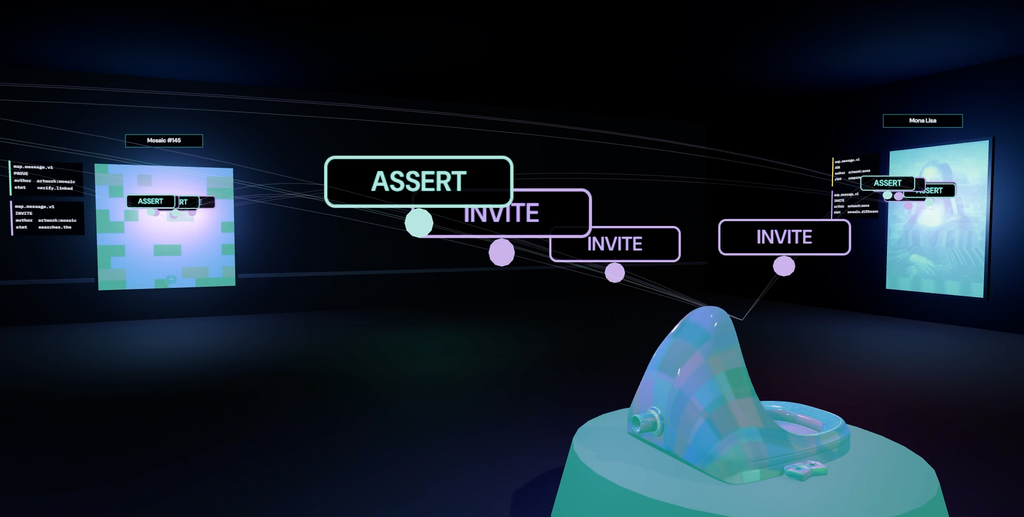
His artistic decisions define the rules of interpretation, while the underlying data determines the visual and sonic structures that result. The rules are deterministic, he said, but the outcomes are not necessarily predictable in practice. That tension is central to the work. The artist does not specify what the piece should look or sound like; the artist establishes the conditions under which something can emerge.
Participants as collectors and contributors
People contribute to “Mosaic” through their own Bitcoin transactions, becoming part of a composition that no single person controls. Asked whether that makes them collectors, collaborators, or something else, BitArt said he sees authorship as distributed across several layers.
He said one of the most interesting aspects is that individual intentions can generate collective structures that nobody intended. Each person contributes something specific, but the larger composition belongs to the system as a whole. A participant can be a collector and also a contributor to the work’s evolving structure. In that sense, the line between collecting and creating becomes less clear. Every contribution changes the work, but nobody, including the artist, controls the resulting composition. Authorship becomes less about controlling an outcome and more about establishing the conditions under which it can appear.
Transactions create verifiable changes; speech opens interpretation
The article also discusses a system BitArt is developing for an upcoming Postmasters exhibition, where visitors will be able to speak directly with artworks and receive responses. Asked how that differs from participating in “Mosaic” through Bitcoin transactions, BitArt said both are intentional acts mediated by computational systems, but they are not the same semantically.
A contribution made through a Bitcoin transaction is a non-verbal gesture that becomes part of a verifiable record, he said. It is possible to establish exactly what happened and how it changed the artwork. The action leaves a trace the system can process directly. Speaking to an artwork is different because natural language first has to be interpreted and translated into the formal language the artworks use to communicate. In the first case, the act produces a verifiable change in the work’s state. In the second, it starts a process of interpretation. Both express human intention, but one establishes a computational fact while the other opens interpretive space.
A simple algorithm that still produces surprise
On unpredictability, chance, and duration, BitArt said he designed the algorithm for “Mosaic” to be as simple as possible. It is deterministic, so from a technical standpoint its results should be predictable and reproducible. In that sense, there should be no surprises. Yet he said the work still produces many unexpected elements.
For him, there is an important difference between something being computationally predictable and people being able to anticipate or fully comprehend the result. With more than 127 million tiles and over 1 billion layers, the work operates at a scale that exceeds ordinary viewing. At one layer per second, seeing everything would take more than 30 years. 「There are many things that have surprised me, and I’m still discovering new ones」, he said.
He also pointed to the temporal divergence between real time and Bitcoin’s block time. Bitcoin evolves according to its own rhythm, independently of when or how people observe it. That introduces another dimension of duration into the artwork.
What sound reveals that images may not
BitArt said “Mosaic” was built from the beginning around three core ideas.
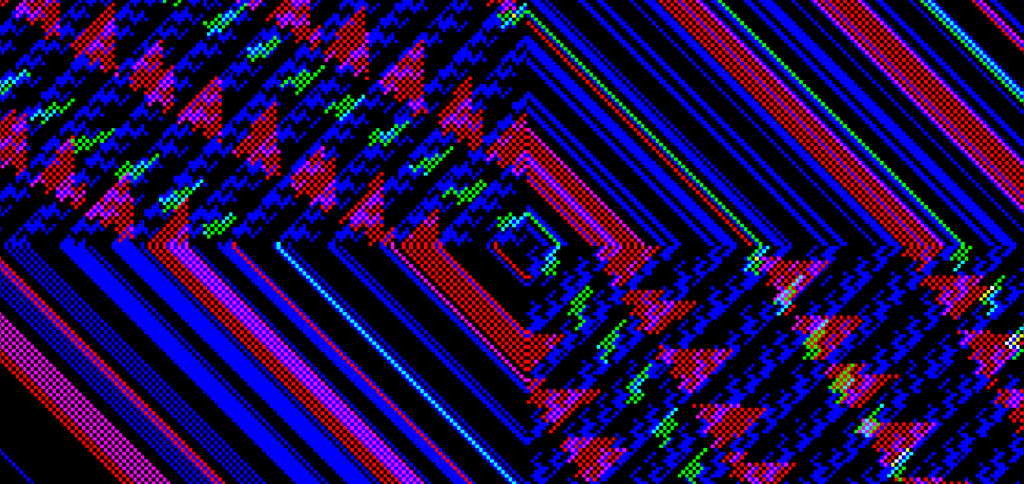
- The first is the possibility of capturing traces of human intention inside a financial and algorithmic system, then revealing visual and sonic structures from those traces.
- The second is the development of a formal system in which “Mosaic” becomes meta-aware in the sense of being self-referential, introspective, and capable of communicating and collaborating with other artworks.
- The third is collective creation, since anyone can contribute to “Mosaic” and become part of its evolving structure.
He said each perspective reveals something different about the work. In the case of sound, it brings out melodic, harmonic, contrapuntal, and rhythmic structures that may not be obvious in the visual form. At the same time, within the digital realm, the structures underlying the image and the music are closely related and sometimes almost identical. He suggested that the habit of treating visual, sonic, and programmatic structures as separate domains may itself be a limitation.
From generative art to communication between artworks
The article notes that BitArt’s practice has appeared in contexts including the Whitney, ZKM, and ICC Tokyo. Asked where he places “Mosaic” in the broader history of generative and systems-based art, and what working directly with bitcoin makes possible that earlier computational media did not, BitArt said he sees the project as part of that tradition but wants to extend it beyond the generation of images and sound.
He is currently working with BAS on a show at Postmasters gallery in New York City. That exhibition will present “Mosaic” in communication and collaboration with other artworks. In principle, he said, any artwork that can be represented digitally can join the conversation, whether that is Leonardo’s “Mona Lisa,” Malevich’s “Black Square,” a work inscribed on Bitcoin, or music ranging from traditional folk songs to Nine Inch Nails’ “34 Ghosts IV” and Ravel’s “Boléro.”
Through the system he described, these works can refer to themselves and one another, exchange statements, and initiate collaborations using a machine-readable formal language. Audiences will also be able to join those exchanges by speaking directly with the artworks in natural language. BitArt said discourse about art has historically happened outside the works themselves, in texts, institutions, discussions, and criticism, while artworks remained largely silent objects of interpretation. By giving artworks the formal means to refer to one another, reason about themselves and others, and exchange verifiable statements, the project treats discourse itself as artistic material.
He added that art history usually describes influence retrospectively. Here, through collaborations between artworks, influence becomes operative. It becomes something artworks can perform. Bitcoin adds another dimension by providing a shared, ordered, and verifiable record of those exchanges and of the artworks’ histories of collaboration. Unlike a conventional computational environment, that record can exist independently of any single artist, institution, or platform. In that framework, the artwork is no longer simply the result of a process, or the process itself. It becomes a participant in an ongoing process of interpretation, communication, and creation.
Bitcoin Amsterdam 2026 and BAS event details
On the shift from immersive settings to large LED screens at Bitcoin Amsterdam, BitArt said the surface of the work is not fixed and does not define the artwork itself. It is only a manifestation of the work’s state at a given moment.
He said he likes BAS’s approach of presenting “Mosaic” in intimate settings, large-scale immersive environments, and formats in between. Each setting lets audiences encounter a different aspect of the same underlying system. In an interactive environment, a viewer navigates the work individually. On large screens, the experience becomes collective, with the audience watching the work unfold rather than exploring it directly. For the Postmasters show, he is also developing a physical component that will offer another way to experience “Mosaic.” What matters to him is that the work can take very different forms without changing its underlying identity. The presentation changes; the system that constitutes the work does not.
The article closes with exhibition information. Bitcoin Art Society said readers can explore BitArt’s evolving “Mosaic” project, learn more about BAS exhibitions and artist residencies, and follow BAS on X. BAS will also present “Art on Bitcoin: BAS Night” at WiHH Gallery, or What Is Happening Here, in Amsterdam on Nov. 6 from 8 p.m. to 11 p.m. Held in collaboration with Bitcoin Amsterdam, the event will bring together artists, collectors, and the bitcoin community for an exhibition and reception with food, music, and conversation.
Bitcoin Museum & Art Gallery, or BMAG, said “Mosaic” will appear on the main-stage LED screens at Bitcoin Amsterdam on Nov. 5–6, 2026, as part of its programming. BMAG organizes international exhibitions, auctions, and artist collaborations focused on bitcoin and its cultural implications. The original article was written by Dennis Koch.