Bitcoin
Oct 29, 2026

BitArt’s ‘Mosaic’ turns satoshi data into a living audiovisual work on Bitcoin

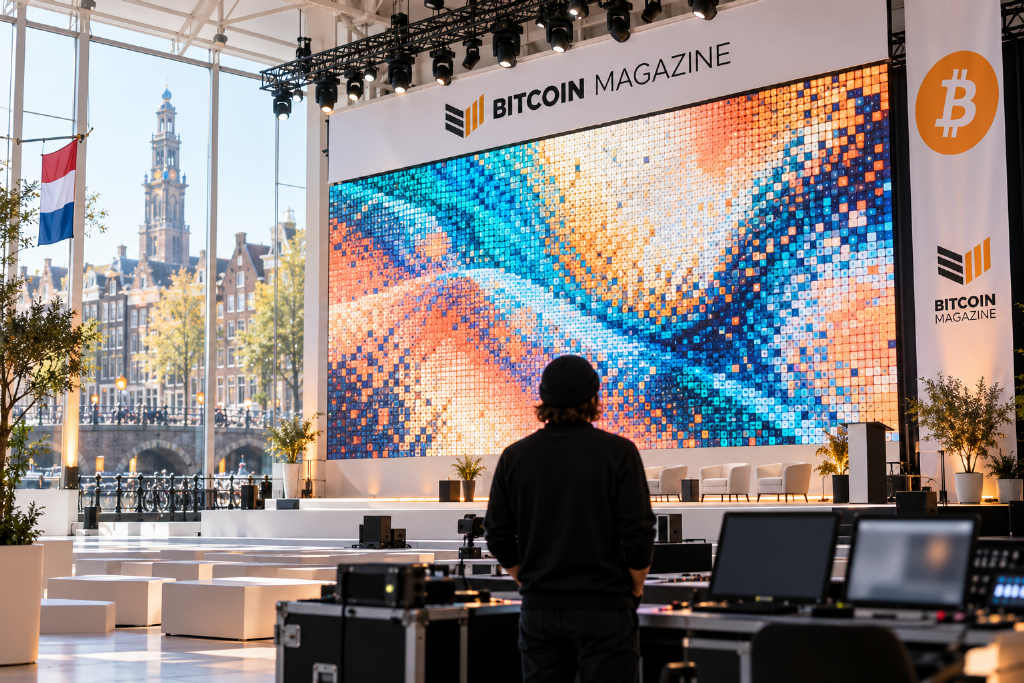
Bitcoin Magazine profiled “Mosaic,” an evolving artwork by generative artist BitArt that uses satoshis, ordinal numbering, and unspent transaction outputs on Bitcoin as the raw material for image and sound. Developed through Bitcoin Art Society, the project converts numerical properties of sats into color, spatial coordinates, and musical parameters, producing a composition that grows as participants contribute through transactions. BitArt said the work now contains more than 127 million tiles and over 1 billion layers, a scale that would take more than 30 years to view at one layer per second. The article places the project in the lineage of rule-based and generative art associated with figures such as Sol LeWitt, Vera Molnár, and Manfred Mohr, while arguing that “Mosaic” adds a distinct input: the accumulated result of human decisions inside an economic network. BitArt described the rules as deterministic but said the resulting visual and sonic structures remain difficult to anticipate in practice. Bitcoin Art Society, founded by Serge Ajamian and Yara Al Chammaa, frames the work within a broader effort to create, exhibit, and preserve bitcoin-native digital art. The piece has already been shown in immersive settings in Buenos Aires and is scheduled to appear on the main-stage LED installation at Bitcoin Amsterdam on Nov. 5–6, 2026, according to the report by Dennis Koch.
520
BitArt’s ‘Mosaic’ turns satoshi data into a living audiovisual work on Bitcoin
ZEC
Sep 21, 2026

zkSNARKs floor price falls to 0.5 ZEC, below its 1.5 ZEC settlement floor

The floor price of zkSNARKs, an NFT project in the ZEC ecosystem, has dropped to 0.5 ZEC, or about $749, according to data from the project website cited by BlockBeats on Sept. 22. That puts the collection below its previously reported final liquidation and settlement floor of 1.5 ZEC from the auction process. BlockBeats also referenced an earlier accusation from @LeonidasNFT, a well-known builder from the Bitcoin inscriptions era, who publicly alleged that the zkSNARKs team had previously operated as serial founders in the Ordinals sector and that many of their projects were scams. The report did not provide additional details beyond those claims and the latest floor-price reading.

1120
zkSNARKs floor price falls to 0.5 ZEC, below its 1.5 ZEC settlement floor
ZEC
Sep 20, 2026

zkSNARKs floor price falls below settlement level to 0.976 ZEC

The floor price of zkSNARKs, an NFT project in the ZEC ecosystem, has dropped below its auction settlement level, according to data on the project’s official website cited by BlockBeats on Sept. 20. The current floor stands at 0.976 ZEC, or about $1,420. Earlier coverage said the project’s final auction clearing and settlement floor price was 1.5 ZEC, meaning the collection is now trading below that level. The move marks a break below the previously reported settlement benchmark. BlockBeats also referenced earlier public accusations from @LeonidasNFT, a well-known builder from the Bitcoin inscriptions era. He alleged that the zkSNARKs team had previously been serial “entrepreneurs” in the Ordinals sector and claimed that many of their projects were scams. The report did not provide additional comment from the project team in the cited brief.

1100
zkSNARKs floor price falls below settlement level to 0.976 ZEC
ZachXBT
Sep 19, 2026

ZachXBT calls zkSNARKs NFT collection useless, compares it to Ordinals-style extraction

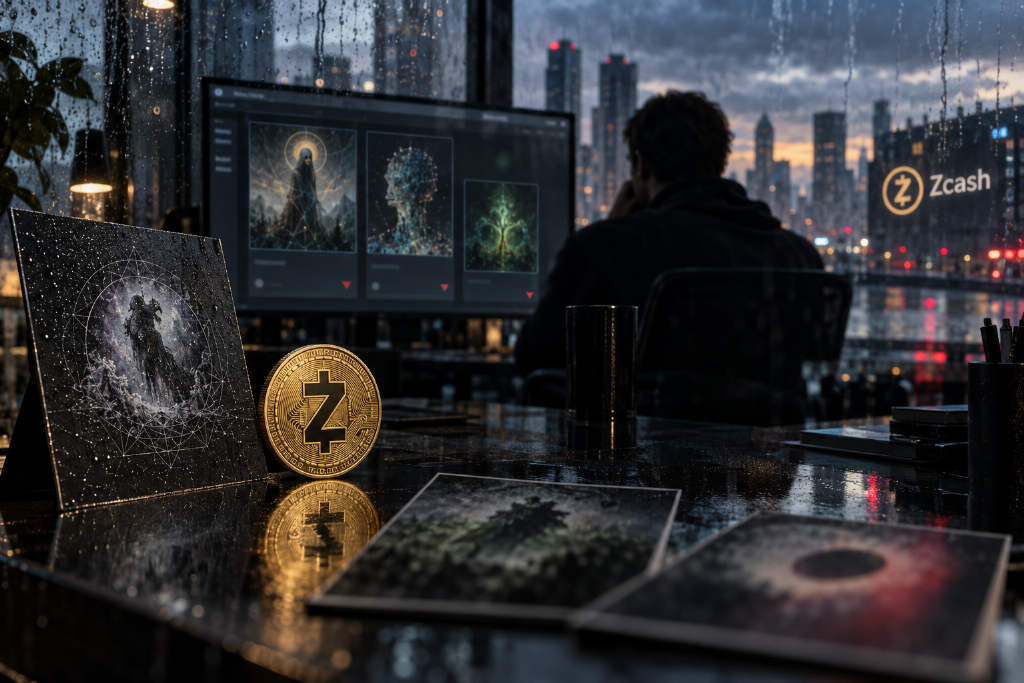
On-chain investigator ZachXBT criticized the zkSNARKs NFT collection, describing it as another generic 10,000-piece profile-picture set with no real utility. In his post, he argued that teams behind such projects can raise eight-figure sums across multiple chains and then walk away. He listed what he described as the project’s structure: roughly $17 million in fundraising, a 10% team allocation, 5% royalties, and a mint price of about $2,000. He also said the setup appeared similar to the kind of “exit liquidity” behavior often seen in the Ordinals scene, adding that few actual ecosystem builders were promoting it. Earlier, zkSNARKs published its auction results on X. The figures showed 16,971 bids, all 8,000 items allocated, a clearing price of 1.5 ZEC, or about $2,190, total volume of 25,305 ZEC, or about $36.94 million, and 13,309 ZEC, or about $19.43 million, due for refunds.

1100
ZachXBT calls zkSNARKs NFT collection useless, compares it to Ordinals-style extraction
ZEC
Sep 18, 2026

zkSNARKs auction closes at 1.5 ZEC clearing price after 16,971 bids

The zkSNARKs NFT project in the ZEC ecosystem said its auction has concluded, with 16,971 bids submitted and 8,000 NFTs allocated. The final clearing price was set at 1.5 ZEC. According to the project, the sale used a uniform-price sealed-bid format: bids were ranked from highest to lowest, the top 8,000 bids won allocations, and unsuccessful bidders will receive full refunds. The team also said secondary market trading will open tomorrow and refunds will be processed within 24 hours. On the same day, @LeonidasNFT, described in the source as a well-known builder from the Bitcoin inscriptions era, publicly accused the zkSNARKs team of being serial entrepreneurs from the Ordinals sector and said many of their past projects were scams.

1310
zkSNARKs auction closes at 1.5 ZEC clearing price after 16,971 bids
Bitcoin
Aug 31, 2026

David Schwartz says post-vote BIP-110 chain amounts to an attack on Bitcoin

Ripple former chief technology officer David Schwartz said on Aug. 31 that backers of the Bitcoin BIP-110 fork crossed the line from governance into attacking the network after rejecting the soft-fork outcome and continuing to run an independent proof-of-work chain. In his view, losing a consensus dispute does not justify launching a separate Bitcoin chain, and doing so is itself an attack. The BIP-110 fork chain was activated at block height 961,640 through a flag-day hard fork. It replaced the SHA256d mining algorithm with BLAKE2b, introduced a new 164-byte block header, and added temporary rules that cap block size at about 300 KB until September 2027. Bitcoin Knots developer Luke Dashjr defended the changes, saying BLAKE2b lacks known weaknesses associated with SHA256d and that the redesigned block header closes a block-withholding flaw that previously required miner monitoring to detect. The fork grew out of Bitcoin Core removing old limits on OP_RETURN data, which opened more block space to non-monetary content including Ordinals and Runes. BIP-110 supporters wanted to preserve that space for payments. After the split, supporting mining pool Roughnecks produced only two blocks before the branch stalled, and the gap with the main chain widened to hundreds of blocks within weeks.

1850
David Schwartz says post-vote BIP-110 chain amounts to an attack on Bitcoin
Bitcoin
Aug 31, 2026

Rupture’s ‘Remains’ ties paintings to Bitcoin Ordinals that decay one block at a time starting in 2028

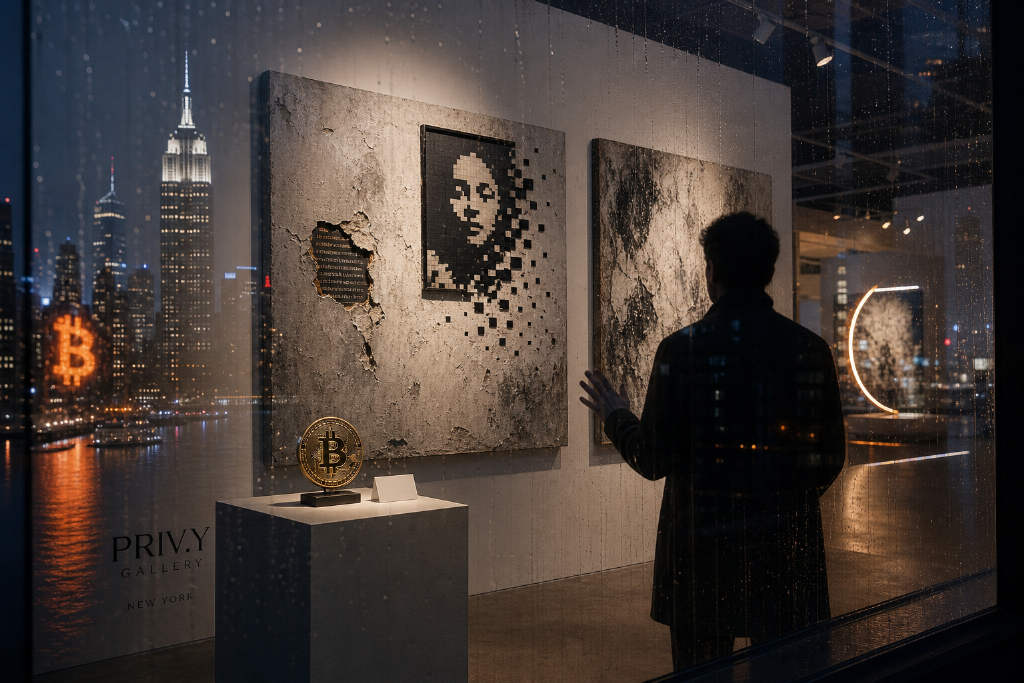
Bitcoin Magazine has profiled “Remains,” a four-work series by artist Rupture that binds physical paintings to related Bitcoin Ordinals in a way that forces a collector to choose what to preserve. Each inscription contains exactly 210,000 pixels, matching the number of blocks in a Bitcoin halving epoch. Beginning with the next halving in April 2028, one pixel will disappear for every block mined unless the collector intervenes. That intervention comes at a cost. According to the article, a unique alphanumeric code capable of stopping the decay is hidden beneath the surface of each painting. To retrieve it, the owner must destroy a meaningful portion of the physical work and then inscribe that damaged fragment as a child inscription tied to the Ordinal. If the painting is left intact, the on-chain image is gradually consumed until only a black square remains. Bitcoin Magazine said the series will debut at PRIV.Y Gallery at 46 Hester Street in New York from Sept. 2 to Sept. 8, 2026, with an opening reception on Sept. 2. The exhibition is presented by BMAG and runs in parallel with NFT.NYC. The original article was written by Dennis Koch.

1810
Rupture’s ‘Remains’ ties paintings to Bitcoin Ordinals that decay one block at a time starting in 2028
Bitcoin
Aug 15, 2026

David Schwartz says forks let participants choose the rule set they want

Ripple CTO Emeritus David Schwartz said in a recent discussion on X that the core function of a Bitcoin hard fork is to let participants choose between different chains and, by extension, different rule sets. In his view, if the losing side later moves to the winning chain, that outcome reflects the fact that one set of rules produced a better result. His comments came in response to criticism of a new proof-of-work fork. One user argued that even if such a fork fixes surface-level issues, it would still inherit the same governance problems. Schwartz took a different position, saying the point of a fork is to create a mechanism for rule competition rather than to assume governance questions cannot be tested in practice. The debate followed an attempt by a minority chain backing BIP-110 to split from Bitcoin last Saturday. That chain survived for only two blocks after separating. The proposal was designed to restrict arbitrary data in transactions, including standards tied to Ordinals inscriptions, BRC-20 and Runes. The report cited U.Today.

1970
David Schwartz says forks let participants choose the rule set they want
Total 98 items
Go topage