


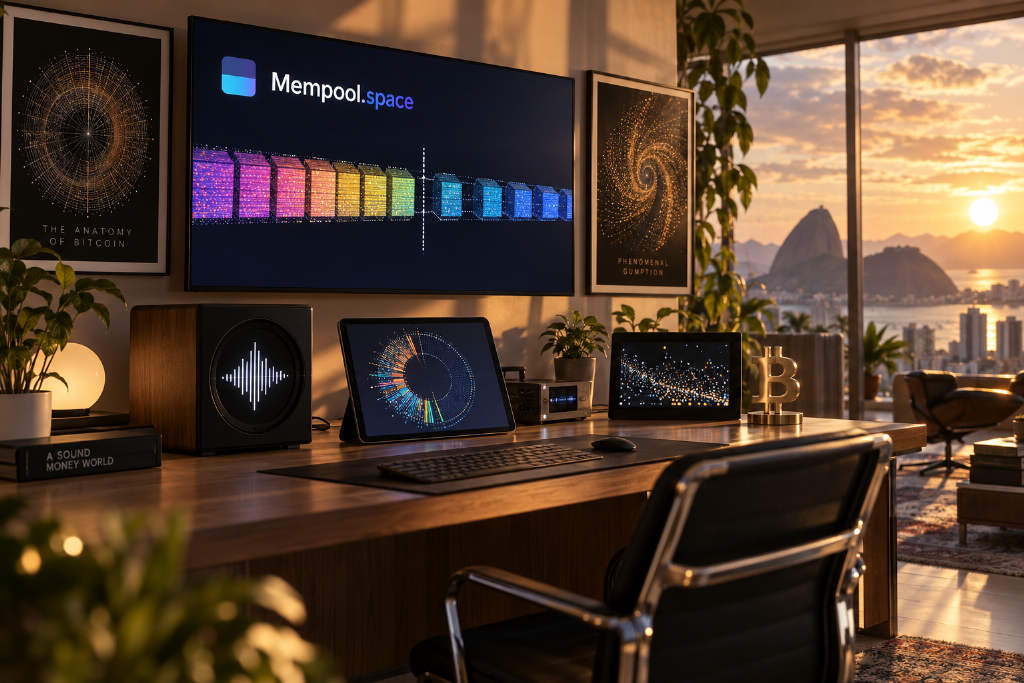
Bitcoin is often framed in abstract terms such as "cryptocurrency" or "digital gold," but Bitcoin Magazine’s latest feature turns to a different category of products: visualizers, explorers, and art-first interfaces that make the network feel present in a home or office. The article looks across a niche that has grown over the years, covering tools built around price displays, node data, mempool activity, and passive visual or audio experiences.
Some of these projects can even be tied to physical devices that people can interact with, turning Bitcoin into a conversation piece rather than something that only lives inside a wallet app or portfolio tracker. The roundup was published by Bitcoin Magazine and written by Juan Galt.
Block explorers remain the most familiar window into Bitcoin
The article begins with the block explorer, describing it as one of the earliest and most recognizable interfaces in Bitcoin. Since the industry’s early days, block explorers have worked as a kind of public notary for on-chain transfers. A user can send a bitcoin payment, paste the transaction ID or destination address into a website, and receive a cryptographically authenticated, timestamped receipt that can be shared with the recipient.
It also notes that many wallets now integrate some form of block explorer into their transaction views so users can verify payments through another app or website.
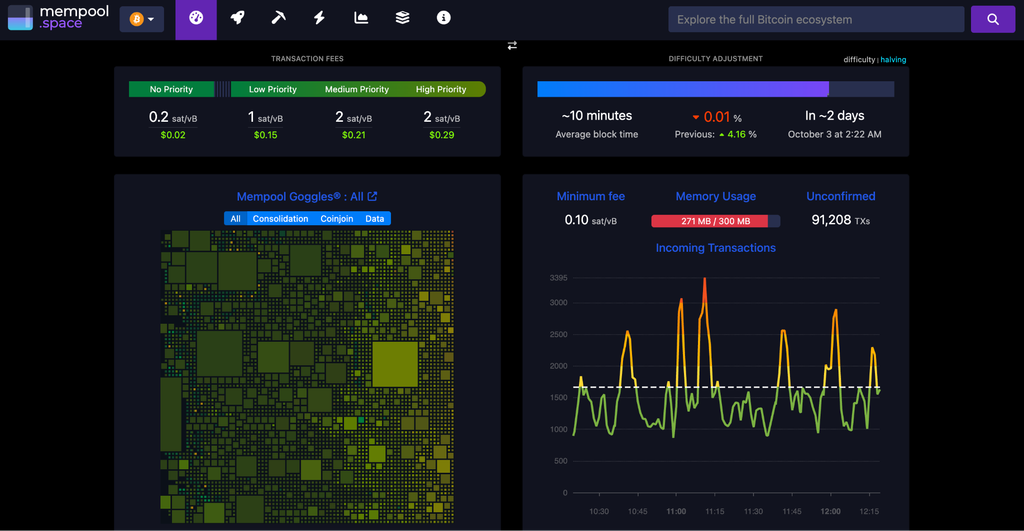
Mempool.space
The piece says the first major block explorer was probably Blockchain.info, which also operated as a web wallet before expanding into other parts of the broader crypto sector. Within the Bitcoin-only segment, it describes Mempool.space as likely one of the niche’s most visited websites.
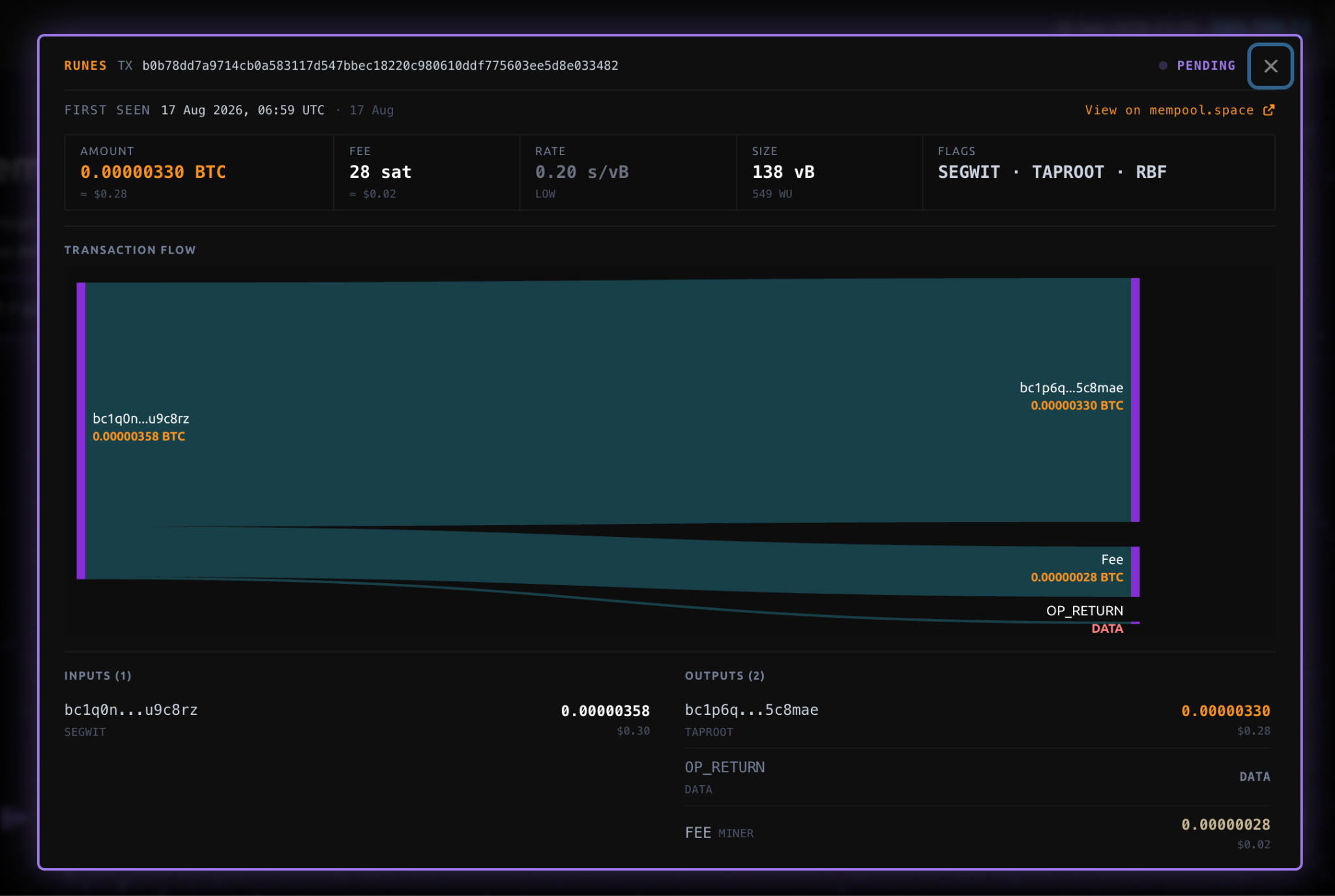
Mempool.space offers basic transaction information, including whether a payment has been confirmed on-chain, but the article places equal weight on its fee-market estimates. Those estimates help users avoid overpaying for on-chain transactions, and the site also shows the different transaction types expected to be mined in the next block.
Its backend is open source, according to the article, and users can run it locally on their own machines as a layer on top of a home full node. That turns the interface into a view of the network from the user’s own perspective, including the mempool seen by that specific setup.
ExploreTimeChain.com
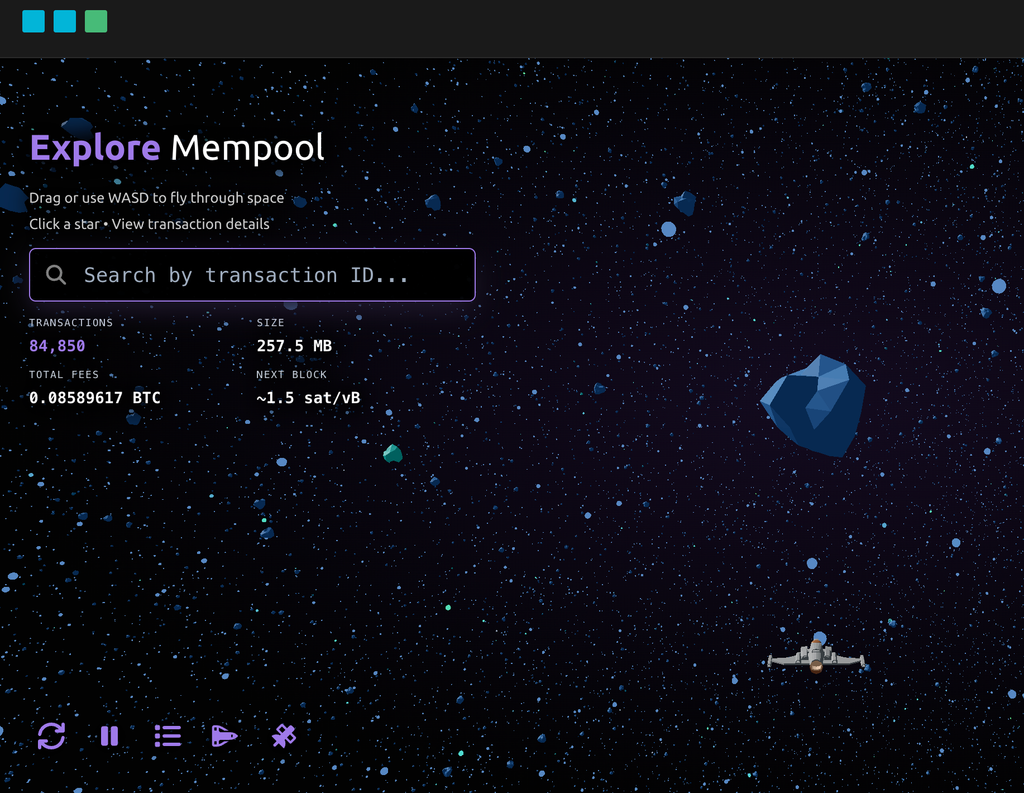
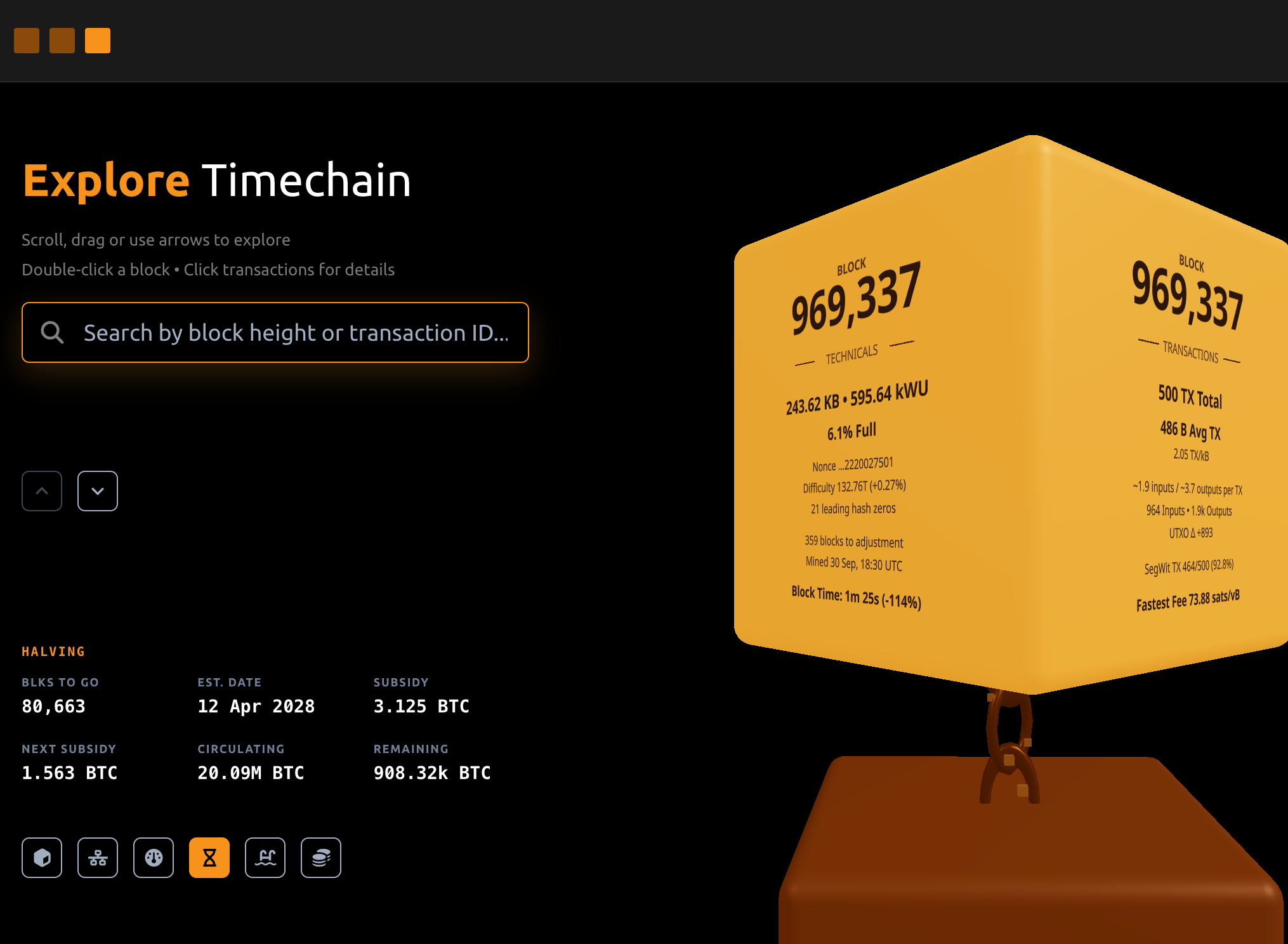
ExploreTimeChain.com takes a full space-exploration approach, except the destination is the time chain, the term Satoshi Nakamoto used in early code for what later became widely known as the blockchain. The interface accepts transaction IDs, public addresses, and similar inputs so users can inspect key details tied to those records.
Beyond lookup functions, the site lets users manually fly a ship through block space, where each meteor represents a transaction. In parallel, it also shows blocks as a literal 3D chain. The article adds that Tesseractb offers another 3D exploration mode built around tesseract-inspired geometric figures. A small search icon at the bottom right accepts transaction IDs and other data to identify specific addresses or blocks, which makes it, technically, a block explorer as well.
Symphony.iohk.io
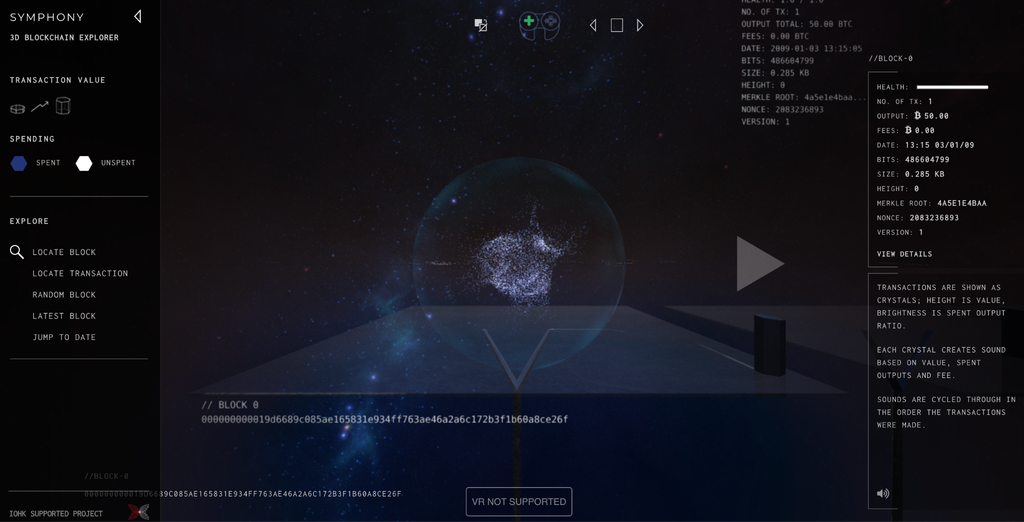
Symphony, a project from IOHK.io, is presented as another 3D explorer that turns block exploration into a game-like experience. Users can enter transaction IDs and block numbers to move through the time chain.
The design is not only visual. The article says the experience includes a synthetic symphony that gives the sensation of exploring the Milky Way as an alien traveler. The 3D space can be navigated with gaming-style controls and keyboard input, and the site is VR-compatible.
The Anatomy of Bitcoin
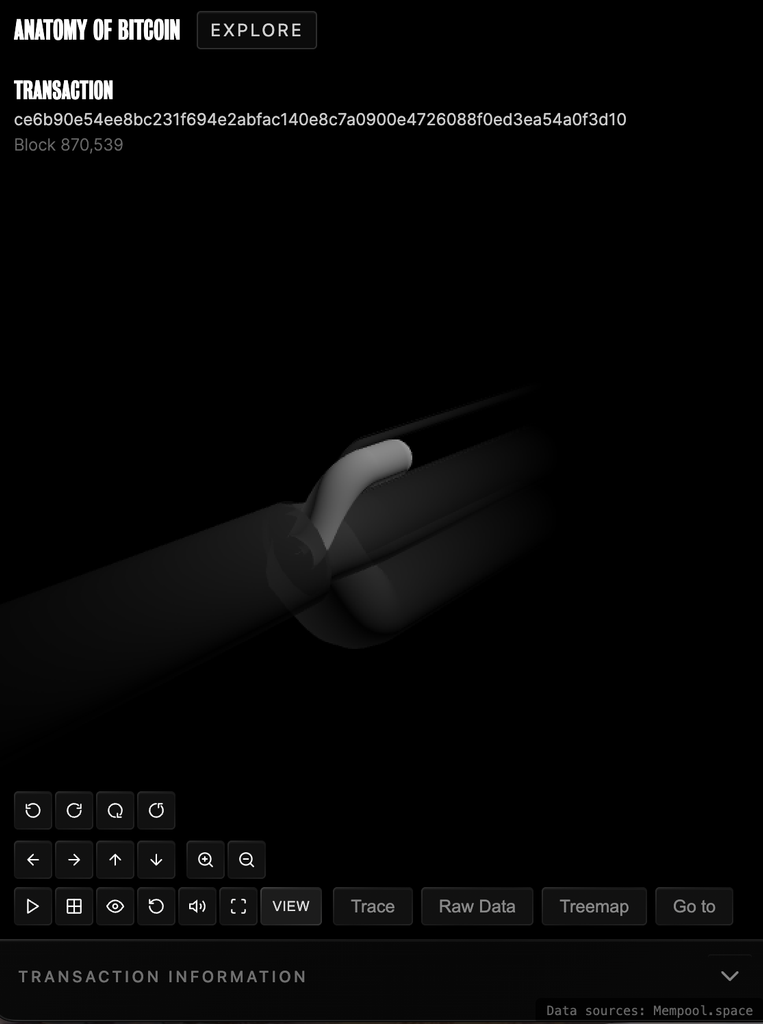
The Anatomy of Bitcoin also earns a place in the roundup as a block explorer, though the article says most of the site is fundamentally a data science project with a minimalist artistic style. The technical stack built by Pedro is described as live and synced to the network.
The explorer can accept transaction IDs and return both 3D and 2D transaction data, although the interface for doing so is somewhat buried in the menus. What stands out more is the backend. The article says the project provides MIT-licensed open-source 3D modeling of the Bitcoin system at nearly every layer, from the bit-level cryptography of a private key up through node-network topology, blockchain data, and the dynamic state of the UTXO set.
Bitcoin Magazine calls it an impressive data science stack and suggests other projects could build on top of it. The site originally launched with a plan to create a film that would teach people about Bitcoin visually. The article says trailers and speeches were part of the roadmap, but fundraising was weak, and the film never materialized. In the author’s view, that film might have become a staple of Bitcoin evangelism if it had been completed. The article closes this section by saying the site still offers plenty of material and inspiration and may yet be revived or forked.
Mempool visualizers focus on flow, not just individual transactions
From there, the article moves to mempool visualizers. These tools are not always block explorers, and some are not built to return data on a specific transaction at all. Instead, they give users a sense of how transaction flow is moving on-chain, either through data science methods or through more artistic interpretations.
Mempool.JHoenicke.de
One of the most recognizable examples, the article says, is Dr. Jochen Hoenicke’s mempool data site. It has reportedly been online for at least a decade and shows data going back as far as 2026. Bitcoin Magazine describes it as a historical dataset of Bitcoin mempool activity that is highly valuable for researchers and Bitcoin historians.
The article identifies Hoenicke as a German computer scientist who became known in Bitcoin as a white-hat security researcher, later worked as a cryptographer at Trezor, and is now with smart-contract technology firm Certora. The scripts used on mempool.jhoenicke.de are open source under AGPL3. The site is said to be especially useful for understanding how crowded or empty the next block might be, which in turn helps users estimate the right level of on-chain fees.
demo.GetNotZero.com
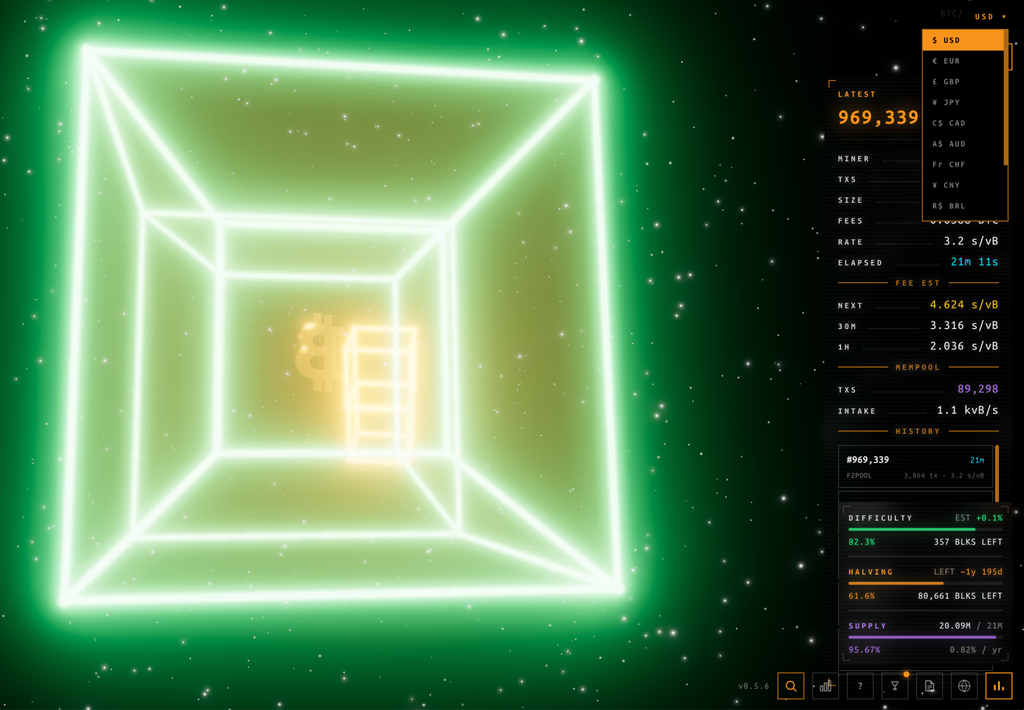
GetNotZero sits somewhere between a real-time dashboard and a hobbyist miner’s tool. The article describes it as a modern, orange-toned cypherpunk view into a broad set of Bitcoin metrics.
Its demo dashboard includes estimates for the next block’s hash rate, mempool block data expected in the next block, mining difficulty, price, ETA to the next halving, and more. At the center of the experience is an invitation to try home mining on a household computer.
The article contrasts that pitch with Bitcoin’s early days, when mining on a laptop made some participants very rich. Today, it says, the odds are much lower, but not zero. That is the point of the site. If a user gets lucky enough to mine a full block, the reward is 3.125 BTC sent to a personal self-hosted wallet with no KYC. The article even compares the exercise with buying lottery tickets, arguing that solo-mining odds may be better than some people expect.
TxCity.io
TxCity.io takes a more playful route. The site sets Bitcoin and Ethereum mempools against each other in a permanent bus-stop scene styled after South Park. It is aware of SegWit transactions as an addition to Nakamoto-era block space, and it shows transactions piling up on both sides as cartoon-like characters waiting for the next bus, or, as the article puts it, the next block.
The piece adds that the site also covers a range of older cryptocurrencies beyond Bitcoin and Ethereum.
Some projects turn the mempool into music
The roundup then turns to a more artistic category: interfaces that interpret on-chain activity through sound. These sites assign notes and tones to transactions and mempool events, translating the self-organizing movement of the Bitcoin fee market into ambient musical patterns.
Proof of Sound
Proof of Sound is described as one of the brightest examples among musical mempool sites. Different transaction types or mempool events receive different notes, and newly found blocks have a dedicated tone of their own.
The visual side is a synchronized synthwave 3D animation suited to running continuously on a display as decoration. Sound can be toggled on and off, and the author says it worked well enough as background audio during regular work. The site also includes customization options so users can tune the experience.
Bitlisten
Bitlisten approaches the same idea with a more minimal design. Each transaction in the mempool produces a bell-like sound based on its size, resulting in a simple but calming audio layer.
The default instrument is a celesta, though users can switch to a few other choices, which significantly changes the listening experience. The article says the visual side could use improvement and jokes that the project clearly predates the era of vibe coding. It is open source, however, which leaves room for anyone interested in giving it a refresh.
Phenomenal Gumption
Phenomenal Gumption has a design reminiscent of Proof of Sound but delivers a more controlled musical result. Bitcoin Magazine describes the anonymous Netlify app as a solid background visual and audio tool for keeping an eye and ear on the mempool.
The on-chain activity is rendered visually in expressive form, and the project’s readme says every moment is unique because the synth waves react to blockchain events. At the same time, the article says the music feels clearly produced and professionally made, rather than directly shaped by the mempool’s self-organizing chaos.
OmPool
The last project in the roundup is OmPool for Omarchy OS, by Pat Riley. The article says the operating system has become popular with users looking to leave the walled gardens of Apple and Windows.
OmPool is designed as a panel within the OS that users can open and likely keep running in the background. The software is open source, and Bitcoin Magazine points to the announcement post as evidence of a polished interface that matches Omarchy’s design language while also incorporating sound patterns derived from the mempool.
The article quotes the announcement as saying the Bitcoin mempool was turned into a live generative musical instrument:
- Tempo follows transaction activity
- Pitch follows fee rate
- Value sets the reverb
- Blocks change the scale
The post was attributed to Pat Riley and dated September 5, 2026.
The article first appeared on Bitcoin Magazine and was written by Juan Galt.