
Bitcoin Breaches $60,000 Support for Third Time This Year
Bitcoin dipped below the psychologically crucial $60,000 level again on June 26, hitting an intraday low of $59,023 — the lowest since October 2024 and a fresh 20-month low. It has since recovered slightly, trading around $60,600, with a 24-hour loss of roughly 3% and a seven-day decline of about 9%. This marks the third time BTC has broken below the $60,000 threshold in 2025. Unlike the prior two instances, the current sell-off is driven by a systemic erosion of market confidence, compounded by persistent institutional capital flight and a sharp macro policy pivot.
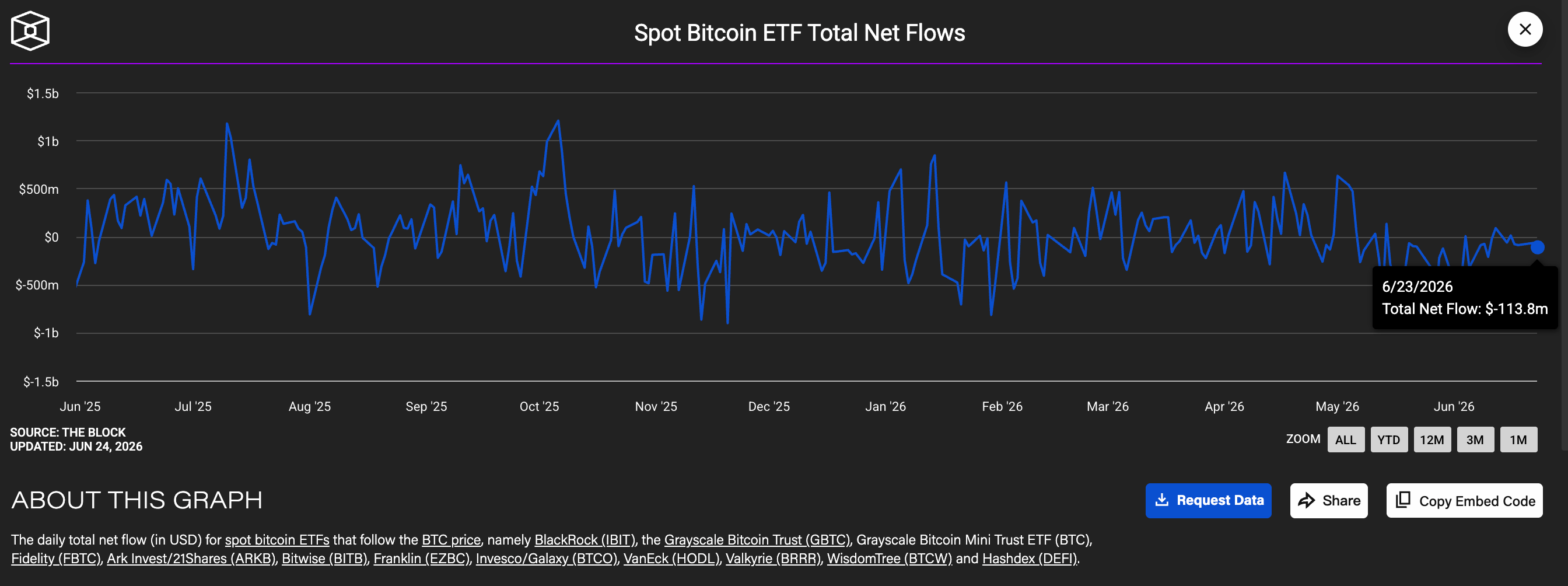

Spot ETF Exodus Reaches Historic Scale
U.S. spot Bitcoin ETFs have been the primary catalyst for the downturn. Since mid-May, ETFs have experienced net outflows for six consecutive weeks. Over the past 30 days, cumulative withdrawals have reached approximately $5.94 billion, the largest institutional capital flight since the ETFs launched in January 2024. Notably, BlackRock's IBIT recorded a single-day net outflow of $528 million on May 28, a record high. The total AUM of Bitcoin ETFs has fallen from roughly $113 billion at the start of the year to around $77.5 billion, a decline of over 30%. Data from The Block shows that on June 23, ETFs still recorded a net outflow of $113.8 million, indicating no meaningful reversal in institutional selling pressure. The mechanism behind ETF outflows is straightforward: when institutions redeem shares, authorized participants sell the underlying bitcoin on the secondary market, creating sustained spot selling pressure. CoinShares has labeled the situation an "emotional shock" rather than a structural breakdown of the crypto market's fundamentals.

Macro Headwinds Intensify
Macroeconomic factors are also exerting significant pressure on Bitcoin. U.S. job openings surged to 7.62 million in April, far exceeding expectations and hitting the highest level in nearly two years. This drove the 10-year Treasury yield back above 4.45%. Cleveland Fed President Beth Hammack subsequently warned that if inflation remains elevated, the Fed may need to resume raising interest rates. According to CME FedWatch, the probability of a rate hike by year-end has risen to over 50%. The strong bull market of 2025 was built on the liquidity expectations of Fed rate cuts. With those expectations reversing and real rates rising, institutional capital is shifting toward lower-risk assets such as bonds and cash. Bitcoin, as a high-risk asset, bears the brunt of this rotation.

What to Watch Next
In the near term, all eyes are on upcoming U.S. inflation data and the Fed's next policy signals. A CPI reading below expectations could provide a temporary reprieve for Bitcoin. Conversely, if the data confirms persistent inflationary stickiness, downside pressure will likely accumulate. As long as extreme fear persists and ETF capital flows show no clear inflection point, Bitcoin's ability to hold the $60,000 line will likely determine the direction of this bearish phase.