

The crypto market started June with a devastating sell-off that sent Bitcoin below $66,500 and Ethereum crashing through the $1,900 level, triggering the most violent liquidation wave since February. According to OKX data, Bitcoin dipped to $66,500, while Ethereum fell 8% in 24 hours to $1,855 and SOL slumped to $73. The sell-off spread across mainstream coins, altcoins, and even crypto-related stocks, igniting widespread panic. When Ethereum lost its critical psychological support, a cascade of automatic stop-loss orders fired on exchanges like Bitstamp and Binance, amplifying the downward spiral.
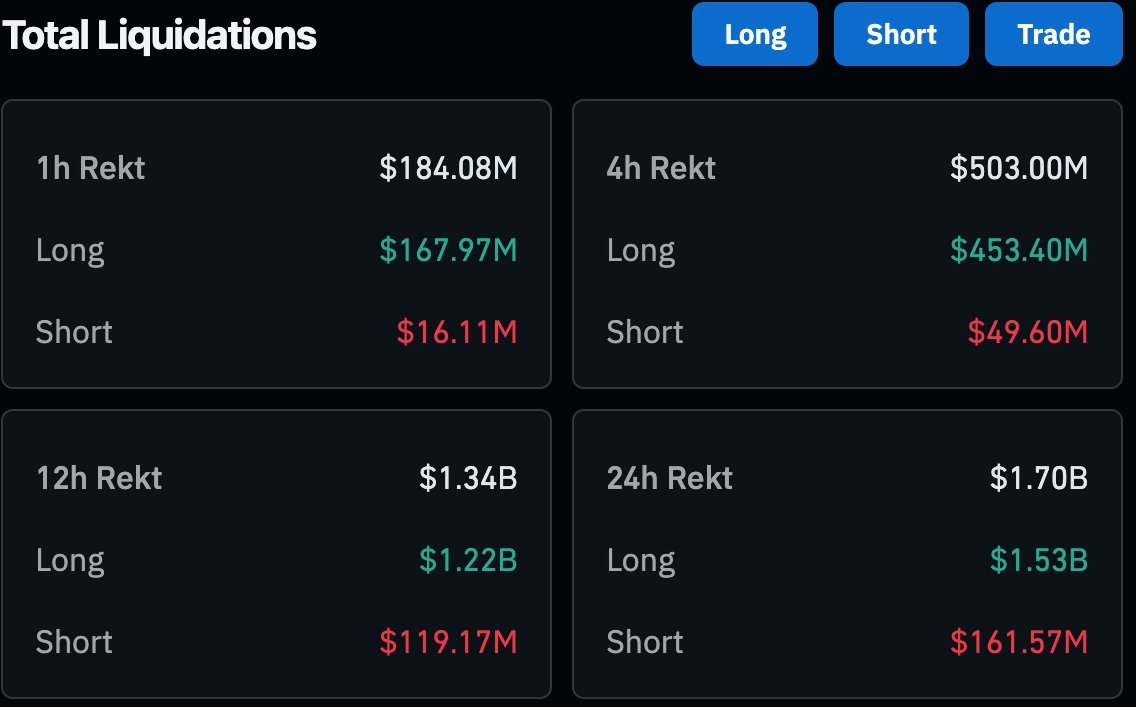
Derivatives markets bore the brunt. Coinglass data shows that total liquidations across crypto derivatives exceeded $1.7 billion in the past 24 hours, the highest since February. Long positions were overwhelmingly the victims, with Bitcoin long liquidations alone surpassing $1.5 billion. Ethereum and other altcoin longs also suffered massive forced closures, creating a vicious cycle that fueled further panic selling in spot markets.
Institutional Selling and Historic ETF Outflows
This wasn’t just a spot-driven correction. On the same day, spot Bitcoin ETFs witnessed a net outflow of $483.8 million, signaling that institutional money was fleeing at an accelerated pace. More alarmingly, the entire month of May saw a cumulative net outflow of $2.3 billion from these ETFs — the largest monthly withdrawal since 2026 and the worst since November 2025. In contrast, March and April had recorded net inflows of $1.32 billion and $1.97 billion, respectively. The complete reversal within a single month underscores a sharp deterioration in institutional expectations.
At the macro level, institutional dumping emerged as the primary driver of the decline. The crypto market’s correlation with the Dow Jones Industrial Average surged to 84%, indicating that both markets are suffering from the same macro-level selling pressure — a phenomenon typical of risk-asset contagion. The pace of institutional selling far outstripped what the price decline alone could justify, underscoring the intensity of the exodus.

HYPE and ZEC Buck the Trend
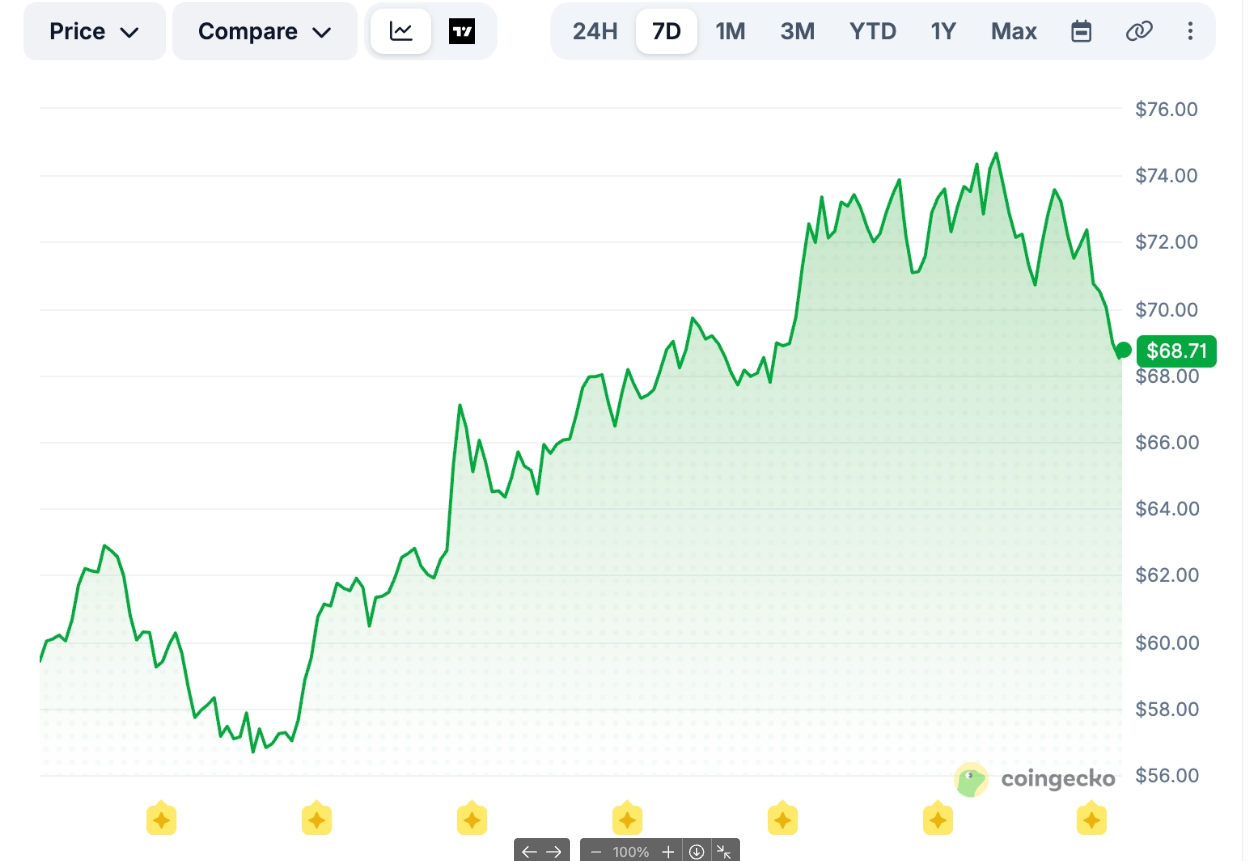
Even as the broader market crumbled, Hyperliquid (HYPE) exhibited remarkable relative strength. HYPE hit an all-time high of $75.51 on June 2 before retracing to around $68 — a 24-hour drop of about 8%, yet still up roughly 15% over the past week. With a market cap of approximately $15.9 billion and a 24-hour trading volume of $1.54 billion, HYPE ranks as the 10th-largest crypto asset globally. That weekly gain of 15% stands out starkly against an overall crypto market decline of 7.5%.

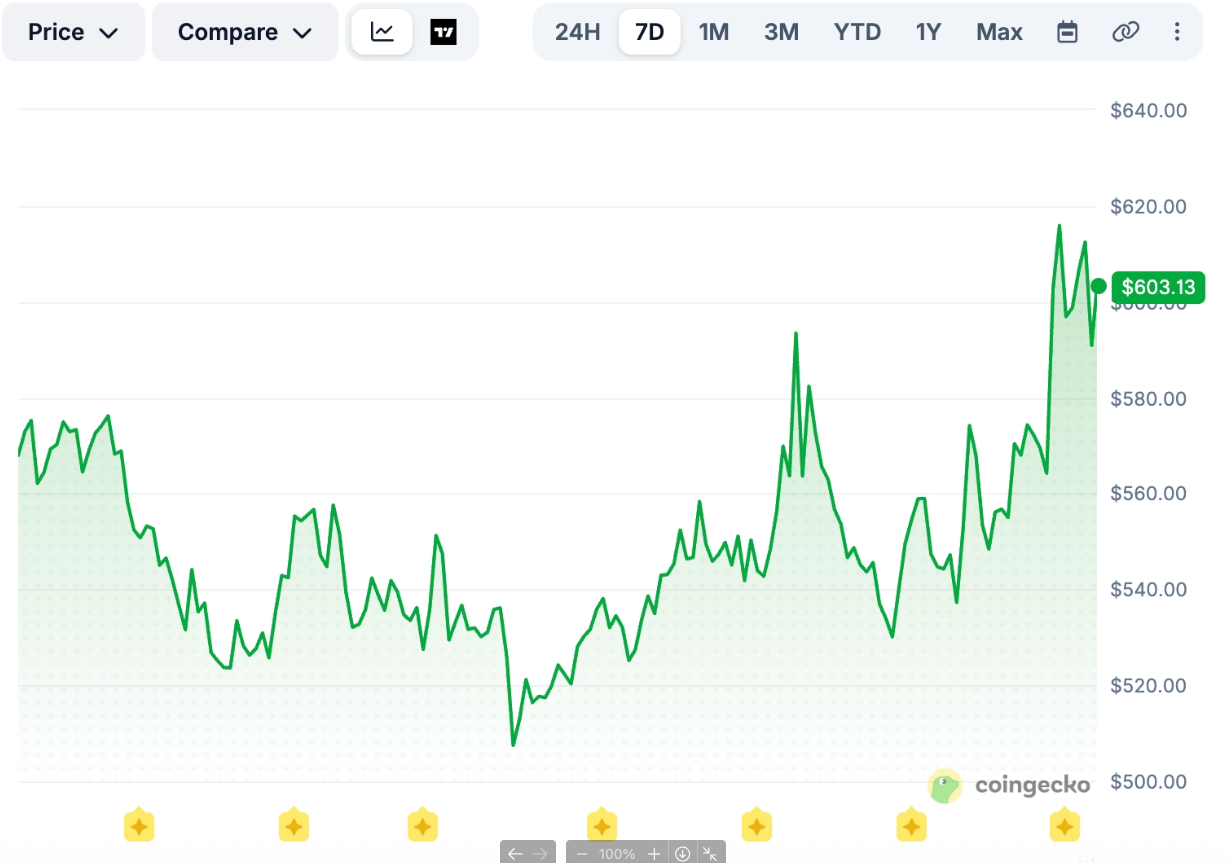
Zcash (ZEC) was the true star of the turmoil, surging over 7% in 24 hours to an intraday high of $628. Its market capitalization briefly climbed to exceed $11 billion, placing it 11th among all crypto assets. The immediate catalyst was confirmation that the U.S. SEC had closed its investigation into Zcash with no enforcement action — regarded by the market as a major regulatory green light, even though the news surfaced weeks earlier. More fundamentally, ZEC’s strength rests on robust fundamentals: from a low of $185 in February, it rebounded nearly fourfold to a peak of $688 in May, a gain of over 270%. Meanwhile, the number of shielded addresses on Zcash has exploded from 1.47 million in 2024 to 5.11 million, reflecting surging demand for on-chain privacy.

Technicals also support the bullish case. Crypto analyst Ali Martinez noted that the ZEC 12-hour chart has triggered a TD Sequential buy signal; if the price can hold the $500 support level, the next target points to $642. In addition, the governance vote for the Zcash network upgrade NU7 is expected to commence in June 2026, providing a long-term technical roadmap that could continue to underpin price action.

All in all, the sharp sell-off in Bitcoin and other major assets contrasted dramatically with the upswings in ZEC and HYPE. The market is witnessing a clear divergence, with capital rotating away from mainstream tokens toward projects with independent narratives and strong privacy features.