



U.S. spot Bitcoin ETFs recorded $1.92 billion in net inflows in the week through Aug. 21, the largest weekly intake of 2026, as a Treasury buyback expansion, a White House crypto meeting and a new Securities and Exchange Commission proposal combined to flip risk sentiment in less than 48 hours.
That shift pushed a broad rally across major tokens and triggered $2.74 billion in short covering. Still, the rebound came with a sharp reminder of how much leverage was underneath it: XRP plunged 37% in a Saturday flash crash, while the wider crypto market saw $1.71 billion in liquidations within six minutes.
Week in numbers
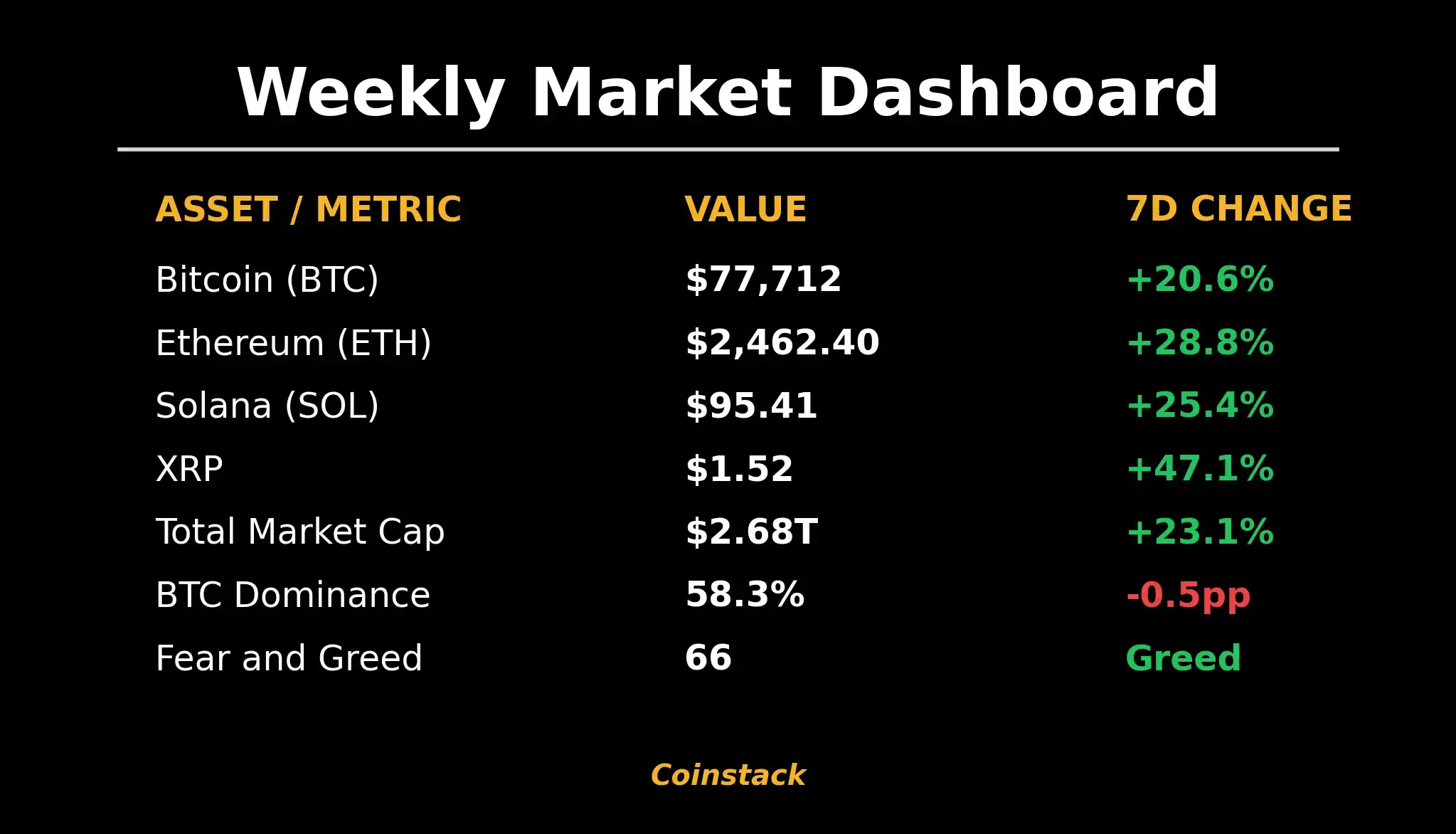
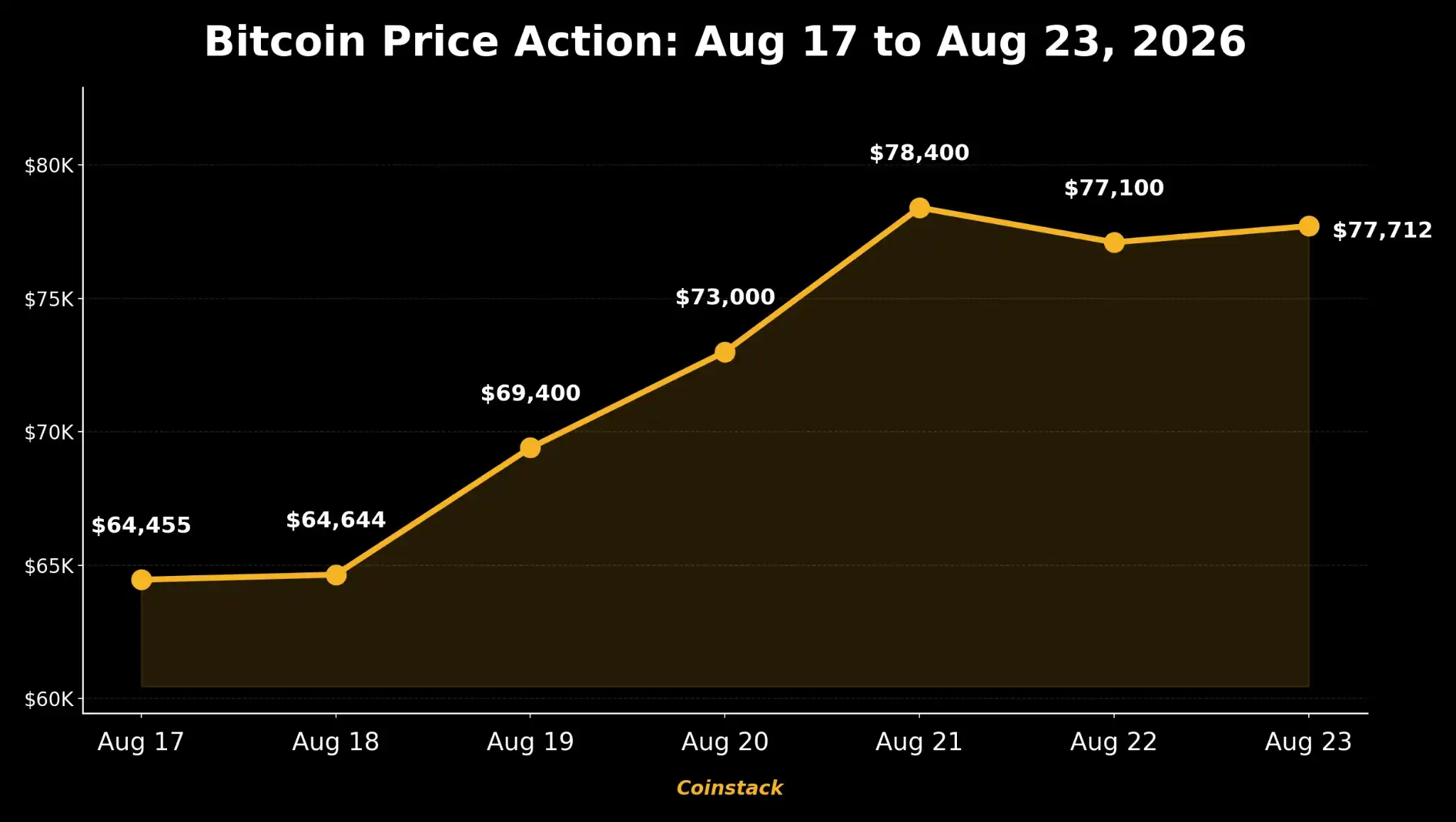
Bitcoin closed Sunday at $77,712, up 20.57% on the week for its strongest weekly performance since October 2025. Spot Bitcoin ETFs brought in $1.92 billion through Aug. 21. President Donald Trump met crypto chief executives at the White House on Aug. 19 and urged passage of the CLARITY Act. The Treasury’s larger long-end buybacks helped set off $2.74 billion in short covering. The SEC proposed what the report described as its first formal crypto rule. XRP then dropped 37% on Saturday, and $1.71 billion in positions were liquidated over 24 hours.
The next major event on the calendar is the Jackson Hole conference, scheduled for Aug. 27 to 29, where Warsh is due to give a keynote speech on Aug. 28.
A 48-hour reversal in market tone
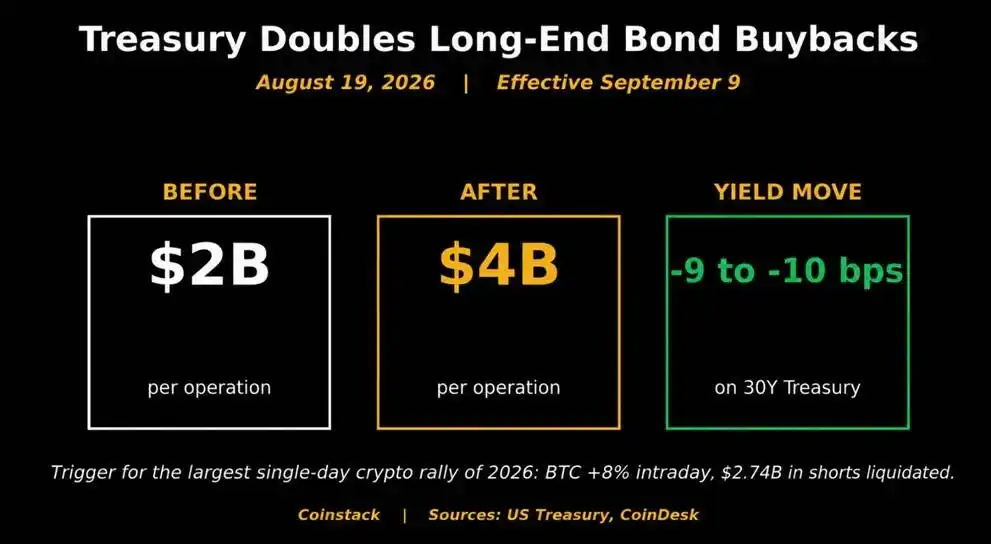
August had carried a defensive tone until Aug. 19, when Bessent decided to lift long-bond buybacks from $2 billion to $4 billion. The move pushed the 30-year Treasury yield down by 9 to 10 basis points from a 19-year high. The Federal Reserve stayed on hold, but the timing mattered: the buyback decision landed alongside the White House summit and the SEC’s first formal crypto rule proposal.
Bitcoin moved back above $70,000, and spot ETFs posted their best week since October 2025. Then came the XRP sell-off on Saturday, exposing how fragile a leverage-heavy rebound could be.
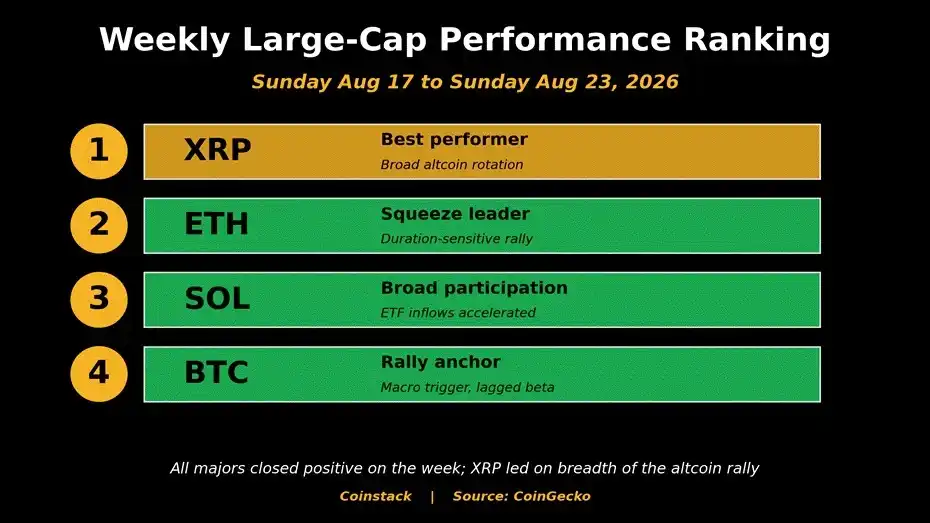
Large-cap performance: XRP led, Bitcoin lagged higher-beta tokens
Among major tokens, XRP was the week’s strongest performer with a 47.1% gain. It reached $1.69 before settling near $1.52 and held onto much of its weekly advance even after the Saturday flash crash.
Bitcoin rose 20.6% on the week. That was its best weekly showing since October 2025, but it still trailed the higher-beta move in altcoins. The report tied the rally to the Treasury’s bigger buyback operations and Trump’s White House summit, while ETF inflows were treated as confirmation that institutional demand had returned.
ETF flows turn sharply positive
According to SoSoValue data cited in the report, U.S. spot Bitcoin ETFs attracted $1.92 billion from Aug. 17 to Aug. 21, the largest weekly total since October 2025. Spot Ether ETFs added $697 million over the same stretch. Combined inflows reached $2.617 billion, about three times the prior week’s level, and reversed an earlier net outflow of $392 million.
The report said the macro trigger came first. Bessent’s buyback expansion pulled the 30-year yield down from 5.34% to 5.18%. The White House summit and the SEC proposal amplified the move. On Wednesday alone, nearly $2.74 billion in shorts were liquidated. On Aug. 21, BlackRock’s IBIT accounted for about 77% of that day’s spot Bitcoin ETF net inflow, taking in $239 million.
For investors, the next question is whether Warsh uses Jackson Hole to validate easier conditions. If his tone turns restrained, a repricing of the September Federal Open Market Committee meeting could drain part of the ETF bid.
Three policy and regulatory developments
Treasury doubles the size of long-end liquidity support buybacks
On Aug. 19, the U.S. Treasury said it would at least double the size of liquidity support buybacks for securities with maturities of 10 to 30 years, raising each operation from $2 billion to $4 billion. The program is set to run from Sept. 9 through Nov. 4. The 30-year yield fell 9 basis points that day.
The bullish case in the report is that lower long-end yields ease financial conditions and can push discretionary capital toward duration-like alternatives such as Bitcoin. The bearish case is that these operations are a refinancing tool, not reserve creation. Once the program ends on Nov. 4, part of the rate relief and related price gains could fade.
SEC proposes Regulation Crypto Assets
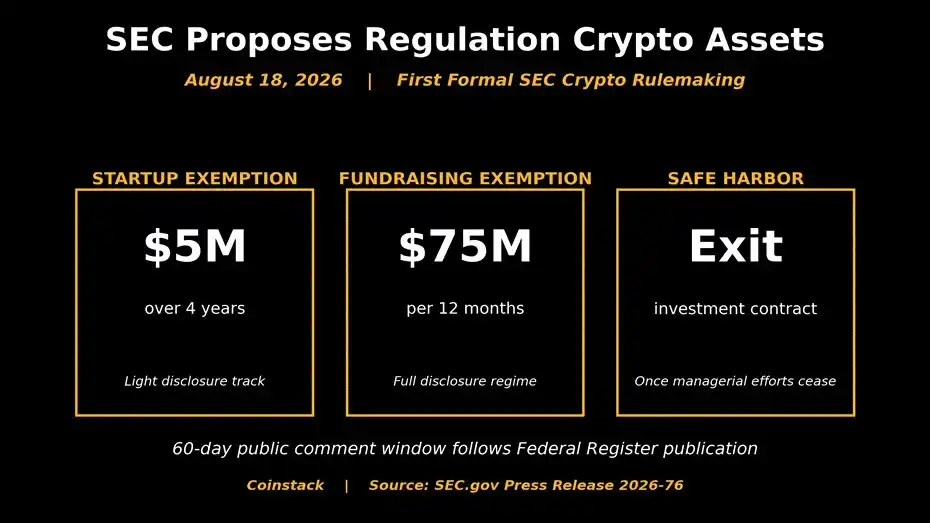
The SEC on Aug. 18 proposed Regulation Crypto Assets. The framework includes a $5 million startup exemption, a $75 million annual exemption and a safe harbor provision after the end of managerial efforts.
The positive reading is that issuers would gain a domestic fundraising route, and federal preemption over state law could help bring token issuance back to the United States. The cautionary reading is procedural: the 60-day comment period is only the beginning. The report cited Polymarket data putting the odds of the CLARITY Act passing in 2026 at about 23%.
Trump meets crypto CEOs at the White House
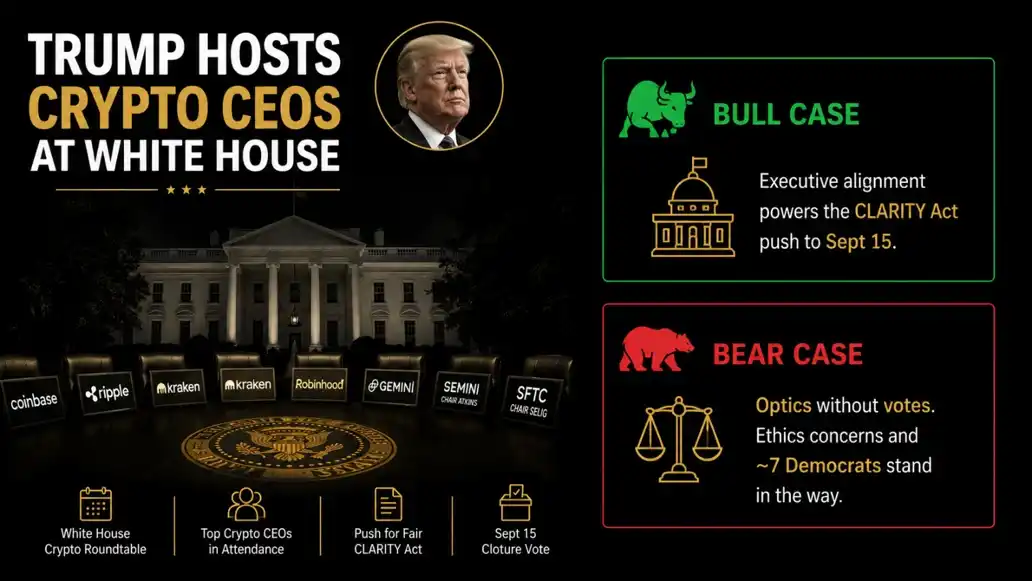
Trump hosted executives from Coinbase, Ripple, Kraken, Robinhood and Gemini on Aug. 19, alongside SEC Chair Atkins and CFTC Chair Selig, and pressed for what the report called a fair CLARITY Act.
The constructive view is that the executive branch is now aligned and giving the Sept. 15 cloture vote its strongest push so far. The more skeptical view is that posture is not the same as votes. Ethics rules around officials with crypto interests remain a sticking point, and the bill would still need roughly seven Democrats to cross over.
Leverage stress shows up fast
CoinGlass data cited in the report showed the total crypto market cap fell from $2.68 trillion to $2.55 trillion in six minutes on Saturday, Aug. 22. About 281,846 traders were liquidated, with total losses of roughly $1.71 billion.
The report’s takeaway was simple: positioning had moved ahead of allocation. XRP led the drop. After climbing 60% on the week and touching $1.69, it then suffered a 37% flash crash. In that reading, most of the gains before Saturday came from leverage rather than spot demand.
Jackson Hole is the next major test
Warsh is scheduled to deliver his first Jackson Hole keynote on Aug. 28. The report said he has dropped forward guidance since June and described this speech as a “blank draft.”
Markets are watching because the rebound already reflects a neutral policy expectation. Citing a Bank of America survey, the report said 53% of fund managers expect a neutral tone, meaning any hint of a September rate cut would likely be read as dovish.
There is also room for disappointment. Three FOMC members have publicly argued for rate hikes, according to the report, and Warsh’s style is to say less. If the speech truly offers little direction, a market that has already positioned for a message may not like the silence.
Weekly investment theme: Ether regains beta leadership
The report singled out Ether as a core trade for the week. Spot Ether ETFs took in $697 million through Aug. 21, their best weekly showing since launch. BlackRock’s ETHA led Friday flows with $151 million.
Cumulative inflows into Ether ETFs are now close to $12.15 billion, the report said. A dovish Jackson Hole interpretation, followed by the Sept. 15-16 FOMC meeting, could keep that duration trade in place. The risks are clear too. If Bitcoin stalls at the $80,000 resistance level, Ether can give back beta outperformance quickly. A hawkish reading of Jackson Hole could also end the squeeze.
Treasury buybacks are not quantitative easing
The report drew a distinction between Treasury buybacks and quantitative easing. In this case, the Treasury is swapping older, less liquid long-dated bonds for newly issued short-term bills. That changes the structure of debt, not the money supply.
That distinction matters for crypto. It is one reason the report said part of Bitcoin’s midweek surge could reverse: no new reserves were created, only a duration shift that temporarily eased pressure at the long end. The next checkpoint is Sept. 9. If that operation can keep the 30-year yield below 5.20%, the trade may hold. If yields move back above 5.30%, the support from this “buyback trade” may weaken.
Other developments this week
- Strategy raised $2 billion through MSTR stock, did not buy Bitcoin and set up a new U.S. dollar cash pool.
- Metaplanet said it would invest 2,100 BTC and $2.5 million in cash into Nasdaq-listed Super League Enterprise.
- The number of SOL-holding addresses rose above 176.5 million, a record for the network.
- XRP gained more than 47% over seven days, its strongest week since late 2024.
- Minutes from the July 28-29 FOMC meeting confirmed that three members favored an immediate rate hike, leaving September risk two-sided.
The report ended with a macro warning. August delivered the reflexive rally that weak July data had failed to trigger, powered by an unexpected liquidity signal, a crypto-friendly White House stance and a new SEC framework in the space of 48 hours. The Saturday flash crash then exposed what kind of rally it was. The next two weeks will test whether ETF demand can hold once the Fed offers more clarity, and whether the CLARITY Act can make it through Sept. 15.