
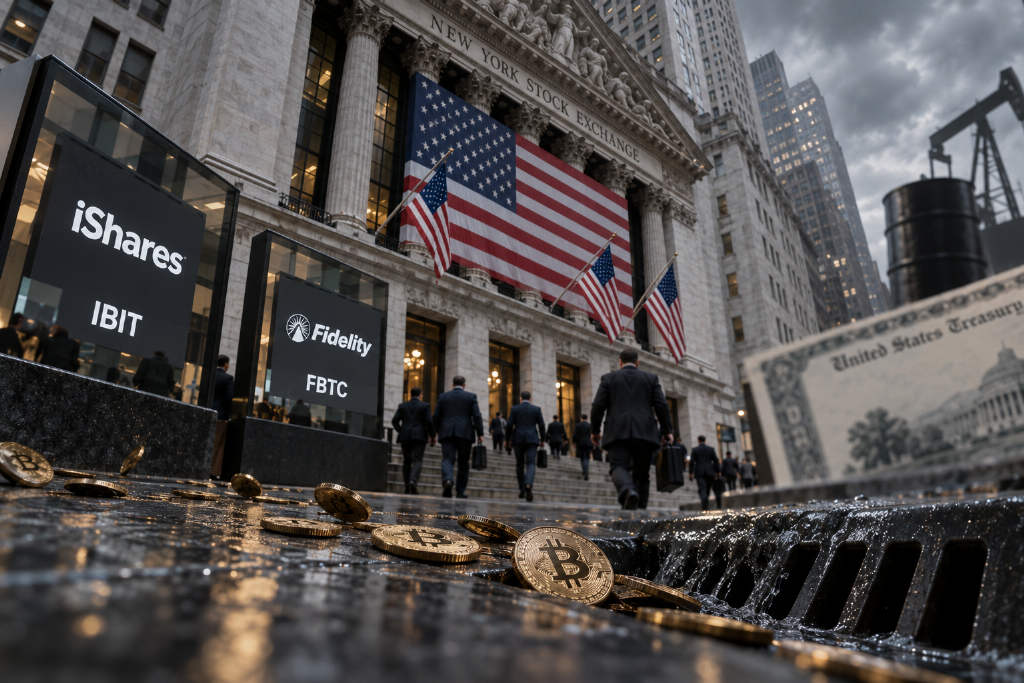
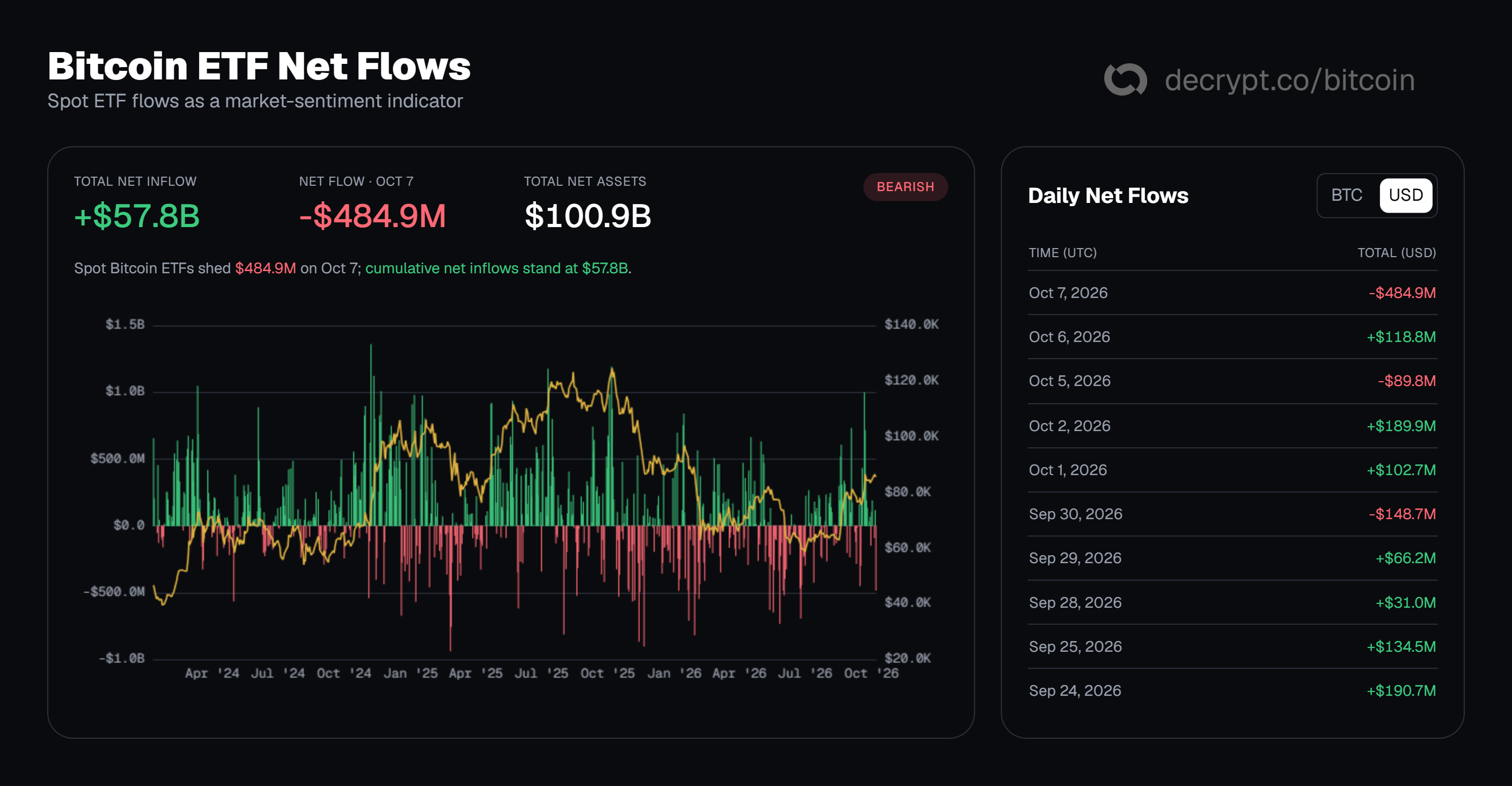
U.S. spot Bitcoin ETFs recorded $484.9 million in net outflows on Wednesday, their worst one-day loss since June 25, according to Decrypt’s ETF tracker. BlackRock’s IBIT posted the largest withdrawal at $207.7 million, followed by Fidelity’s FBTC with $105.1 million in outflows.
That single session erased roughly 81% of the money that had entered the funds over the previous nine trading days. Decrypt described it as about two weeks of steady buying being pushed out in one day. Even so, cumulative net inflows across the funds still total $57.8 billion, which means the day was severe without amounting to a broader run on the products.
Macro pressure, not a crypto-specific trigger
Decrypt said the main driver appeared to be the macro backdrop rather than anything specific to crypto. On Wednesday, the 30-year Treasury yield rose to about 5.7%, its highest level since 2002. Brent crude settled around $100 a barrel, and stocks retreated from record highs.
The report also pointed to repeated ship attacks around the Strait of Hormuz. Since Oct. 2, there has been at least one such attack a day, according to the article, giving oil another reason to stay expensive.
That matters for Bitcoin investors because higher oil prices can feed inflation, inflation can keep the Federal Reserve hawkish, and a hawkish Fed can keep bond yields elevated. For an asset that does not pay interest, that comparison becomes harder to ignore. Decrypt framed it this way: if a 10-year Treasury yields more than 5% and does not drop 6% in a few days, institutions and large investors will keep weighing that against holding Bitcoin through an ETF. Those allocation decisions can move the market.
Fed minutes and rate expectations
The article said the Federal Reserve raised rates in September for the first time since 2023. Minutes from its most recent meeting, released Wednesday, showed that most officials expect another increase before the end of the year.
Traders remain unconvinced that another move is imminent. Based on CME FedWatch odds and prediction markets, an October hike looks unlikely. CME currently puts the probability of an October rate increase at 19.4%, while Myriad assigns it a 17% chance.
Bitcoin drops and longs take the hit
Outside the ETF flow data, Bitcoin itself moved lower. The asset fell as low as $81,749.83 on Thursday, about 6% below the $86,978 peak reached earlier in the week.
Long positions in derivatives absorbed most of the damage. According to CoinGlass, roughly $429 million in positions were liquidated over the past 24 hours, and 87.5% of those liquidations were long bets.
October starts in the red
Bitcoin had posted gains in October for six straight years before falling 3.69% last year. This month, the funds opened October with $321.6 million in inflows across four sessions. They are now down $163.3 million for the month.
Decrypt noted that Halloween is still 23 days away, leaving plenty of time for more volatility before the month ends.
Next Fed meetings
The Federal Reserve’s next meeting is scheduled for Oct. 27-28, followed by another on Dec. 8-9. The September minutes did not set a date for the next increase.