
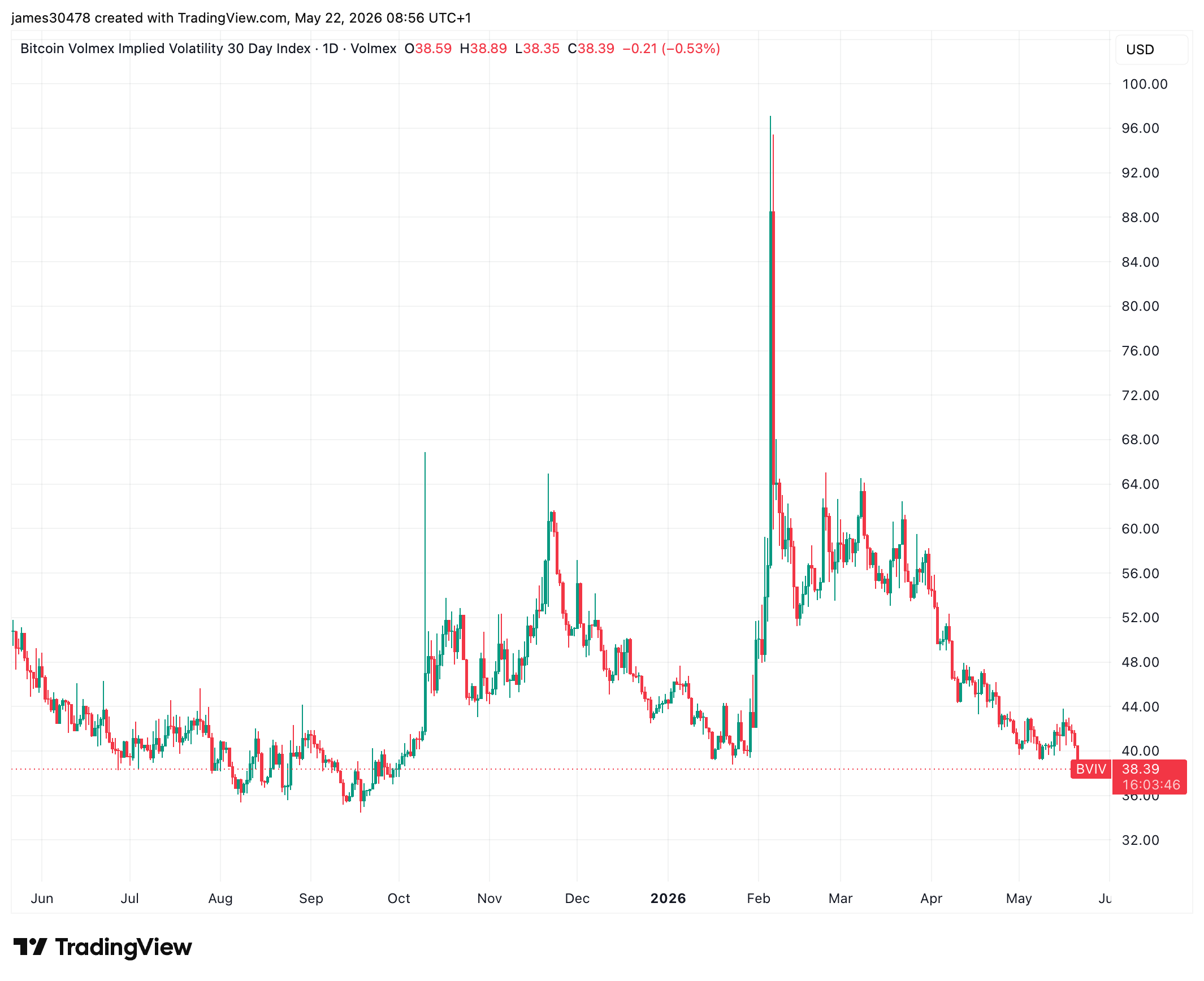
Bitcoin's 30-day annualized implied volatility index, BVIV, has slid to 38%, the lowest reading since October 2025. The metric suggests traders expect calmer price action ahead, even as macro uncertainties linger.
Geopolitical Risk Fades
Shiliang Tang, Managing Partner at Monarq Asset Management, attributed the decline partly to the Iran conflict moving into its later stages, reducing geopolitical risk premiums. Meanwhile, WTI crude remains below $100 per barrel, further signaling that the market is pricing out fear-driven volatility.
Strategy’s Buying Creates a Structural Floor
Tang also highlighted that continued BTC purchases by Strategy (MSTR) and its perpetual preferred STRC structure are acting as a structural floor, dampening downside volatility. So far in 2026, Strategy has acquired 171,238 BTC, far outpacing the roughly 63,450 BTC mined during the same period. This persistent institutional demand tightens supply and stabilizes prices.
Systematic Overwriters Keep a Lid on Volatility
Systematic call overwriters—institutional funds that sell out-of-the-money call options to collect premium—are a major force suppressing implied volatility. Bitcoin is trading near $77,000, and these sellers are aggressively offering calls at higher strikes. “Because Bitcoin has underperformed other risk assets to the upside, systematic overwriters are aggressively selling options for yield, keeping a heavy lid on the entire volatility complex,” Tang noted.
Institutional Maturing Reduces Extreme Swings
The declining volatility also reflects Bitcoin's maturation as an institutional asset. Deeper liquidity and broader ownership through ETFs, asset managers, and corporate treasuries naturally temper the wild price swings that characterized earlier years.