
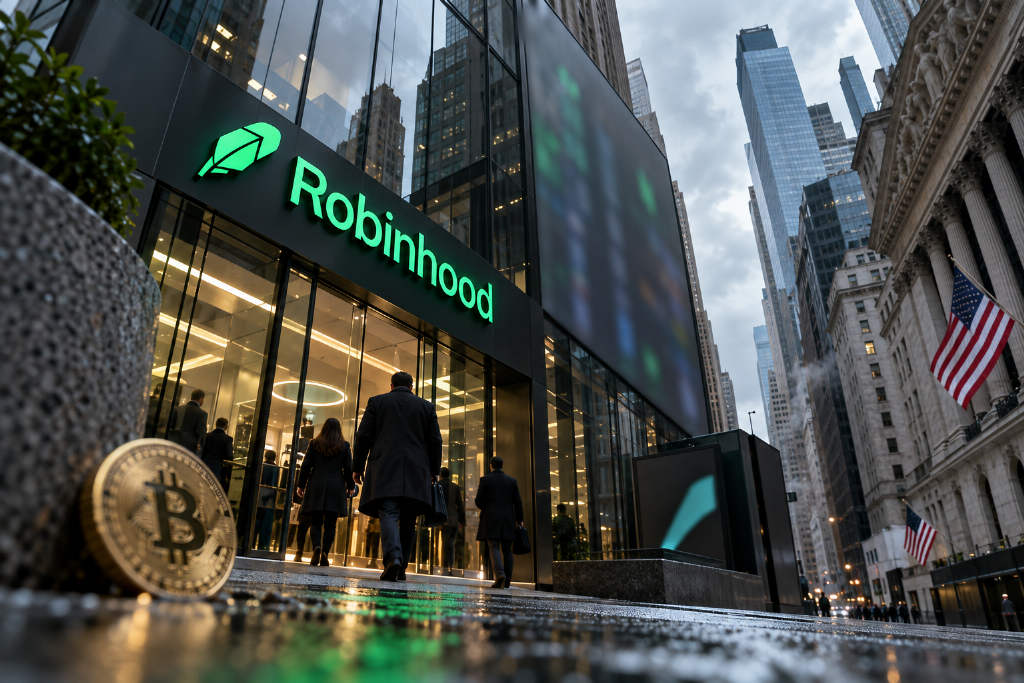
Bitcoin traded near $83,000 in European morning hours as traders turned their attention to U.S. personal consumption expenditures price index data due before Wall Street opens. At the same time, the 30-year U.S. Treasury yield moved above 5.6%, its highest level since June 2002, while perpetuals exchange token Lighter came under pressure after Robinhood said it will offer crypto perpetual futures to U.S. customers through its own derivatives arm.
Bitcoin steadies near $83,000 as the broader market splits
CoinDesk data showed bitcoin changing hands at $83,164 in the European morning, down 0.57% since midnight UTC. The wider market was mixed, with 50 members of the CoinDesk 100 in positive territory and 50 in the red.
Over the past 24 hours, bitcoin was weaker by about 1% after pulling back from a Tuesday U.S. session peak of $84,400. The CoinDesk DeFi Index, or DFX, lost 2.3%, the weakest showing among CoinDesk’s index group. AAVE fell 4.4% after leading Tuesday’s advance with an 11% jump.
Traditional markets were firmer. S&P 500 futures rose 0.27%, and the Stoxx 600 added 0.74% in morning trade. According to CNBC, the 30-year Treasury yield crossed 5.6% on Tuesday, marking its highest level since June 2002, while the 10-year yield reached a fresh 2007 high near 5.3%. Brent crude traded at $96.43 after falling on Tuesday, still below the $100 level seen during Monday’s crypto sell-off.
The report did not point to a clear catalyst for the morning drift. Focus has shifted to the U.S. PCE price index, the Fed’s preferred inflation gauge, due before the stock market open, while Micron earnings are expected after the close. Bitcoin has been consolidating since a failed breakout attempt at $87,300 on Sept. 21.
Derivatives positioning shows leverage cooling
Positioning data suggested a continued pullback in leverage. The market-wide taker long/short volume ratio stayed balanced for a second straight day after sellers held a slight edge two days ago at 46.9% versus 53.1%. Liquidations fell to roughly $196 million from $389 million the previous day. CoinGlass data showed open interest easing to $147 billion from nearly $150 billion two days earlier, while total volume fell 16.9% to $181 billion.
BTC rally still appears spot-led
Bitcoin futures open interest dropped to 625,000 BTC, down from 644,000 BTC the previous day and 650,000 BTC the day before, the lowest reading since Jan. 1. The decline began in June even as bitcoin climbed from $57,000 to above $80,000. That points to spot buying rather than leverage as the driver of the rally.
Binance traders remain net bullish on bitcoin
On Binance, the BTC long/short ratio rose to 1.42 for retail accounts from 1.24 a day earlier. For whale accounts, the ratio increased to 1.49 from 1.31. Whale positioning edged up to 1.90 from 1.88, though that remained below the levels above 2.3 seen earlier this month. A reading above 1 indicates more longs than shorts.
ETH leverage keeps draining while SOL and XRP stay quiet
Ether futures open interest slid to about 13.08 million ETH, the lowest since early March. SOL and XRP futures activity remained subdued, extending the quiet tone seen throughout the week.
Speculative flows return in pockets as HBAR shorts build
PUMP gained nearly 16% over 24 hours, making it the best performer among the top 100 coins, and its futures open interest also climbed. That combination indicates fresh leveraged money entering the token. The report said that when this pattern appears repeatedly in speculative tokens, it has tended to coincide with short-term market tops.
HBAR fell 16% in 24 hours, yet futures open interest continued to climb to new highs. Funding rates turned negative from just above zero two days ago, signaling a short bias. The report added that traders may be hedging spot long holdings against a deeper decline. HBAR’s 24-hour open-interest-adjusted cumulative volume delta was also the most negative among major tokens, pointing to aggressive selling.
POL and CAKE also showed deeply negative funding rates, meaning short sellers were paying to maintain their positions. LIT stood at the opposite end with strongly positive funding.
Volatility remains muted while options flows run both ways
The 30-day implied volatility indices for bitcoin and ether stayed calm, matching the pattern seen earlier in the week. Traders still appeared to expect orderly markets even with Treasury yields rising, the dollar strengthening and gold weakening.
On Deribit, BTC options flow showed demand for both calls and puts after the previous day had leaned more clearly toward calls. The $70,000 BTC call was the most actively traded contract over the past 24 hours. In ETH, the $3,000 call ranked as the most traded contract for a second straight day.
Lighter drops after Robinhood outlines U.S. perpetuals offering
Lighter, the token tied to a perpetuals exchange, fell 17% over 24 hours and lost another 5.6% since midnight UTC, cutting its market capitalization to $2.1 billion. The drop came alongside Robinhood’s announcement that it will offer crypto perpetual futures to U.S. customers through its own derivatives arm.
Altcoins continue to rotate beneath bitcoin’s consolidation
Interoperability-related tokens led the gainers. Quant (QNT) rose 7.5% since midnight UTC, the biggest advance in the CoinDesk 100, lifting its 24-hour gain to 14%. LayerZero’s cross-chain messaging token ZRO was up 13% over the same stretch.
Memecoins also outperformed. BONK added 5.9% since midnight, and dogwifhat (WIF) rose 3.4%. Pump.fun’s PUMP slipped 2.7% over that window but remained 14% higher on a 24-hour basis.
DeFi tokens were mixed after Tuesday’s rally linked to speculation around an AAVE token burn. AAVE fell 3% since midnight, while UNI and ONDO posted smaller losses. CRV gained 3.6%, and liquid staking token LDO and ENA each rose 1.8%.
CoinMarketCap’s altcoin season index stood at 61/100, still in bullish territory. The gauge has now remained above 60/100 for five straight days after failing to reach those levels for more than three months. According to the report, investors are continuing to look toward altcoins while bitcoin trades in consolidation.