
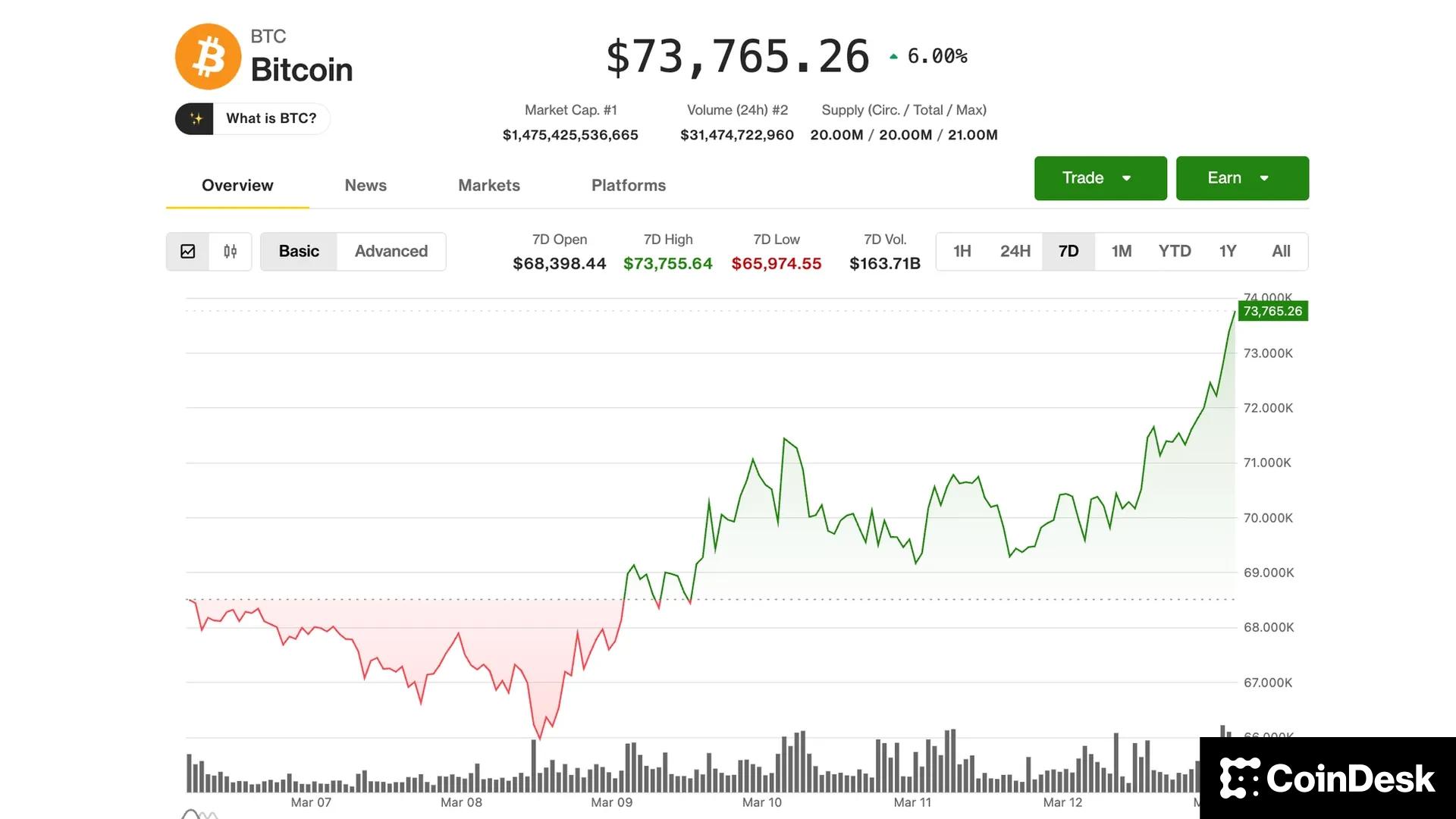
Bitcoin extended overnight gains in early U.S. trading Friday, climbing to $73,800 — its highest level in one month. The nearly 5% rally over the past 24 hours was largely triggered by U.S. Treasury Secretary Scott Bessent's remarks Thursday evening, in which he said the Trump administration is taking concrete steps to cap surging oil prices.
Since the Iran war broke out on Feb. 27, bitcoin has risen roughly 11%, outperforming broad U.S. stock indices and gold, both of which have declined over the same period. WTI crude oil traded at $94.50 per barrel Friday, down from a high of nearly $98 on Thursday. U.S. equities posted gains of about 0.5%.
Oil Spike Fuels Stagflation Fears
Olu Sonola, head of U.S. economics at Fitch Ratings, warned that the recent oil price surge directly pressures household budgets. If sustained, it could weaken consumer spending and slow economic growth. "The broader economy is still expected to grow at trend, but that forecast increasingly looks fragile as downside risks accumulate," he wrote. "The Fed can shrug off pockets of weakening growth, but resurgent inflation severely limits its room to maneuver."
Negative Funding Streak Sets Stage for Short Squeeze
After one of the most bearish sentiment periods in bitcoin's history, the recent modest rally is not surprising. Vetle Lunde, analyst at K33 Research, noted that perpetual futures funding has been negative for 14 consecutive days, the longest stretch since December 2022. That period marked the aftermath of the FTX collapse, when BTC traded around $16,000. Lunde pointed out that such negative streaks have historically coincided with local price bottoms over the past seven years.
Meanwhile, bitcoin open interest in perpetual and dated futures rose 9% over the past 24 hours to around 700,000 BTC, the highest since Feb. 6. Taken together, these conditions create fertile ground for a short squeeze.
Friday Gain May Signal Calmer Weekend
If Friday's gain holds, it would be the first positive Friday since the Middle East conflict began on Feb. 27. That could suggest less volatile weekend trading for crypto, which has formed a pattern of declining on Saturdays and Sundays in recent weeks.