


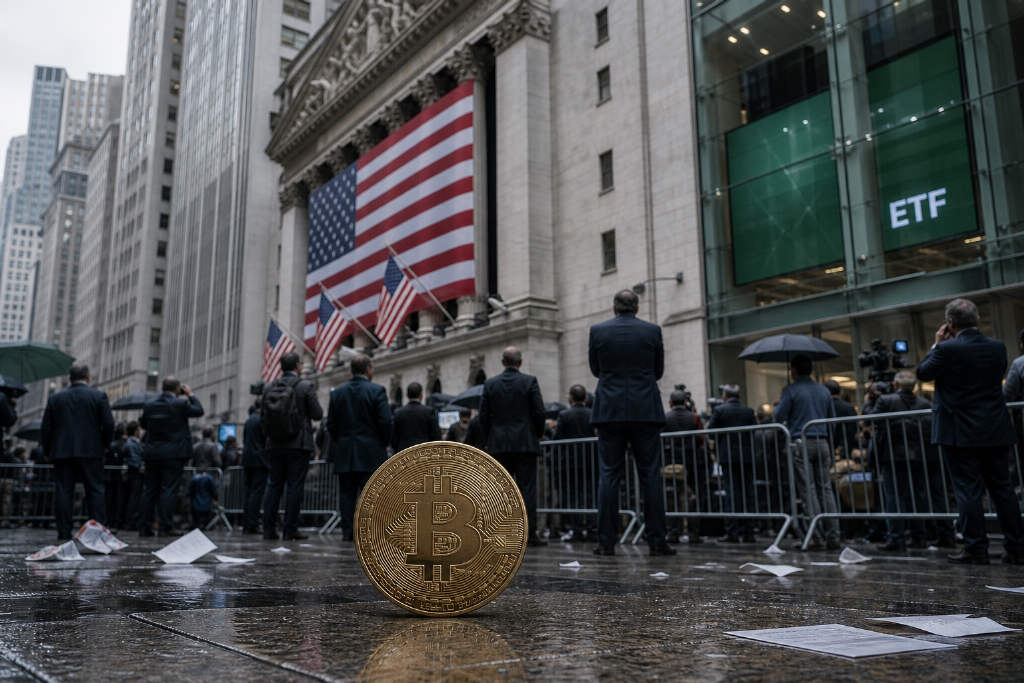
Bitcoin rebounded sharply from a low of $64,100 on Aug. 19 and climbed to as high as $79,500 on Aug. 21. The report added that, by the time the article was published, the session high had been updated to $75,720. Even with that revision, Bitcoin was still up more than 20% over three days.
Just days earlier, the market was still framed by bear-market talk. The fear and greed index moved from 46 to 72 over the span of three bullish candles.
According to CoinAnk, total crypto liquidations briefly exceeded $4 billion during the move, with short liquidations accounting for $3.7 billion. The report described it as the most severe short squeeze since 2021.
Bitcoin’s market capitalization was reported at $1.5 trillion, above Meta’s $1.39 trillion, lifting Bitcoin to No. 13 in the global asset ranking by market value. Spot Bitcoin ETFs recorded $606 million in net inflows in the previous trading day and extended their streak of positive flows to four consecutive days.
The total market capitalization of altcoins also returned to $1 trillion for the first time in nearly a month. Several major tokens posted strong gains:
- ETH rose as much as 18% in a single day, was up 25% on the week, and traded at $2,361, a more than two-month high;
- XRP gained 20% over 24 hours and 31% over the week, traded at $1.3, and added about $10 billion in market value in one day;
- HYPE rose 15% on the week and reached as high as $75, approaching its record high of $76.85;
- SOL briefly moved above $90 and was up nearly 15% on the week.
The rise also changed the balance sheet picture for corporate Bitcoin holders. As of Aug. 16, Strategy held 840,447 BTC at an average cost of $75,385. With Bitcoin moving higher, the company, described in the report as the world’s largest publicly listed Bitcoin holder, had just returned to break-even.
Why the market moved
The article tied the rally to a combination of macro, regulatory and market-structure factors.
On the macro side, the U.S. Treasury said on Aug. 19 that it would at least double the size of its long-term bond buybacks, raising each operation from $2 billion to $4 billion. The 30-year Treasury yield then fell from 5.337% to 5.187%, while the U.S. dollar index dropped below 99. The report treated that shift as a sign that liquidity conditions were easing.
On the same day, Trump gathered senior figures from the crypto industry at the White House, including Coinbase CEO Brian Armstrong and Ripple CEO Brad Garlinghouse, and urged the Senate to move forward with the CLARITY Act. He also said the U.S. was considering buying a “considerable amount” of Bitcoin for reserves.
One day earlier, on Aug. 18, the U.S. Securities and Exchange Commission had released a new regulatory framework proposal. The article said that step loosened the ground for a clearer compliance path.
Supportive regulatory comments continued on Aug. 21. At the first meeting of the Commodity Futures Trading Commission’s innovation advisory committee, CFTC Chair Michael Selig said that if the CLARITY Act “continues to stall because of Democratic obstruction, the CFTC will use its existing authority to begin building a framework for the crypto asset market.”
He said he had instructed staff to start studying rules that would use existing powers to lock in a market structure for crypto, covering exchanges, leveraged and margin trading, and compliance paths for developers of onchain financial protocols.
Whales and forced liquidations shaped the move
The article argued that the rally was not driven by headlines alone. A large-scale short squeeze also changed the market structure and helped push prices higher.
Since July 8, Bitcoin had traded for six weeks in a narrow range between $62,000 and $66,900. As price broke out, bearish positions built up during that stretch were forced out.
Lookonchain data showed that the three largest short-liquidation addresses each lost more than $90 million. An address beginning with 0x8 c96 was liquidated on 1,829 BTC, worth about $120 million. The address pension - usdt . eth was liquidated on 49,808 ETH, worth about $111 million. Another address beginning with 0x8 eff was liquidated on 1,343 BTC, worth about $92.56 million.
One of the most visible examples was a Chinese-speaking whale known as “先定 10 个大目标.” On Aug. 19, the trader made $20 million on a long position, then flipped bearish at higher levels and opened combined BTC and ETH shorts worth $222 million. As the rally continued, the whale was forced to close the position on Aug. 20 and gave back $6.28 million.
That did not stop the trader from shorting again. On Aug. 21, the same whale opened fresh BTC and ETH short positions worth about $17.9 million. The average entry price was $74,506.57 for BTC and $2,346.83 for ETH.
Not all whales took the same side. Two whale addresses sold 5,250 ETH and 550 BTC and booked profits of $6.26 million. Another address that had previously built a cumulative long position of 120,000 ETH added more exposure, with two wallets holding a combined long position worth $182 million at an average entry price of about $2,265.
Analysts are split
The report cited a wide range of views on whether the move marks the start of a new cycle.
Bitwise research analyst Ishmael Asad said he sees the rally as “the strongest confirmation so far that a bottom is already in,” adding that institutional allocation is only beginning and long-term capital inflow potential remains intact.
Brian Armstrong, CEO of Coinbase, said, “There is a good chance we are on the eve of the next bull market in crypto spot trading.”
Trader mignolet publicly reversed his earlier stance, saying he had not expressed a bullish view since August 2025 but now acknowledged that call was wrong. He said the current rebound may last longer than expected, no longer expects an easy break lower, and has turned bullish on Bitcoin while stopping short trades.
CryptoQuant founder Ki Young Ju said spot and perpetual futures demand have both turned positive at the same time for the first time since the all-time high in October 2025. His conclusion was direct: “The bear market is over, and a new bull cycle has begun.”
On the institutional side, Standard Chartered head of digital asset research Geoff Kendrick gave a year-end target of $100,000. Risk Dimensions chief investment officer Mark Connors said BTC could reach $180,000 to $360,000 by 2030.
Analyst Beth Kindig, referred to in the article as the “Queen of Nvidia,” wrote that the I/O Fund had raised its long-term Bitcoin target from $1 million to $2 million.
Not everyone was ready to chase the move. Smart Money said the rebound was not a bottoming rally but a “trap” built around the September vote on the CLARITY Act. In that view, the bounce off support was pulling in short positions while clearing leveraged accounts. Smart Money said the 4-hour RSI had reached 92.6, up from 82.8 the previous morning, putting the market in overbought territory, and suggested waiting to see whether Bitcoin can hold $73,244.
Trader Peter DiCarlo offered a split view: bullish in the long term, bearish in the short term. He said Bitcoin could still push toward $80,000. Over a 12- to 18-month horizon, he still expects a new all-time high. For now, though, he said the internal structure remains bearish and price is moving into a short-term “smart money zone” resistance area. To change that structure, Bitcoin would need a valid breakout above $85,000.
Sept. 15 is the next key date
The article said Bitcoin has nearly recovered the previous two months of losses in just three days. After so many short positions were wiped out, the next test is whether real spot buying can keep taking over.
Traders will now be watching several points closely: whether spot Bitcoin ETF flows can stay positive; whether price can break and hold the $78,000 to $80,000 resistance zone; whether Bitcoin can push above the average cost basis of all active investors, around $75,800; and the outcome of the U.S. Senate vote on the CLARITY Act on Sept. 15.