
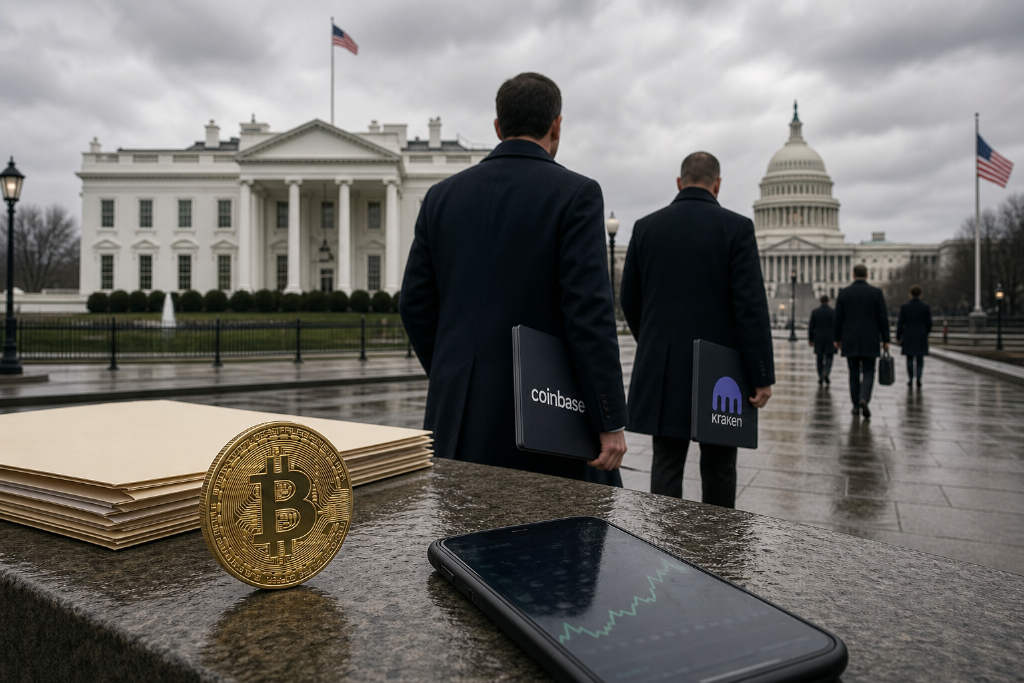
Bitcoin pushed back above $72,000 on Thursday after President Trump met with crypto executives at the White House and urged Congress to pass the long-awaited Clarity Act.
The leading cryptocurrency was trading at $71,758 at 8 a.m. in New York, up nearly 12% over the past 24 hours. Earlier in the session, it touched $72,344. That was bitcoin’s highest level since the start of June. It spent most of July and August below $65,000.

Trump presses Congress on the bill
Trump met at the White House with crypto executives, including the CEOs of Kraken and Coinbase. He said getting the Clarity Act over the line would keep the U.S. ahead of China.
At a Wednesday press conference, Trump said Congress now needed to take the next step by passing the bill, which he described as “a fair version of the Clarity Act” and a landmark piece of structure legislation.
He also hinted that the U.S. may be open to accumulating bitcoin. When asked about adding to the Strategic Bitcoin Reserve, Trump said, “It’s taken a lot of pressure off the dollar, it’s been very, very good for the dollar, and I think if [regulators] came in with recommendations, I would certainly listen.”
September vote now expected
Some lawmakers had hoped to vote on the Clarity Act in August, but after a delay, the vote is now set for September.
The bill would create a framework for distinguishing between digital assets that are securities, commodities or payment stablecoins, a change the crypto industry has long pushed for.
Treasury buybacks and a weaker dollar also helped
Bitcoin’s move came as the Treasury Department said on Wednesday that it would more than double the size of its government debt repurchases. Lower long-term yields reduce the opportunity cost of holding non-yielding assets such as bitcoin and gold, and they tend to support risk-on sentiment.
Bitcoin and gold both climbed after the announcement as the dollar weakened.
2026 still lagged despite a record high in October
Bitcoin hit a record high of $126,080 in October, but its performance in 2026 was still weighed down by geopolitical pressure, including the U.S.-Iran war, rising oil prices and the Federal Reserve’s reluctance to cut interest rates.
This article first appeared on Bitcoin Magazine and was written by Mathew Di Salvo.