
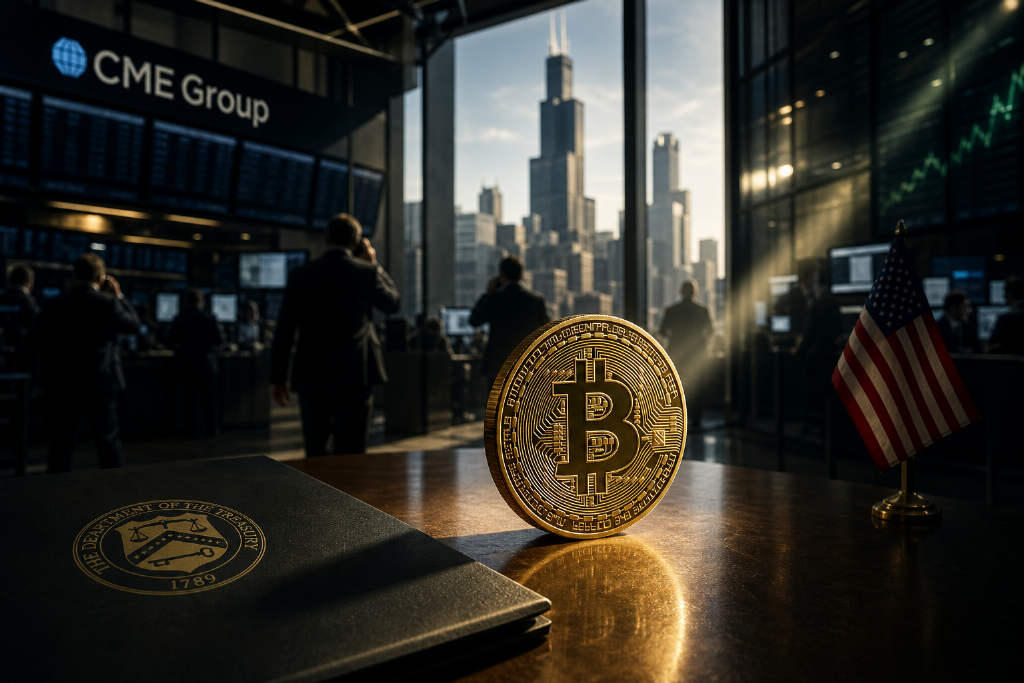
Bitcoin has rebounded sharply, and analysts say a record short squeeze together with policy signals linked to U.S. Treasury Secretary Scott Bessent may be pushing the market into a new phase of bull-cycle adjustment.
Data showed bitcoin rose about 23% over the past week, its biggest weekly gain since the rally that followed the U.S. election in November 2024. Trading activity across crypto markets also picked up at the same time. Spot and perpetual futures volume increased 188%, while Chicago Mercantile Exchange (CME) bitcoin futures volume rose 152%. The annualized futures basis climbed to 11.1%, the highest level since January 2025.
ETF inflows and derivatives metrics moved higher together
Bitcoin ETF products posted net inflows of about 31,740 BTC for the week, the strongest influx since the market peak in October 2025.
Vetle Lunde, head of research at K33 Research, said the early stage of the rally was mainly driven by short covering. On Aug. 19, liquidations of bitcoin short positions reached $1.37 billion in a single day, setting a record high. The market then saw another $739 million in short liquidations on Aug. 21.
Open interest fell to its lowest level since May after the squeeze
The large-scale short squeeze pushed perpetual futures open interest down to 284,000 BTC, the lowest level since May. Funding rates also returned to neutral.
On the macro side, analysts have also focused on signals that Scott Bessent is pushing for increased buybacks of long-term U.S. Treasuries. K33 said such a buyback plan could lower long-term yields and increase demand for scarce assets.
Bitcoin’s correlation with gold increased
Correlation data shifted as well. Bitcoin’s 90-day correlation with gold rose to 0.52, the highest level since October 2020. Its correlation with the Nasdaq index fell to 0.38, the lowest point in a year.
Matt Hougan, chief investment officer at Bitwise Asset Management, also said Bessent’s recent remarks on sanctions targeting Iran’s financial network have reinforced bitcoin’s investment thesis: as the global financial system becomes more affected by geopolitics, the value of decentralized assets that do not rely on any single national financial system may rise further.
The analysis was cited from The Block.