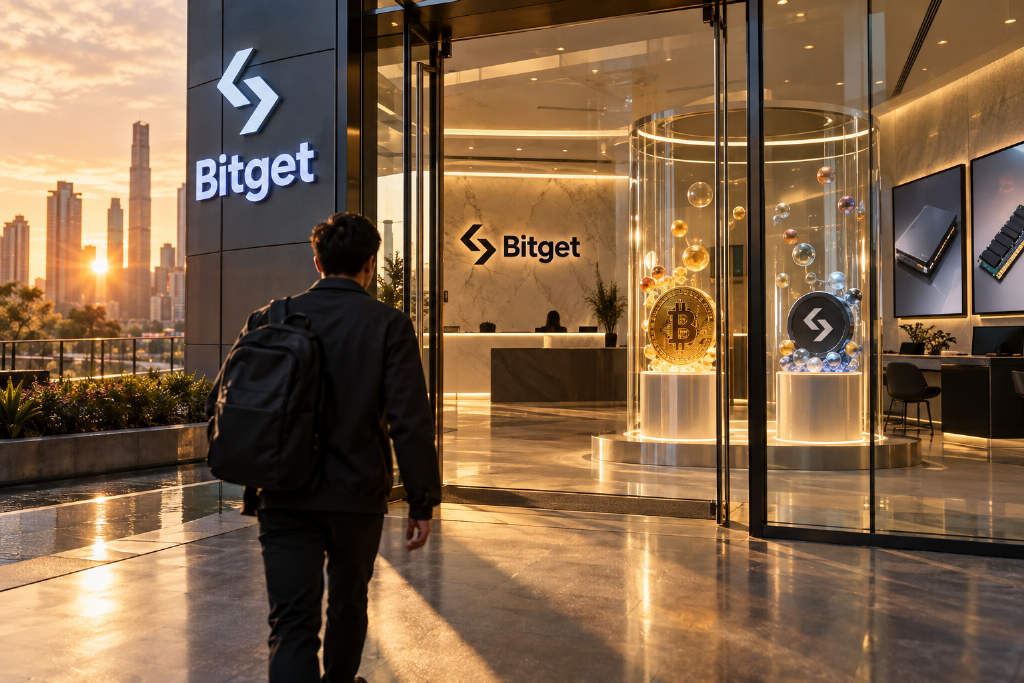
Bitget has rolled out a double CandyBomb campaign running from Oct. 9 at 18:00 to Oct. 19 at 18:00 (UTC+8), according to Odaily. The promotion includes two separate reward pools tied to contract trading activity.
Under the first offer, new futures users who complete the required net deposit and futures trading tasks can share a prize pool of 0.2 BTC. The maximum reward for a single participant is capped at 0.002 BTC.
The second offer is aimed at new TradFi contract users. Those who trade designated contracts, including SanDisk and Micron, can share an 8 rSNDK reward pool. The maximum payout for each participant in that pool is 0.08 rSNDK.
The announcement only states the campaign structure, participation window, and reward amounts. No additional eligibility details were disclosed in the news brief.
Bitget has launched a double CandyBomb campaign, with participation open from Oct. 9 at 18:00 to Oct. 19 at 18:00 (UTC+8), according to Odaily.
Two reward pools announced
In the first promotion, new futures users who complete the required net deposit and futures trading tasks can share a prize pool of 0.2 BTC. The maximum reward for each participant is 0.002 BTC.
The second promotion is for new TradFi contract users. Users who trade designated contracts, including SanDisk and Micron, can share an 8 rSNDK prize pool, with a maximum of 0.08 rSNDK per participant.
This article was originally published by Bit.Fan. For more cryptocurrency news and market insights, visit www.bit.fan. Disclaimer:
The market information, project data, and third-party content displayed on this platform are for industry information sharing only and do not constitute any form of investment advice or return commitment.
Cryptocurrency trading carries high risks. Users should fully assess their risk tolerance and make independent decisions. All profits, losses, and legal responsibilities are borne by the users themselves.