Bitget UEX’s Nov. 3 daily report centered on U.S. manufacturing data, a sharp drop in oil prices, Election Day in the United States, and fresh moves across crypto and U.S. equities.
U.S. manufacturing expands for a 10th month as price pressure eases
The U.S. ISM manufacturing PMI for October rose to 55.5 from 54.5, extending expansion to a 10th straight month. New orders came in at 55.5, while the production index climbed to 59.0. The prices index fell to 75.2 from 77.9, showing that input costs were still rising, but the breadth of those increases had narrowed.
The report said the data pointed to a mix of manufacturing growth and softer price pressure. Demand resilience may support corporate revenue, but the prices component remains elevated and, on its own, does not justify a clear call for materially easier monetary policy. Job openings data due later in the day was cited as the next clue on labor demand.
Oil settles sharply lower after supply-risk premium is reassessed
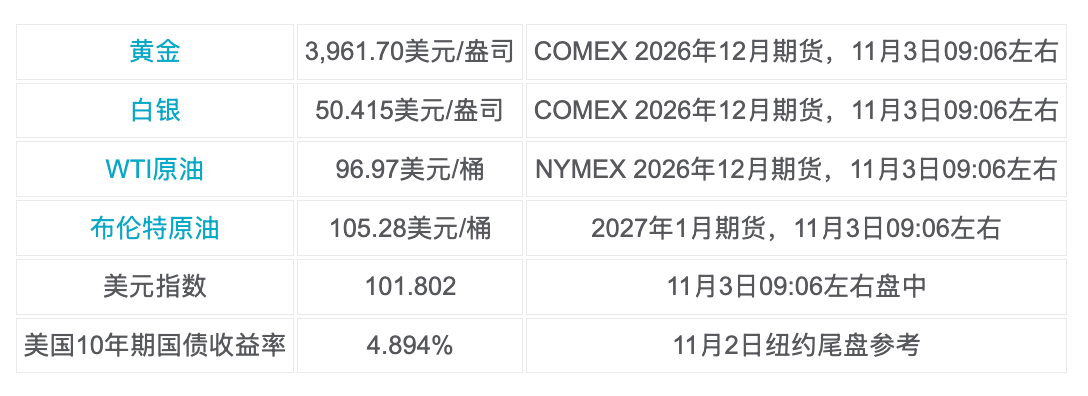
On Nov. 2, December WTI crude settled at $96.46 a barrel, down about 7.4%. Brent’s January 2027 contract settled at $104.77 a barrel, down about 7.6%. According to the report, news related to diplomatic contact between the U.S. and Iran pushed the market to reassess the Middle East supply risk premium.
Lower oil prices may ease transportation and some manufacturing cost pressure, while revenue expectations for energy companies face strain. The report added a clear caveat: any diplomatic progress still needs to translate into actual supply improvement, and expectations around talks should not be written up as a ceasefire or a full restoration of transport flows.
U.S. midterm election reaches voting day
Nov. 3 local time in the U.S. is federal election day. Markets are watching the shape of Congress and what it could mean for fiscal policy, taxes, and the regulatory agenda. As of the time this daily note was published, no voting result had been produced.
The report said trading on the day would need to absorb election developments, labor data, and corporate earnings at the same time. Policy expectations may drive sector rotation, but campaign rhetoric, election outcomes, and later legislation should be treated as separate steps rather than folded into one conclusion.
Commodities, FX, and crypto market review
In commodities and foreign exchange, crude traded slightly above the previous settlement early in the day but remained within the range set after the sharp drop. Gold was near $4,000, and the U.S. dollar index was below 102. The report said the retreat in oil offered room for softer inflation expectations, yet tech stocks stayed under pressure, suggesting that lower cost expectations had not offset concerns over returns on AI spending.
In crypto, BTC was quoted at about 77,206.47 USDT, down 1.42% over 24 hours. ETH traded around 2,260.30 USDT, down 1.10% over the same period. Total crypto market capitalization stood at roughly $2.61 trillion, down 2.64% in 24 hours, with that figure updated at 09:06 Beijing time.
Liquidation zones for BTC and ETH
For BTC, the more visible potential short liquidation cluster on the upside was around $78,400 to $79,000, or about 1.68% to 2.45% above spot. On the downside, the potential long liquidation cluster was around $76,000 to $76,600, roughly 0.66% to 1.44% away. The report said price was currently closer to the lower zone, so any further decline should be watched for volatility tied to long deleveraging.
For ETH, the more visible potential short liquidation cluster on the upside was around $2,305 to $2,330, about 2.11% to 3.22% away. The lower potential long liquidation cluster was around $2,220 to $2,240, or roughly 0.77% to 1.66% away. The report said the nearer lower band should be watched first, especially around $2,240, for both spot demand and leverage pressure.
Institutional cost-basis references
Glassnode said on Oct. 28 that its estimated blended cost basis for U.S. spot BTC ETFs was about $81,500, leaving the current BTC price about 5.39% below that reference. Strategy disclosed on Nov. 2 that, as of Nov. 1, it held 849,327 BTC at an average cost of about $75,451 including fees, putting the current BTC price about 2.20% above that level. The report stressed that these gaps only reflect unlevered price changes relative to holding cost and do not represent the overall returns of ETF investors or the company.
Its short trading takeaway was straightforward: watch the lower liquidation-zone edge near $76,600 for BTC and near $2,240 for ETH first; if prices rebound, then watch $78,400 for BTC and $2,305 for ETH. It also noted that Strategy’s cost basis sits about 0.73% away from the lower edge of BTC’s lower liquidation zone, which may be useful when tracking long deleveraging and price action near cost, but should not be treated as proof of support.
U.S. stocks finish mixed as pressure stays on large-cap tech
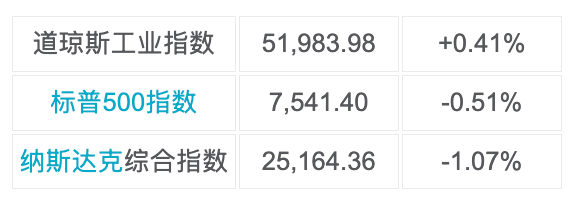
U.S. equities failed to hold an early rebound and closed with a split performance: the Dow rose, while the S&P 500 and Nasdaq fell. The report said lower oil prices improved cost expectations for some industries, but financing and valuation pressure on large-cap tech continued to weigh on the broader indexes.
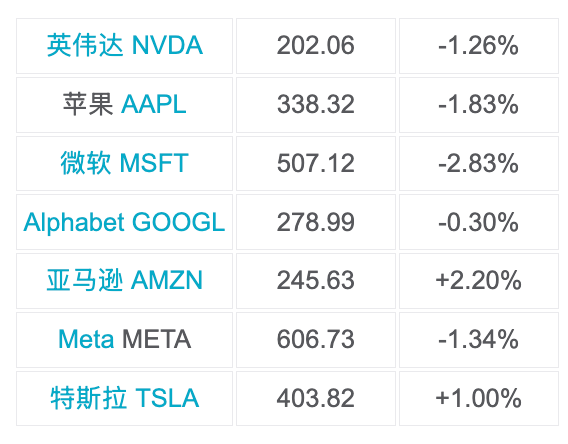
Among the Magnificent Seven, two stocks rose and five fell. Amazon and Tesla advanced, while Microsoft posted the largest decline. The report added that Apple’s regular-session drop took place before its earnings release and should not be used to judge the market’s after-hours response.
Sector moves
- AI infrastructure: Oracle fell 8.76% and Marvell dropped 12.72%. Oracle is pursuing financing through stock and bond issuance, while Marvell announced a large all-stock acquisition. Market attention has shifted to financing costs, equity dilution, and integration delivery.
- Energy and airlines: Exxon Mobil fell 4.05%, Chevron lost 3.29%, and Delta Air Lines rose 4.08%. With oil prices dropping sharply, fuel producers and fuel users faced different earnings implications.
- Crypto-linked stocks: Coinbase fell 3.98%, Robinhood lost 1.35%, and Strategy rose 0.19%. The report said these names should be assessed through their own trading businesses, financing arrangements, and asset exposure rather than grouped together mechanically.
Apple, Palantir, and Oracle in focus
Apple: revenue grows, but margin needs a cleaner read
Apple fell 1.83% in the regular session on Nov. 2 to close at $338.32, then reported fiscal fourth-quarter 2026 revenue of $114.5 billion, up 12% year over year. Diluted EPS was $2.10, up 14%. Gross margin came in at 47.9%, including about 1 percentage point of benefit from tariff refunds, while EPS also included a related $0.05 gain.
The report said record quarterly iPhone revenue and services revenue showed continued growth in Apple’s product and ecosystem income. At the same time, it argued that margin analysis should strip out the refund effect rather than treat the full improvement as sustainable operating income. It pointed to holiday-season product demand, services growth, and margin durability as the next items to watch. The next full trading day, not the pre-earnings regular session, was described as the better gauge of how the market digests the results.
Palantir: strong commercial growth, with order durability still to be tested
Palantir fell 3.13% in the regular session to $178.34, then reported third-quarter revenue of $2.313 billion, up 96% year over year. U.S. commercial revenue reached $984 million, up 148%. The company raised its full-year revenue guidance to $8.530 billion to $8.534 billion.
The report said U.S. commercial revenue exceeded U.S. government revenue for the first time, signaling a broader customer mix. But it also noted that total newly signed contract value rose only 6% year over year, creating a gap versus revenue growth. That leaves contract conversion and the sustainability of new bookings as key follow-up points. The note said investors should track commercial customer expansion, order delivery, and GAAP profitability rather than focus only on top-line growth. Because the earnings were released after the close, the regular-session decline does not reflect the post-earnings reaction.

Oracle: $20 billion financing plan sharpens scrutiny on capital spending
Oracle disclosed a preliminary filing on Nov. 2 showing plans to issue $10 billion in common stock and another $10 billion in senior notes. Completion of one offering is not conditional on completion of the other. The stock fell 8.76% that day to $119.22. The report noted that the proposed size of the offerings does not mean the funds have already been raised.
Market focus, it said, is now split across equity dilution, financing costs, and the return profile of Oracle’s AI expansion. Financing can provide capital, but whether it creates per-share value depends on utilization, revenue realization, and cash-flow performance. Final terms, use of proceeds, and later cash-flow guidance were listed as the main items to watch.
Market and project updates
Strategy disclosed weekly BTC purchases and capital actions. In a Nov. 2 announcement, the company said it bought 811 BTC between Oct. 26 and Nov. 1 for about $65.50 million in total, at an average price of $80,846 including fees. Over the same period, it repurchased about $208.2 million of STRC. The report said this BTC purchase belongs to a previously disclosed historical execution window and should not be framed as fresh buying today.
Marvell and Lumentum signed a merger agreement. The companies announced an all-stock transaction in which each Lumentum common share will be exchanged for 4.500 Marvell common shares. The deal is expected to close in the first half of 2028, subject to shareholder and regulatory approval, among other conditions. The report said the transaction would combine electrical interconnect and optical technologies more closely, while dilution, approvals, and synergy delivery remain the main points to monitor.
On crypto leverage, Glassnode said in a weekly observation published Nov. 2 that active selling in perpetual futures had driven the earlier decline, while open interest and long-side funding pressure remained elevated and spot buyers were relatively stable. The report added that this was a structural observation for the week ending Nov. 1 and should not be treated as a direct read on today’s flows.
On exchange developments, Binance said on Nov. 2 that a zero-knowledge proof for the Oct. 31 reserve snapshot had been generated, allowing users to verify balances for 10 tokens. The exchange also said it was continuing to restore withdrawals for other assets and networks, with related losses to be borne by the platform.
Today’s calendar and a market view
The report said JOLTS should be read through job openings, hiring, and quits together when assessing labor demand. AMD earnings were flagged as another source of information on AI hardware demand and profitability. With election developments and earnings landing at the same time, the note warned against attributing all single-stock moves to macro headlines.
As for outside commentary, Longbow Asset Management CEO Jake Dollarhide said on Nov. 2 that AI spending has limits and that the key question is whether it can keep adding shareholder value. In the context of the current market, the report said the more useful test ahead is whether spending turns into cash returns.
This report is for market information only and does not constitute investment advice.