

BitMart said it will formally stop operating its trading platform on Jan. 31, 2027, after announcing an orderly wind-down of exchange services in the early hours of July 26. The company said the move followed an assessment of its operating conditions, market environment and future strategic direction.
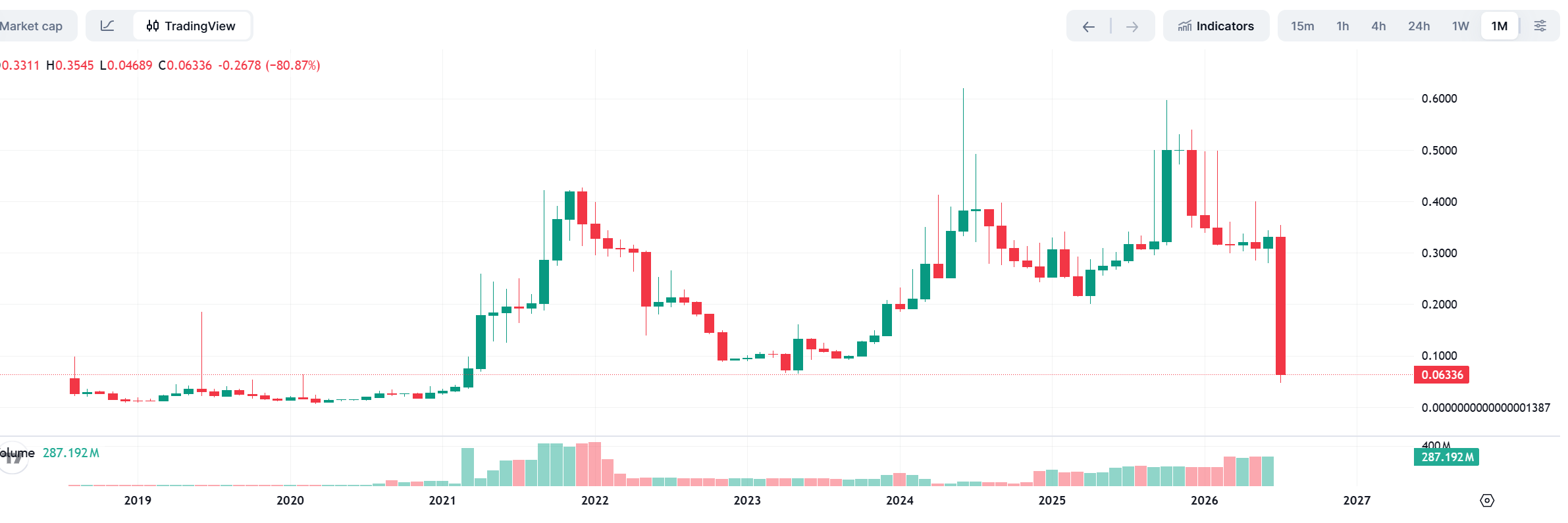
The announcement sent BitMart’s platform token BMX sharply lower, falling from around $0.3 to $0.064. Its market capitalization dropped to $20.57 million. The report noted that BitMart was still posting roughly hundreds of millions of dollars in 24-hour trading volume when the notice was released, a meaningful figure for a mid-sized exchange, even as the platform moved toward an exit.
Shutdown schedule starts in July and ends in January 2027
According to BitMart’s notice, the exchange began phasing out services from 01:30 UTC on July 26. It started suspending new user registrations as well as crypto and fiat deposits. Derivatives accounts were placed into reduce-only mode, the spot market stopped accepting new orders, and automated services including copy trading, grid trading and API trading were set to be shut down in stages.
From 01:00 UTC on Aug. 26, BitMart will stop all spot, derivatives and other trading services. Any derivatives positions left open at that point may be handled under mark price, index price or other applicable settlement rules. Products such as wealth management, staking, lending and Launchpad services will also be terminated in phases, with redemption and settlement arrangements to be announced separately.
The exchange plans to formally cease platform operations at 15:59 UTC on Jan. 31, 2027. After that date, users will still be able, within a specified period, to log in, review historical records and submit withdrawal requests.
Withdrawals remain open, but reviews may slow some requests
BitMart said withdrawals are still available for now. It added that some requests may be subject to manual review because of KYC checks, device and account security, source-of-funds requirements, withdrawal address reviews, Travel Rule obligations and sanctions screening. The company urged users to download and save records of account balances, deposits, withdrawals and trading activity, and warned them against scams involving so-called expedited processing fees, unfreezing fees, or requests for passwords, verification codes, private keys or seed phrases.
The report described the wording of the notice as an attempt to frame the exit as an orderly sunset, with trading stopped a month ahead of the broader closure timeline, a withdrawal window stretching for nearly half a year, and repeated anti-fraud reminders.
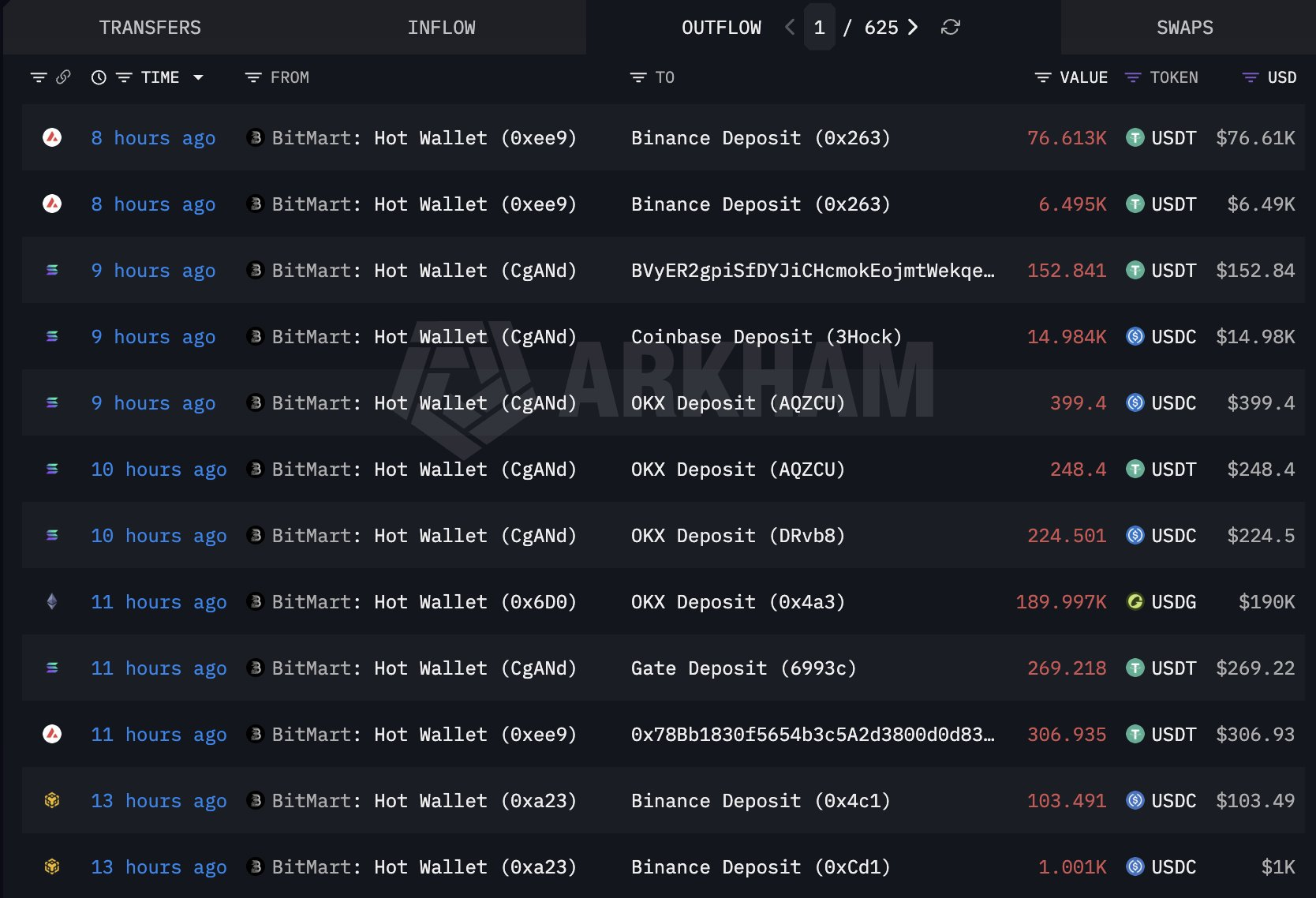
Still, Arkham data cited in the report showed that only 58 wallets completed withdrawals over the past 24 hours, for a total of about $805,000. It also said the platform had not actually processed withdrawal requests during the previous eight hours.
From rapid expansion to shutdown
BitMart was founded in 2017 by Sheldon Xia and officially launched in March 2018. Its early team came largely from traditional finance and technology backgrounds. The exchange at one point said it had more than 10 million users and served over 100 countries and regions.
The platform entered wider public view after its December 2021 hot wallet hack, when about $196 million in assets were lost following a private key compromise. BitMart later publicly promised compensation and fully reimbursed affected users, according to the report.
The article said mid-sized and smaller exchanges have been squeezed as top platforms keep widening their lead in liquidity, product breadth and brand trust, while compliance and operating costs continue to rise.
It also referenced the recent voluntary shutdown of BitMEX, which sparked broad community discussion. Some views cited in the report hold that the crypto exchange sector is entering another round of reshuffling. As compliance advances across major markets, offshore exchanges are facing less room to operate. At the same time, overall trading activity has weakened, while user growth and revenue sources are under pressure. Business models that relied heavily on listing fees and trading commissions are also being challenged, pushing exchanges to explore areas such as tokenized securities and channel services. The report said industry participants broadly believe consolidation and attrition could accelerate if smaller and mid-sized exchanges fail to build clear differentiation.
The report also noted that in the days before the shutdown announcement, BitMart had already adjusted spot margin settings, paused some automated services and pushed ahead with an offboarding process for U.S. users. In hindsight, those moves looked like early steps toward the broader wind-down.
Former Global CEO says he was not involved in the decision
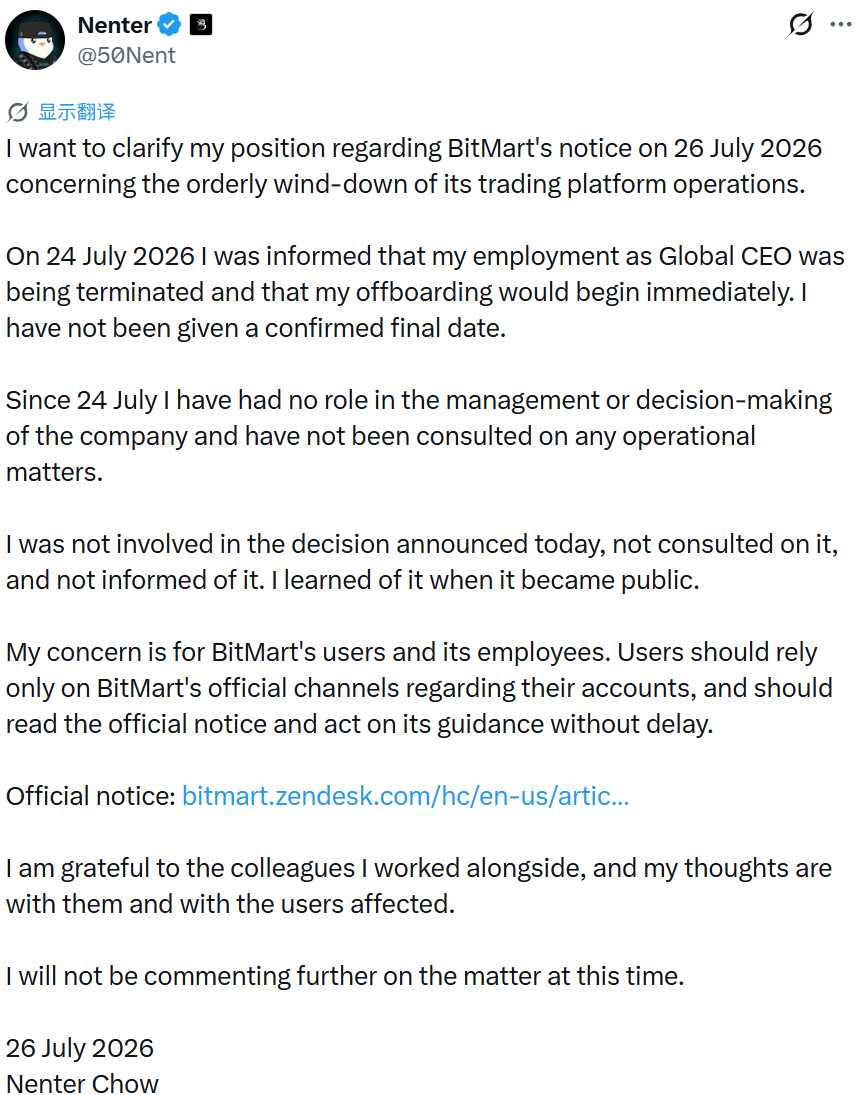
After the announcement, Nenter Chow said he was informed on July 24 that his tenure as Global CEO would be terminated, and that he immediately began the departure process. He said he had not yet received a confirmed final departure date. From that day, he said, he no longer took part in BitMart’s management or decision-making and was not consulted on operational matters.
Chow added that he did not participate in drafting the July 26 orderly shutdown announcement, and that he only learned of the decision after the notice became public.
The report said BitMart has kept its explanation for the closure broad. The company referred only to a prudent evaluation of operating conditions, market environment and future development direction, without disclosing financial details, the scale of any losses or a single triggering event. As a result, outside observers cannot tell from the public statements whether the main pressure came from liquidity, compliance costs or weakening business competitiveness.
CZ calls it a tough moment and explains why he is not buying the exchange
Binance founder Changpeng Zhao commented after the notice was released, saying: “Tough times! At least, this seems like an orderly closing process, and users can withdraw their assets.”
Asked why he would not acquire BitMart, Zhao said: “Acquiring a CEX is not as easy as other businesses. What if a hack happens after the acquisition? Was it an old backdoor left by the previous team, or a new issue? An acquisition is still possible, just much more complicated.”
Discussion around whether BitMart could become an acquisition target has picked up since the shutdown notice, according to the report.