

Bitmine is approaching the end of its ETH buying program.
Speaking at Token2049 in Singapore on Oct. 7, Bitmine Chairman Tom Lee said the company will stop buying Ether once its holdings reach 5% of total supply. He described 5% as a hard cap.
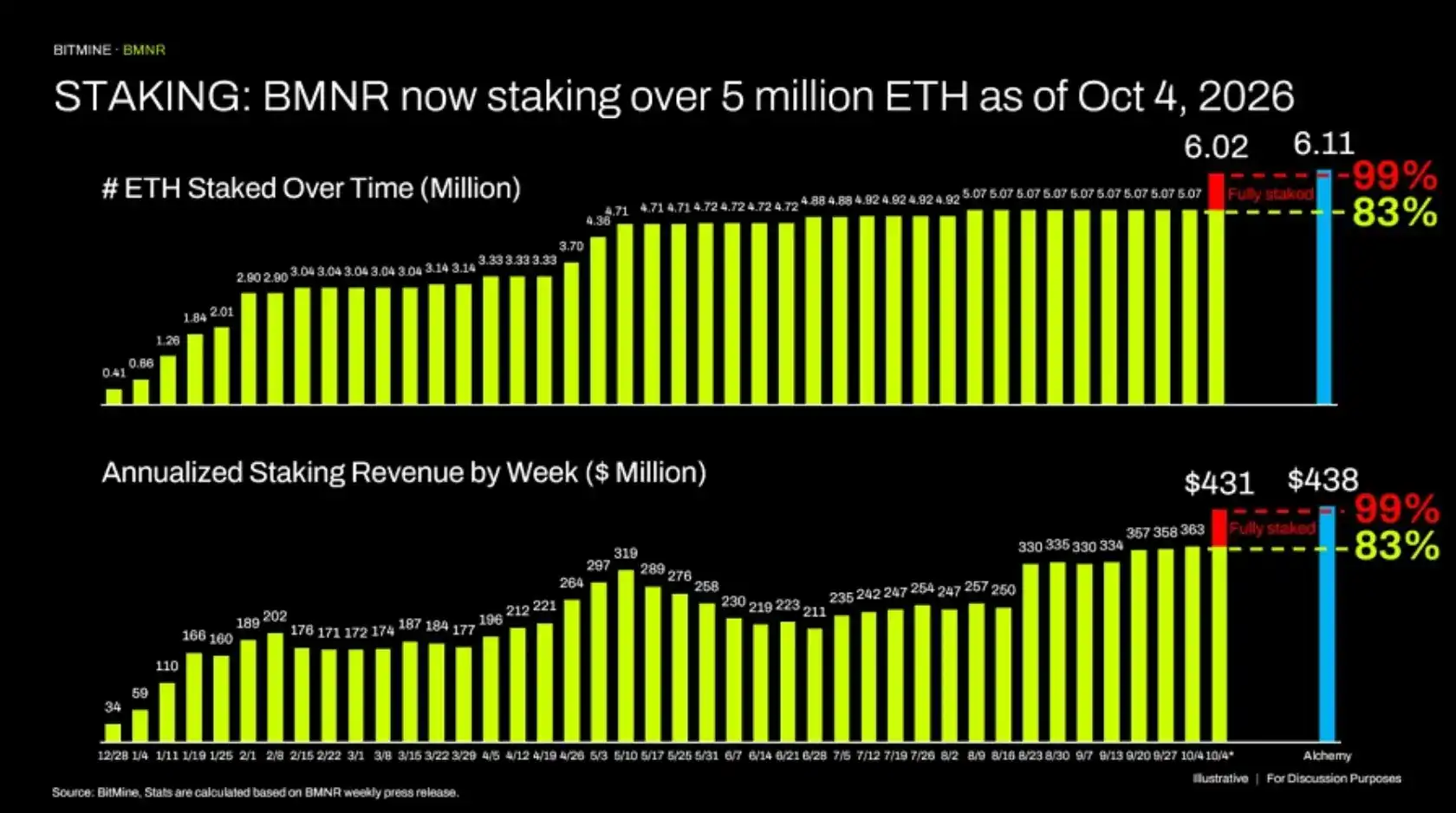
According to Bitmine, the company held 6,016,414 ETH as of Oct. 4, equal to about 4.9% of total supply. That leaves less than 100,000 ETH before it reaches the limit. At the company’s recent buying pace, it could get there in about a month and a half.
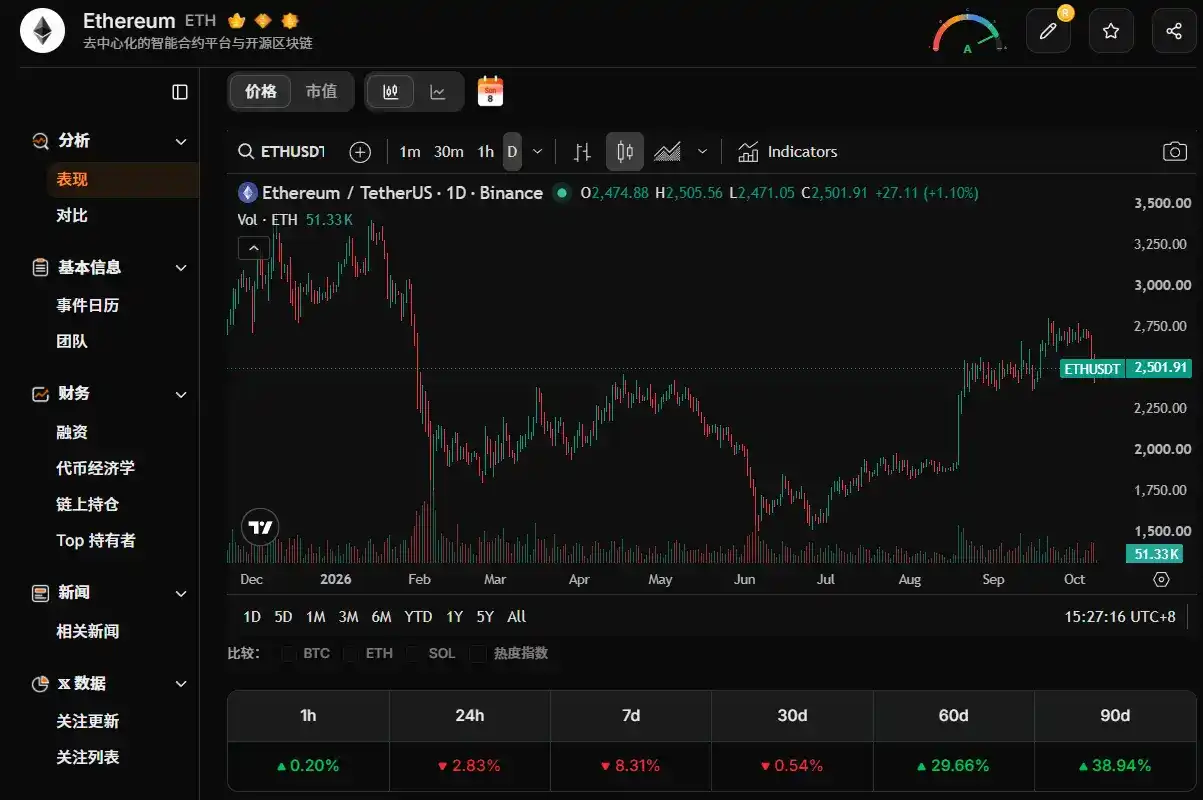
That puts one of ETH’s steadiest large buyers on the verge of stepping away. At the same time, spot ETH ETFs have recently seen continued outflows, and ETH fell about 8.2% from Oct. 7 to Oct. 8. The market is now focused on whether demand from elsewhere can absorb supply once Bitmine stops adding to its position.
Bitmine was taking in as much as 70% of new ETH supply
Bitmine launched its ETH treasury strategy on June 30, 2025, and has bought on a weekly basis since then. The company has referred to its goal of holding 5% of total ETH supply as its “5% alchemy.”
Lee said the company initially thought it would take five years to reach that target. Instead, it got there in a little over a year.
At its fastest pace, Bitmine bought more than 100,000 ETH in a single week. Starting in May this year, it deliberately slowed the pace to tens of thousands of ETH per week, and in recent weeks that figure dropped again to around 15,000 ETH. Even so, Bitmine has added more than 1 million ETH in 2026 alone.
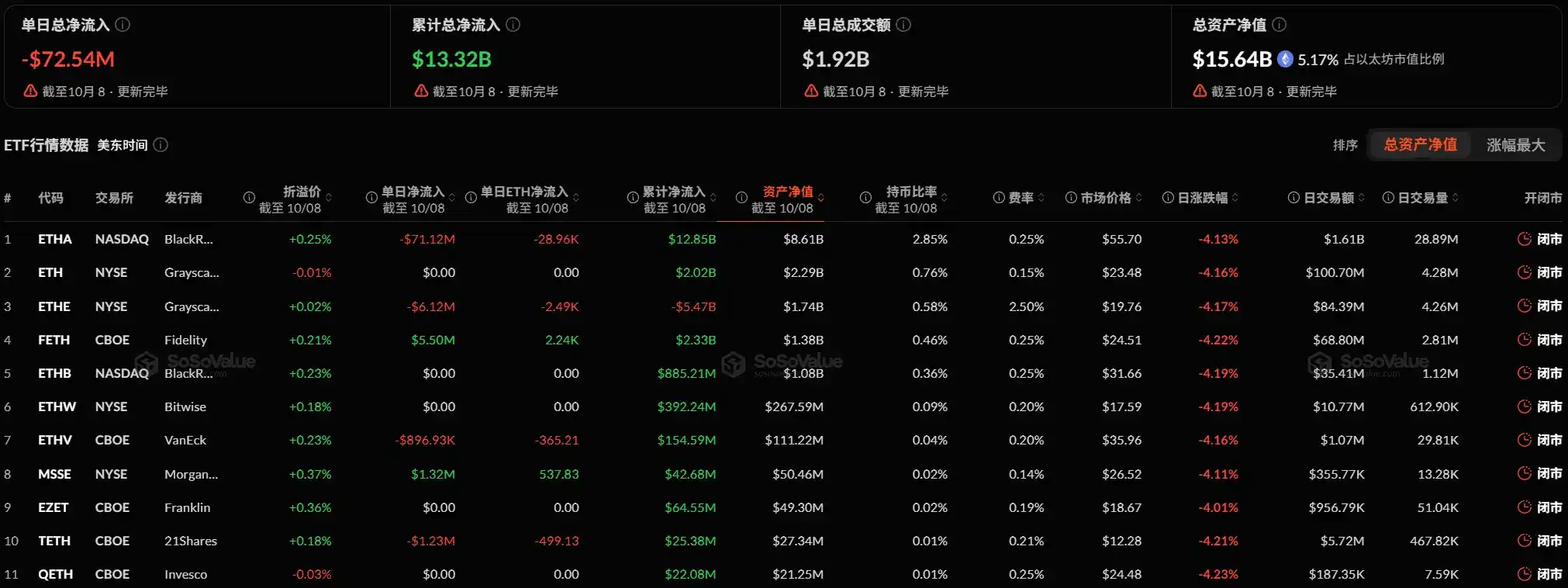
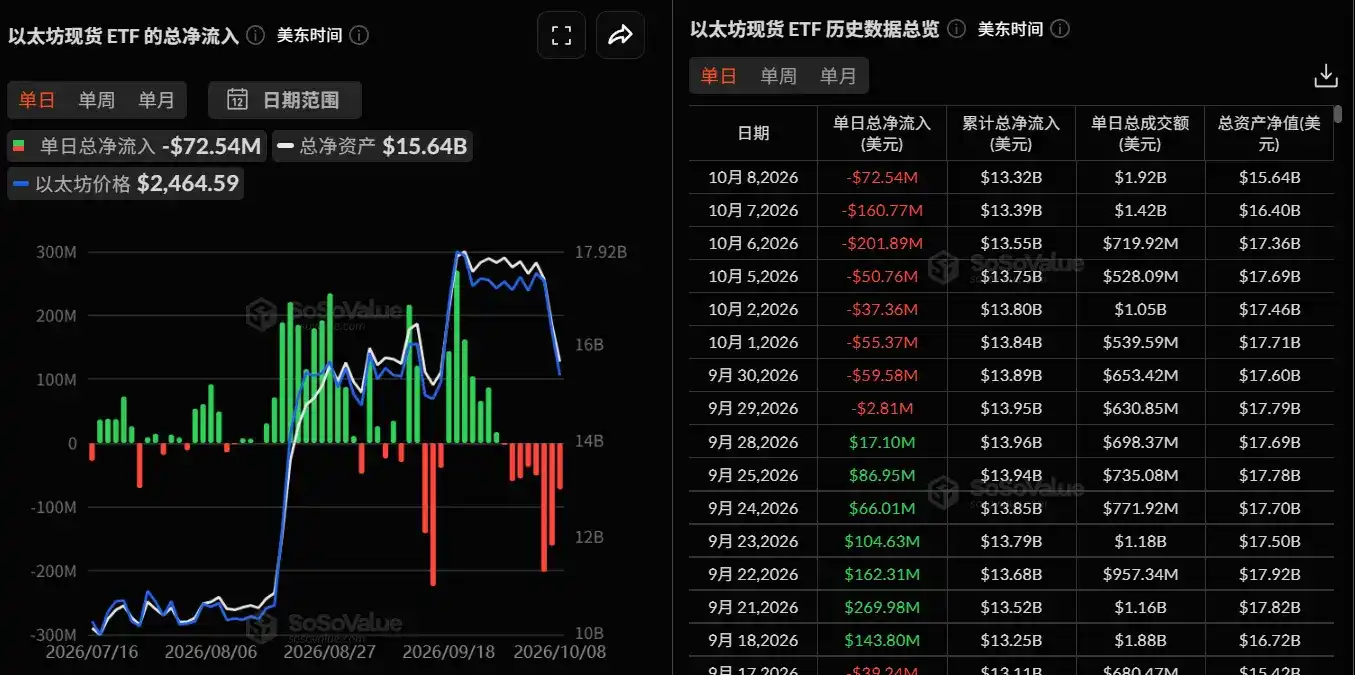
Data from SoSoValue cited in the report shows that, as of Oct. 8, U.S. spot ETH ETFs had about $15.64 billion in net assets, equal to roughly 5.17% of ETH’s market capitalization. Bitmine alone accounts for about 4.9% of supply, putting its holdings on a scale comparable to the entire U.S. spot ETH ETF segment.
The importance of that bid becomes clearer when viewed against ETH’s supply side.
After Ethereum moved to proof-of-stake, new ETH has been issued mainly as rewards to stakers, with issuance rising as more ETH is staked across the network. On the other side, base fees paid by users are burned. After the Dencun upgrade in 2024, fees on layer-2 networks fell sharply, and the amount of ETH burned shrank with them. Since then, ETH has returned to net issuance growth.
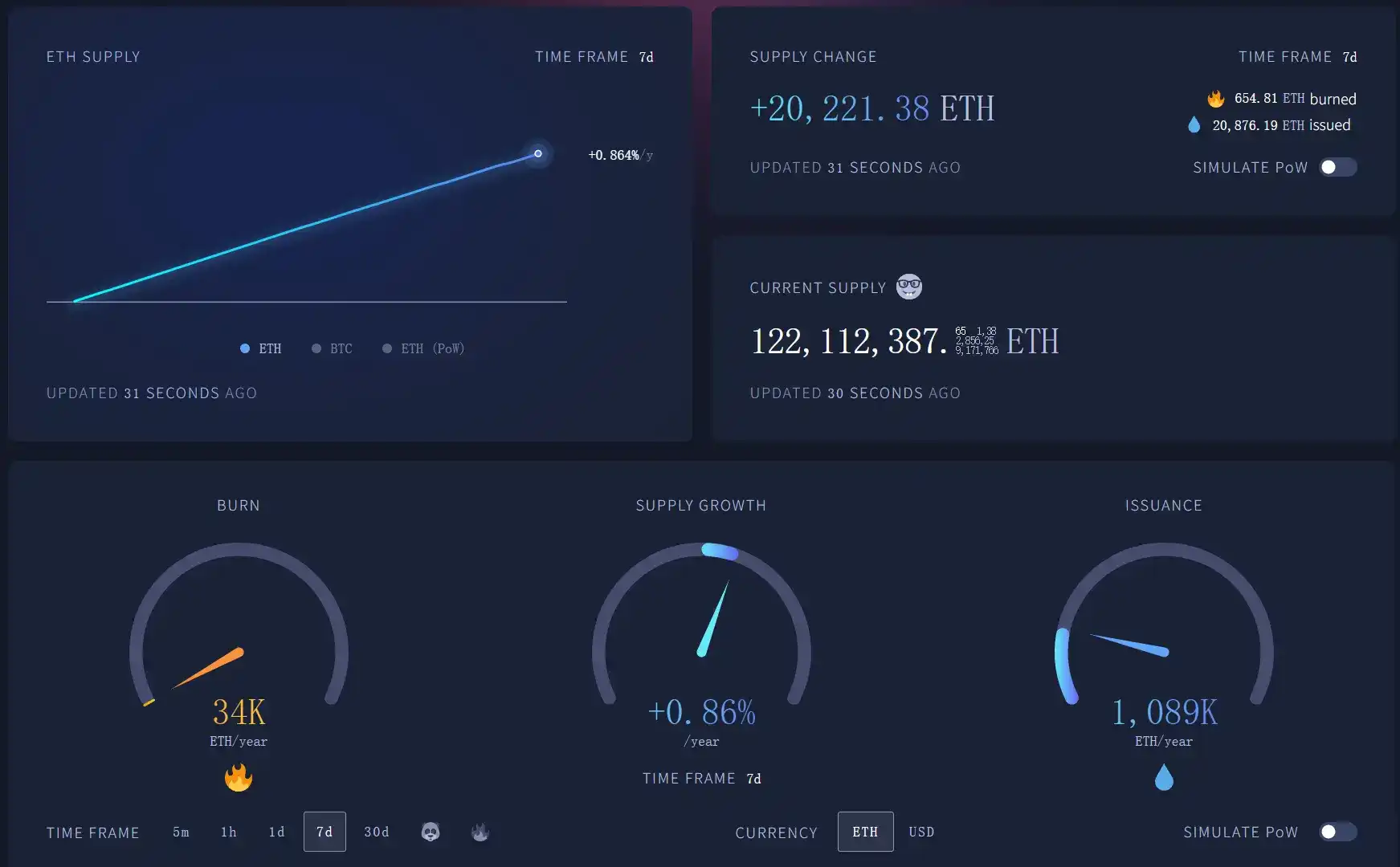
According to ultrasound.money data cited in the article, ETH issuance over the past seven days totaled 20,876 ETH, while only 655 ETH was burned. That works out to average daily net issuance of about 2,980 ETH, or roughly $7.22 million using the report’s figure, with annualized supply growth of about 0.86%.
Bitmine said in a company announcement that it bought 15,112 ETH on the market last week, equal to about 72% of net new issuance over the same period. In practical terms, one company was absorbing roughly seven-tenths of newly created ETH supply over that stretch.
That buying still did not hold up the price. The report says ETH topped in October 2025 and the broader crypto market then entered a bear market. ETH rebounded in the third quarter, but weakened again after entering October, leaving it down more than 40% over the past year.
After the 5% cap, Bitmine could shift from buyer to seller
The 5% threshold was not always framed as an absolute ceiling. In an earlier interview, Lee said that if Ethereum applications kept expanding and more companies began holding ETH, owning more than 5% could still be reasonable, and Bitmine might revisit the issue in 2027.
Lee also said at the time that Bitmine’s roughly $300 million in annual staking income was enough to cover the $30 million to $35 million in annual dividends on its 9.5% Series A preferred stock, leaving the company with no reason to sell ETH for funding needs.
His latest comments were tighter. Lee now says 5% is a hard cap and Bitmine will not hold more than that share of ETH supply. In his view, a hard cap means shareholders no longer need to worry that the company will keep raising capital to buy more coins, and that BMNR has a better chance to outperform ETH in an up market.
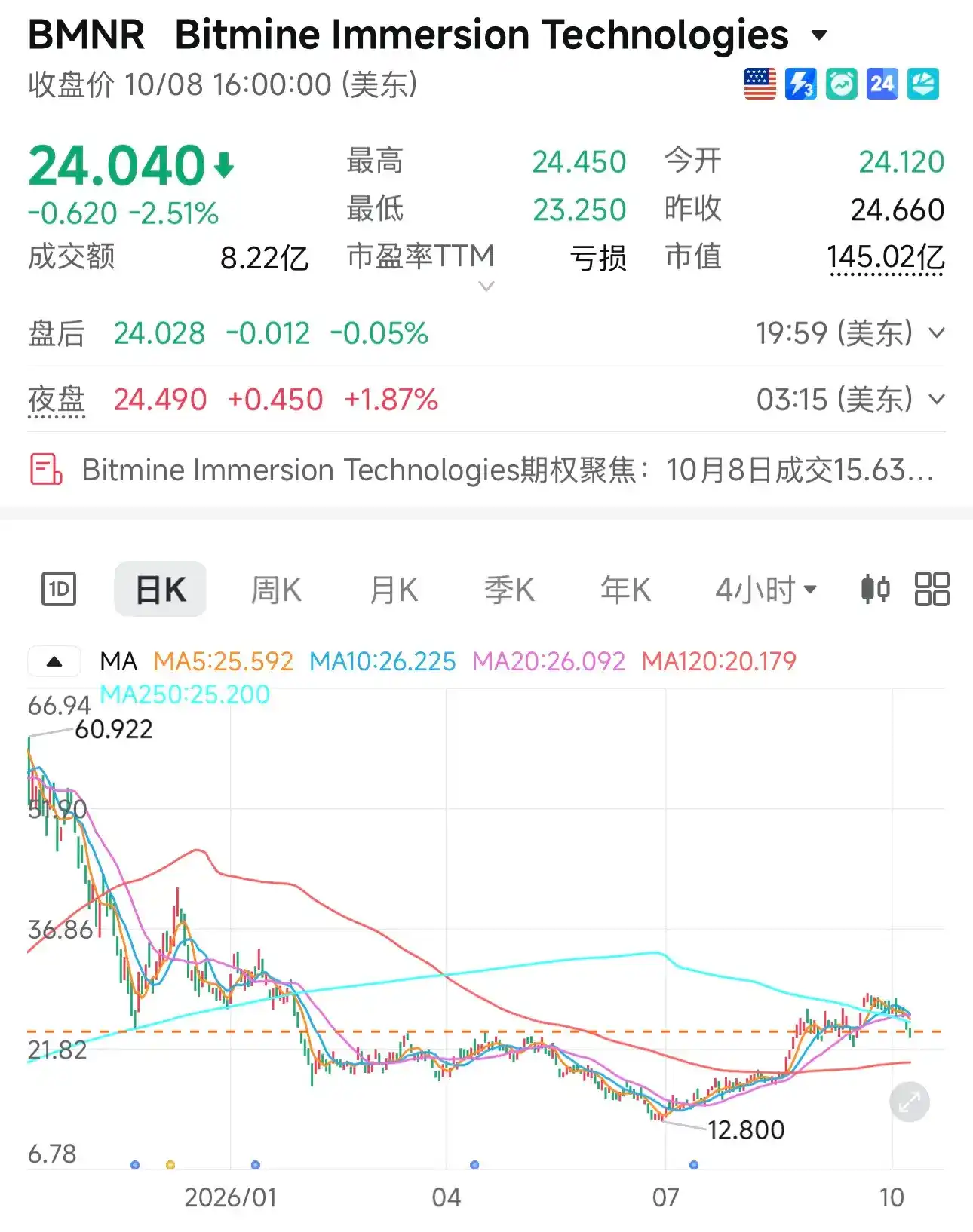
The shift also reflects the pressure treasury companies face when their stock trades below the value of the assets they hold. In that situation, issuing more shares to buy crypto dilutes the amount of ETH backing each share. Bitmine has repurchased 21 million shares this year, and Lee said in a company statement that it was the largest stock buyback ever carried out by a crypto treasury company.
Some crypto KOLs have argued that the hard cap removes the dilution risk hanging over BMNR, and Lee said he agreed with that view. For the ETH market, the implication is straightforward: a persistent buyer is set to leave.
Even after purchases stop, Bitmine’s holdings may not stay unchanged. Lee has also said that once the company reaches 5%, it can sell staking rewards to maintain that ownership ratio.
Bitmine said that as of Oct. 4 it had staked 5,067,309 ETH, or 84% of its holdings. Its seven-day annualized yield was 2.63%, and expected annualized staking income was about $363 million. On that basis, the company would receive about 133,000 ETH in rewards per year.
ETH supply itself is also growing. The article says net supply rises by about 1.05 million ETH per year, and 5% of that is about 53,000 ETH, which Bitmine could retain without breaching the cap. To keep its share at 5%, the company may need to sell about 80,000 ETH in rewards each year.
In size terms, 80,000 ETH is worth about $200 million at the current price cited by the report’s calculation, or less than $600,000 per day on average. The direct market impact may be limited. The bigger change is directional: Bitmine could move from a buyer that absorbed around 70% of new weekly supply to a seller releasing a smaller amount of ETH on a continuing basis.
Lee has previously said the company has no need to sell its core holdings. The roughly 5.07 million ETH already staked continues to generate income.
ETF flows, exchange balances and other treasury firms have not filled the gap
With Bitmine close to stopping its purchases, the market has naturally turned to other potential buyers. The report says the main demand channels do not yet show clear signs of taking over.
Start with ETFs. SoSoValue data cited in the article shows that spot ETH ETFs posted net inflows in both August and September as ETH rebounded, but turned back to net outflows in October. Since Sept. 29, the products have recorded net outflows for eight straight trading days, totaling about $641 million. Of that, $579 million has left since the start of October.
The outflows were especially heavy around Lee’s remarks. On Oct. 6, spot ETH ETFs saw $202 million in net outflows in a single day, almost all of it from BlackRock’s ETHA. Another $161 million left on Oct. 7, followed by $72.54 million on Oct. 8.
Exchange data points in a similar direction. Binance proof-of-reserves data shows user ETH balances fell 4.61% in September, equal to about $499 million, while user BTC holdings rose by about $537 million over the same period.
Other ETH treasury companies may also struggle to take over. When a company’s stock trades below the value of the crypto it holds, the model of issuing shares to buy more coins becomes harder to sustain. The report uses SharpLink, the second-largest ETH treasury company, as an example. When ETH was at lower levels in June, SharpLink bought only about 5,000 ETH, its first increase in eight months.
After that, most of SharpLink’s position growth came from staking rewards. Lookonchain data cited in the report shows that by the end of September, SharpLink held about 892,100 ETH and had accumulated 27,900 ETH in staking rewards.
Still, Lee said earlier this month that ETH treasury companies collectively hold 7% of total ETH supply today, and that share could rise to 15% in this cycle. On that basis, other institutions would still need to buy about 9.8 million ETH after Bitmine stops.
Staking demand looks firmer, but not all of it is new demand
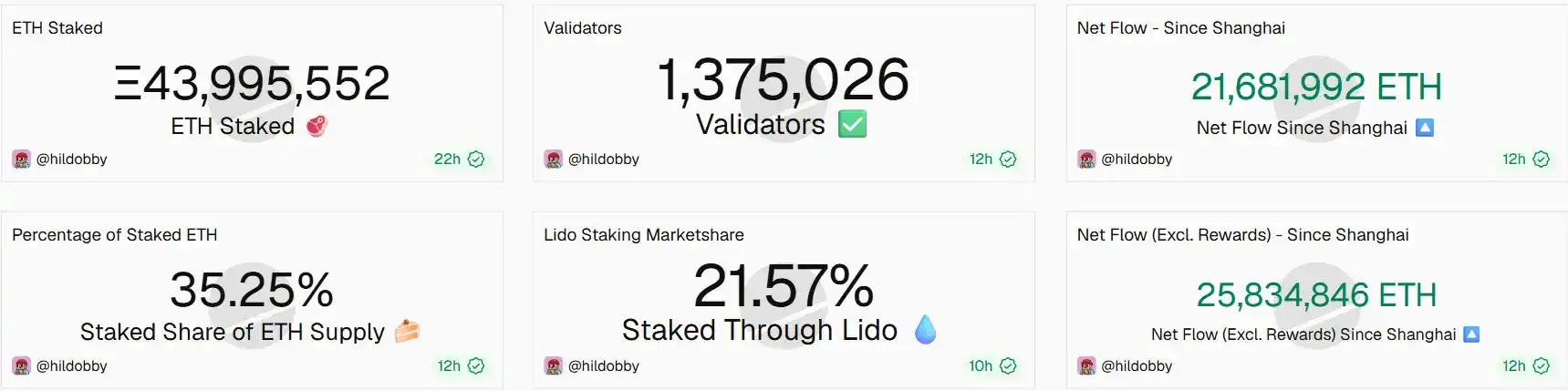
Conditions on the staking side look somewhat better. As of Oct. 6, about 1.5 million ETH was waiting to enter staking, while about 767,000 ETH sat in the exit queue. The entry queue was clearly larger than the exit queue.
That said, the exit queue had previously climbed to 851,000 ETH after the security incident disclosed by MetaMask on Sept. 30. Lido said that this ETH, which exited as a precaution, would be gradually restaked. That means part of the current entry queue reflects returning ETH rather than entirely new demand.
Views are diverging as the market looks for the next source of demand
Lee remains constructive on ETH’s outlook. He said the crypto bull market began in August and could become the biggest on record, driven by institution-led asset tokenization, intergenerational wealth transfer, treasury companies absorbing supply, and onchain payments by AI agents.
Crypto KOL Lanhu also said Bitmine was right to stop at 5%. After accumulating at lower levels, Lee’s next task, in Lanhu’s view, is to build the narrative for ETH and push Ethereum as the settlement layer for an onchain Wall Street.
Many in the market argue that 5% is simply a limit set by the company itself, and that Bitmine stopping purchases does not automatically mean ETH must fall. Even so, once Bitmine steps back, ETH will have one less stable large buyer, leaving price action more dependent on ETF flows, staking demand and other institutions. That could mean larger swings.
Another line of thinking focuses on concentration. From that perspective, stopping purchases is a form of restraint: a single institution can become the largest participant, but should not try to dominate Ethereum.