
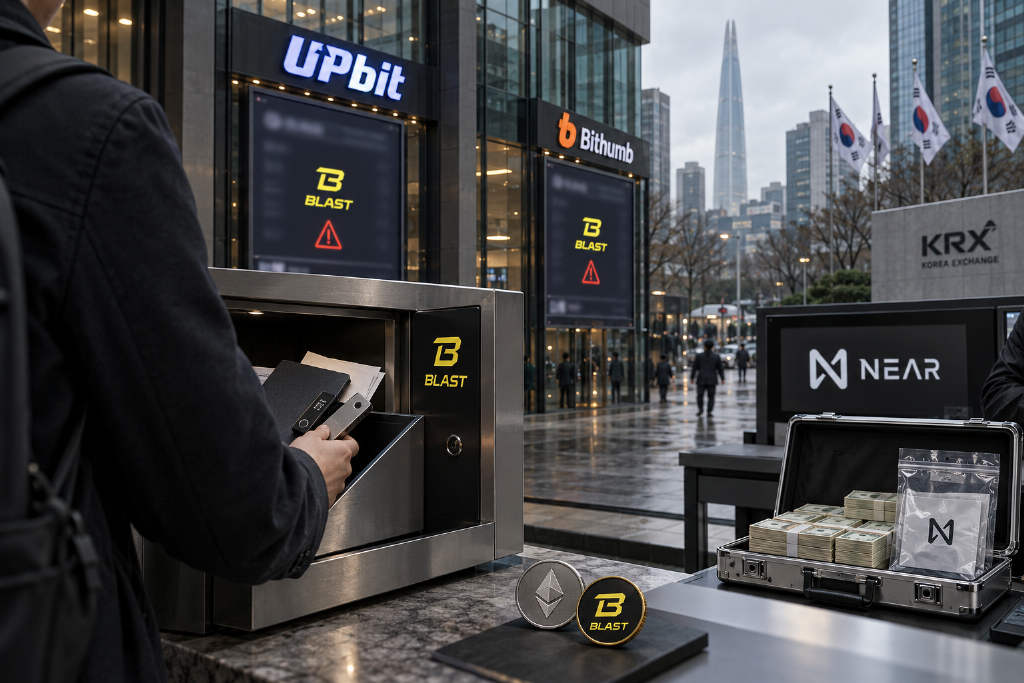
PANews on Oct. 3 published a daily roundup covering regulation, project updates, market commentary and on-chain activity. The two biggest items were Blast’s plan to shut down operations and NEAR Intents’ statement that the $3.8 million taken in its earlier exploit had been returned in full.
Regulation and macro
Bloomberg ETF analyst Eric Balchunas said the U.S. Securities and Exchange Commission had approved 3x long exchange-traded products tied to Bitcoin, Ether, gold, silver, crude oil and natural gas under the Securities Act of 1933.
According to Jinshi, U.S. nonfarm payrolls rose by 29,000 in September on a seasonally adjusted basis, below the 90,000 consensus estimate. The prior reading was revised down to 133,000 from 162,000. The U.S. unemployment rate came in at 4.2%, versus an expected 4.1% and a prior 4.10%.
Jinshi also reported that swaps linked to Federal Reserve meeting dates no longer fully price in one complete rate hike this year. In a separate update, traders were said to have reduced bets on a Fed rate hike in October.
Project developments
NEAR Protocol co-founder Illia outlined a new set of ideas for developers. The list included a verifiable AI Tamagochi built on NEAR AI, Universal Checkout supporting payments from any wallet and chain, an AI encyclopedia tied to prediction markets, a private OTC marketplace based on NEAR Intents, automated trading strategies designed to avoid liquidation, escrow for event registrations, private code review, corporate equity and fundraising management, delta-neutral strategies, private social trading, private medical AI second opinions, private voice transcription and AI model evaluation. He also suggested using channels such as NEAR Legion, Aurora Intent Connect and community distribution.
Blast said on X that it will cease operations. The team said the chain’s economics no longer worked, with operating costs exceeding the revenue generated by the layer-2 network, and that it did not see a credible path to a sustainable model.
Blast asked all users to withdraw assets, including Blast PWA balances, to Ethereum mainnet. Withdrawal delays will be reduced to 24 hours. During the shutdown process, Lido assets will be withdrawn first, which is expected to take about one week, and withdrawals will be temporarily unavailable during that time. Users must withdraw through the standard Blast interface before Oct. 26, 2026. After that, they will need to interact directly with the Blast bridge contract on Ethereum L1, and Blast said it will publish detailed instructions later.
According to The Block, Solana perpetuals exchange Velocity, formerly Drift, has opened claims for compensation tied to its April hack. Users can receive 1 DFX token for every 1 USDT of loss. At current pricing, that works out to about 0.0104 USDT per DFX, or roughly 1% of losses. The compensation pool is about 3.11 million USDT, and DFX has a total supply of about 299.5 million tokens with no further issuance planned.
The Drift Foundation said the pool will continue to be funded with protocol revenue. Tether has pledged up to 127.5 million USDT to support the restart and user compensation. The claim deadline is Jan. 1, 2028. Drift previously lost about $295.4 million in the April attack.
Genius said its second season has ended. The project had planned to distribute 200 million GP but actually distributed 173 million GP. Users who choose a refund can receive a full fee refund, and the corresponding GENIUS tokens will be permanently burned. The refund window runs from Oct. 7 at 00:00 to Oct. 12 at 00:00, and users who take refunds will lose the GP earned during the season.
Users who do not request refunds can either unlock their allocation immediately during a five-day window starting Oct. 12, with an 85% deduction, or lock for 24 months to receive 100% of the airdrop allocation. The 173 million GP already distributed corresponds to a potential claim on up to 6.055% of total GENIUS supply, while the remaining 0.945% will be burned automatically.
Ronin Waypoint wallet will shut down on Oct. 16. Users must complete asset migration before the final deadline, or funds left in Waypoint wallets may become inaccessible. The migration mainly affects users relying on social login, keyless setups or MPC wallets.
Users can move assets to Ronin Stash, which supports email or social login, or to Ronin Wallet protected by a seed phrase. Users who only use seed-phrase wallets are not affected. bAXS and badges must be handled separately through Axie’s official migration page and can only be processed once. The team urged users to confirm that assets reached the destination wallet and to check for anything left behind.
The Information reported that Anchorage Digital, the first federally chartered digital asset bank in the U.S., has cut 17% of its staff. The report said Anchorage was valued at $4.2 billion earlier this year and had around 400 employees globally as of February, implying about 68 jobs were affected.
Aave Labs submitted an ARFC proposal on the governance forum to establish Aave Foundation as a foundation company without members in the Cayman Islands. The proposed entity would hold the lending protocol’s trademarks and related intellectual property under Aave DAO oversight. The proposal only covers phase one, including registration of the foundation and the appointment of independent directors, a supervisor and a secretary. The DAO would cover reasonable registration, legal and setup costs, with no ongoing budget.
Aave Labs and DAO service providers would be barred from serving as directors or supervisors, while governance authority would remain with the DAO. If the community reaches consensus, the process will move to a Snapshot vote, followed by an AIP to authorize the related expenses. Independent directors and supervisors would be appointed after registration, and the IP transfer would take place afterward.
CoinDesk reported, citing two people familiar with the matter, that custody banking giant BNY is in talks with Payward, the parent company of Kraken, on a broad partnership around digital assets and financial market infrastructure. The talks could cover crypto products, custody, wealth management, trading, payments and infrastructure, with related services offered through the B2B platform Payward Services.
The report added that parts of the proposed cooperation could resemble the infrastructure component of Payward’s recent agreement with Nasdaq. Discussions are ongoing, and there is no assurance a final deal will be reached.
NEAR Intents general manager Alex Shevchenko said the $3.8 million stolen in the earlier exploit had been fully returned. He said the team would stop its investigation and called on relevant parties to report issues through bug bounty programs in the future. Earlier, NEAR Intents had said it identified the entity behind the attack and gave it 48 hours to return the funds.
Eric Balchunas also said Canary had filed an amended application for a Pepe ETF. He added that this may be another sign that the crypto winter is over.
Bitwise CEO Hunter Horsley wrote on X that he had personally bought the Bitwise NEAR ETF, though he did not disclose the size of the purchase. Horsley had previously said investors bought the dip in NEAR this week and that the Bitwise NEAR ETF saw about $9 million in net inflows on its third trading day.
According to a post relayed by SlowMist chief information security officer 23pds, Alex Shevchenko said the NEAR Intents exploiter sent 1 BNB to a recovery wallet with a message saying the sender was willing to cooperate and asking for a Signal contact. The transfer came from the same address that had previously moved about $3.8 million. About one hour earlier, the address also sent 0.295 ETH on Ethereum with the same message.
Bloomberg reported that Cboe Global Markets is considering perpetual futures tied to the CBOE Volatility Index, or VIX. Since the VIX itself cannot be traded directly, Cboe said it would explore listing the product once regulation around perpetual futures in the U.S. becomes clearer.
Rob Hocking, Cboe’s global head of derivatives, said clients have been asking how to gain spot exposure to the VIX and that perpetual futures could be a useful solution. He also said options still have clear advantages over perpetuals, including non-linear payouts and the fact that buyers can only lose the premium paid. He called on regulators to provide clearer guidance for perpetual contracts.
The Block had earlier reported that Shevchenko said the team identified the entity behind the roughly $3.8 million exploit and gave it 48 hours to return the funds. He said the entity should understand responsible disclosure rules better than most people and that this was its last opportunity to use that mechanism.
Views and analysis
Trader Killa said Bitcoin’s top target for the year is $97,000 and that price may spend the rest of the year trading below that level. He said the rally in this cycle has been more parabolic than in prior cycles and began earlier.
He described the $80,000 to $83,000 range as critical support. If that area breaks decisively, he said the next target could be $74,000 to $77,000, which could become a panic-selling bottom before another run toward prior highs. If momentum stays intact, he said any pullback may only reach the low $80,000s. Killa added that he opened a 10x leveraged long at $83,500 and may add BTC spot and long exposure if panic selling appears in the fourth quarter.
Maelstrom CIO Arthur Hayes said U.S. policymakers may end up printing money to support AI investment and Treasury financing, a process that could lift crypto prices. Hayes said AI companies need trillions of dollars to build data centers and that there are not many alternatives besides money printing.
He also discussed the possibility that a major Asian country could shift from mild tightening to large-scale monetary stimulus, and he pointed to financial pressure in France, including BNP Paribas-related CDS and French government bond spreads. Hayes said money printing will happen at some point, but called it a slow-moving disaster below the surface.
CryptoQuant analyst Darkfost said Bitcoin is now testing two holder cohorts. The cost basis for holders with coins aged 18 months to two years is about $88,350, while the cost basis for the six- to 12-month cohort is about $89,200. Bitcoin is moving into that overlapping area, where those investors may react emotionally.
Darkfost said cost basis is only an average and should be used to identify risk zones. The six- to 12-month group has been underwater for nearly a year, with some investors likely buying near the top. This test could force out less patient holders, while others may keep buying to lower their cost basis and move back into profit. Those actions, he said, could interrupt the momentum built during the prior advance.
Key data and whale activity
Lookonchain said Andrew Tate deposited 20,950 HYPE worth $1.87 million to Binance today. About two years ago, he bought 122,827 HYPE at an average price of $4.48, then worth about $550,000. He still holds 63,550 HYPE worth $5.62 million. His total profit on HYPE stands at $7.24 million, for a return of 1,317%.
Darkfost also said total stablecoin market capitalization has shrunk by $14 billion since May, pointing to a large capital outflow from crypto. Conditions have improved slightly since September, with market value rising by $4 billion to around $270 billion. Even so, he said the rebound remains weak and stronger momentum would be needed for Bitcoin to reach a new high.
South Korean crypto exchanges Upbit and Bithumb have placed BLAST on a trading caution list. BLAST was quoted at $0.0002387, down 42% over 24 hours. Earlier, Blast had announced that it would stop operating and advised users to move assets to Ethereum mainnet before Oct. 26.
According to Ember monitoring, the largest trader who shorted ChangXin Technology, or CXMT, before its listing closed the full position 10 hours ago and ended with a loss of $10.98 million. That included $5.18 million in funding costs and $5.8 million in price losses. The whale opened the short at $6.5 the day before listing, bet on a decline, held the trade for two months as the price stayed firm, and finally exited at $8.5.
Onchain Lens said a newly created wallet withdrew a cumulative 198,290 HYPE from Coinbase Prime, worth about $17.29 million.
Lookonchain said Machi Big Brother posted 10 straight winning trades on PUMP over the past five days, for cumulative profit of $1.34 million. His current long positions include 33,950 ETH worth $92.56 million, 409 BTC worth $35.22 million, and 180,000 HYPE worth $16.16 million.
CoinGlass data showed Ether gained 70.8% in the third quarter of 2026, marking its strongest quarterly performance since the first quarter of 2021.
ens.eth (@ensdomains) sold 1,097 ETH four hours ago at $2,743, for a total of $3 million.
Lookonchain said trader 0xd9A2 opened a 20x leveraged long on 2,900 ETH worth $7.97 million on Aster. The position is now showing more than $1 million in unrealized profit, a return of 251.68%.
According to Binance market data, crypto-linked equities rose as Bitcoin touched its highest level in more than a week. Riot gained 4.3%, HUT 8 rose 5%, MARA advanced 5.8%, Coinbase Global climbed 5.1%, and Strategy added 5.6%.