
Fresh material published by CryptoComLearn on BlockMason Link (BLINK) offers only a narrow snapshot of the token, with the most visible information centered on a short FAQ rather than a full market profile. The key pricing line on the page states that the all-time high price of BlockMason Link is 0, while also indicating that the current price is down “--” from that level. As presented, the entry does not provide a broader historical chart, trading range, volume context, or additional pricing metrics that market participants would typically expect when evaluating a crypto asset.
That matters because in digital asset markets, the quality and completeness of publicly accessible data often shape the level of investor confidence around a token. A sparse information page does not by itself prove anything conclusive about an asset’s liquidity, adoption, or long-term viability. However, it does limit the ability of traders, analysts, and prospective holders to form a clear, evidence-based view of the market. In the case of BLINK, the currently visible content appears more educational and operational than analytical, with storage methods receiving more attention than tradable market signals.
What the page actually highlights
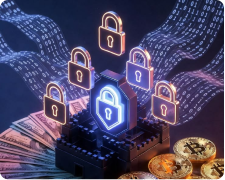
The strongest practical takeaway from the material is not a valuation update but a custody guide. According to the FAQ, users can store BLINK in a custodial wallet provided by a cryptocurrency exchange, allowing them to avoid direct management of private keys. This is a common entry point for newer users, since it reduces technical friction and shifts much of the wallet-management burden to the platform hosting the assets.
The same material also notes that BLINK may be stored using a self-custody wallet, including wallets on a web browser, mobile device, or desktop environment. Beyond that, the page lists hardware wallets, third-party crypto custody services, and paper wallets as additional storage options. While the information is basic, it reflects an important distinction in the crypto ecosystem: whether users prefer convenience and platform support, or direct control over their own keys and assets.
Why incomplete price data can influence sentiment
Pricing data is the backbone of crypto market analysis. Even for small-cap or less-followed tokens, investors usually look for a minimum set of indicators: all-time high, all-time low, circulating data, turnover, exchange coverage, and current price performance. When a page displays an all-time high of 0 and omits broader context, the result is not necessarily a bearish signal on its own, but it is a signal that the publicly available dataset is incomplete or not especially useful for valuation work.
From a market perspective, incomplete information can affect a token in several ways. First, it makes price discovery harder. Without reliable historical references, traders struggle to contextualize short-term moves. Second, it can reduce analyst coverage, since professional researchers and institutional participants generally rely on structured and verifiable datasets. Third, it may dampen retail participation, particularly among users who treat transparent, up-to-date market pages as a baseline requirement before making allocation decisions.
For BLINK specifically, the limited information on this page suggests that anyone conducting due diligence should verify data through additional sources before drawing conclusions. That includes checking exchange listings, independent market aggregators, project documentation, and wallet compatibility resources where available. In crypto markets, fragmented information often introduces an extra layer of execution and operational risk for participants.
Custodial versus self-custody: the real user decision
Although the page is light on price analytics, it does point readers toward one of the most practical decisions any token holder must make: where and how to store assets. Custodial wallets are generally attractive for users who prioritize ease of access, fast account setup, and simplified recovery processes. In many cases, they also integrate neatly with spot trading functions, making them convenient for active users who move in and out of positions.
Self-custody, by contrast, is better aligned with the core crypto principle of direct asset ownership. When users control their private keys, they are not relying on an exchange to maintain access to funds. But with that autonomy comes responsibility. Seed phrase backup, device hygiene, phishing awareness, and transaction verification all become essential. Losing access credentials in a self-custody setup can mean permanent loss of assets, which is why this route is often better suited to users who understand the operational side of digital asset security.
Hardware wallets, also referenced in the material, are commonly viewed as a stronger option for long-term holders because they help keep keys offline. Paper wallets and third-party custody services can also fit specific use cases, though each comes with trade-offs involving usability, recovery procedures, and trust assumptions. In that sense, the BLINK page may be limited as a pricing reference, but it still touches on a topic with real-world importance for token holders.
Market impact analysis: limited direct catalyst, but a transparency signal
As a news item, this update is unlikely to serve as a major trading catalyst because it does not introduce a new partnership, tokenomics revision, network upgrade, exchange listing, or on-chain milestone. There is no disclosed change in demand metrics, no timeline for protocol expansion, and no fresh data on usage or liquidity. As a result, the immediate market impact should be considered modest.
Still, transparency itself matters. In a competitive digital asset environment, projects and tokens that are easier to research often attract more attention from both media and market participants. Better data availability can improve discoverability, lower due diligence friction, and support healthier price discovery. Conversely, if publicly accessible token information remains sparse over time, that can make it harder for an asset to maintain relevance outside of an existing niche user base.
The broader implication is straightforward: BLINK may not be drawing focus today because of a dramatic market event, but because the available reference material underscores how much of crypto investing still depends on data quality. For traders, the absence of complete metrics is itself something to factor into risk management. For long-term holders, wallet selection and custody planning remain essential, especially when market information is thin.
Based on the currently available CryptoComLearn material, the most defensible conclusion is a conservative one. The page shows an all-time high of 0 and provides basic guidance on storage methods, including custodial and self-custody solutions. Until richer market data is made available through broader channels, BLINK is likely to remain a token that requires extra caution, extra verification, and a stronger emphasis on operational security than headline-driven momentum.