
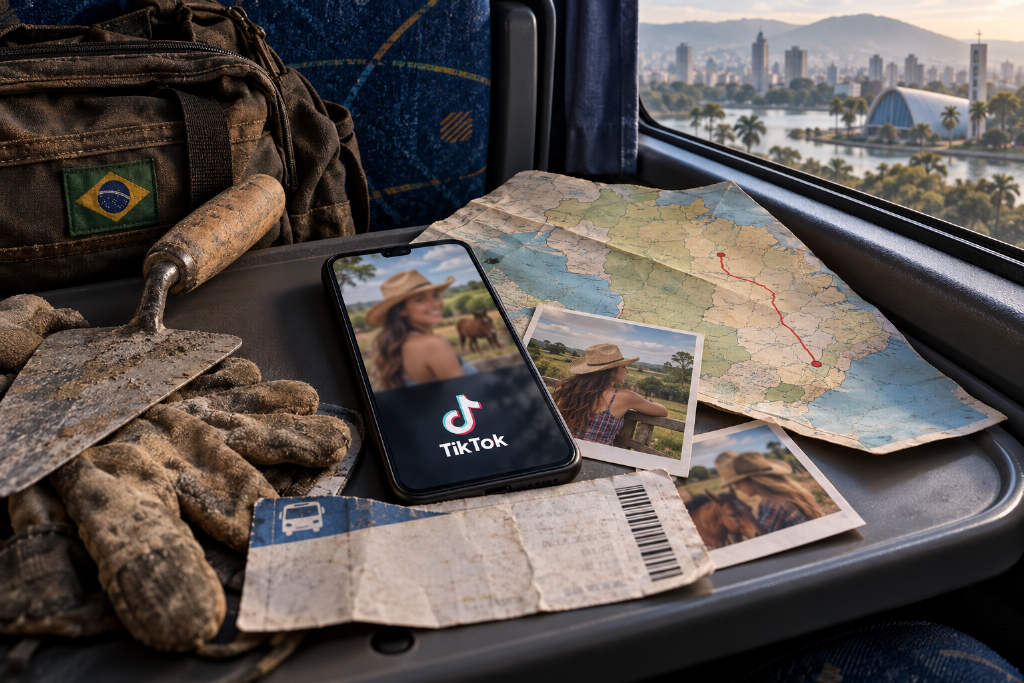
A 49-year-old Brazilian bricklayer traveled more than 2,000 kilometers by bus to meet a woman he believed he knew from TikTok, then found out the person did not exist. BlockTempo, citing Brazilian outlet G1, reported that Edimar Rocha Martins spent more than 36 hours on the road from Imperatriz, in Maranhão state, to Belo Horizonte, the capital of Minas Gerais.
Martins left on Oct. 9 and arrived on Oct. 11. He was trying to meet Jéssica Oliveira. Once he got there, he asked people on the street about her and sought help from local radio, but no one knew who she was because the woman was not real.
An AI-generated TikTok persona with more than 300,000 followers
The character appeared on TikTok as "farm girl Jéssica" and had more than 300,000 followers. Her face and voice in the videos looked realistic, but the person shown in the clips was generated by AI.
In the videos, she described herself as single, said she owned a farm, and said she wanted to find a man to move to the countryside with her. She also said she would support him financially. The clips also included e-commerce promotions.
In one video, she said: "I like having someone to help, but I want you to belong only to me. I want to find a masculine man."
Martins said the account messaged him and never asked for money
Martins told G1 that the account had contacted him through direct messages. He said the person behind it never asked him for money and instead "always said she would pay for my ticket, pick me up anywhere, give me an address — that was always the kind of proposal." Even so, he did not have her address when he started the trip.
He also told TV Mirante that he had been in contact with the account since 2020. He said he did not suspect a scam because no money had ever been requested. What he received, he said, were repeated promises that did not require him to pay first: a bus ticket, transportation, an address, and financial support.
He said loneliness played a role after his mother's death
Martins told Itatiaia radio that he had felt very lonely in his hometown after his mother died, and that "Jéssica" became a hope for a different life. For someone in that situation, an account with more than 300,000 followers and a realistic face and voice could easily appear genuine.
He said he did not become suspicious until he reached Belo Horizonte. He told G1: "I took several photos around and asked whether anyone knew this person, and everyone said no. So I felt I had been deceived." He also told Imirante and TV Mirante that local radio staff told him the profile was fake and that the woman did not exist.
To make the trip, Martins said he sold everything he owned: "I sold all my things. I have nothing left. How could anyone not feel discouraged?" BlockTempo noted that this was his own account and had not been independently verified by media outlets.
City social services helped him return home
Belo Horizonte's municipal social assistance department provided him with food and hygiene support and warned him about the risks of online scams. On Oct. 13, the department bought him a bus ticket back to his birthplace. He returned to Imperatriz on Oct. 15 and stayed with relatives.
Account manager said the profile was created in 2025 for affiliate marketing
In an interview published by G1 on Oct. 15, the person managing the account, who did not want to be named, said the profile was created in 2025 to attract attention and later make money through affiliate marketing in e-commerce. Under that model, the operator earns a commission when people buy products through the account's links.
He said the romantic invitations in the videos were only there to draw attention. He denied ever speaking privately with Martins: "I think he watched a video and thought the video was calling him to come there, but there was no conversation between us."
He also said he did not know whether anyone else had used videos of the character on other accounts to chat with people. According to him, the account had already stopped making much money and was nearly abandoned. It went offline on Oct. 14. He added: "These videos were never meant to bring this kind of trouble into anyone's life."
Two key points in dispute remain unverified
The two sides differ on at least two points. The first is timing. Martins said he had been in contact with the account since 2020, while the manager said the account was only created in 2025. The second is whether direct messages ever existed. Martins said they did; the manager said they did not.
No independent verification has established whether those messages existed, and it is not known who, if anyone, may have been chatting with Martins.
Police have not received a complaint
Police in Minas Gerais said they had not received a report about the case. They said creating AI characters does not by itself constitute a crime, but using the technology to deceive someone and obtain unlawful gain could amount to fraud. Without reviewing the facts of the case, police said they could not determine whether a crime had occurred.
Police advised people to verify the identity of anyone they plan to meet in person after online contact, avoid sending money or personal information, and keep evidence.
TikTok's community rules require creators to label AI-generated content that presents realistic scenes or people. Unlabeled content may be removed, restricted, or labeled by TikTok itself. BlockTempo said the reports it reviewed did not say whether Jéssica's videos carried such a label, so that point remains unclear.
Martins called for legal rules, then said he would go back
Before leaving Belo Horizonte, Martins said: "This kind of thing should not exist. There should be a law to regulate it. Everyone can be deceived. Anyone can fall for it."
After returning home, he said he did not regret the trip: "I didn't find her, but I will find another one, and it will be in the same place I already went. I will go again."



