


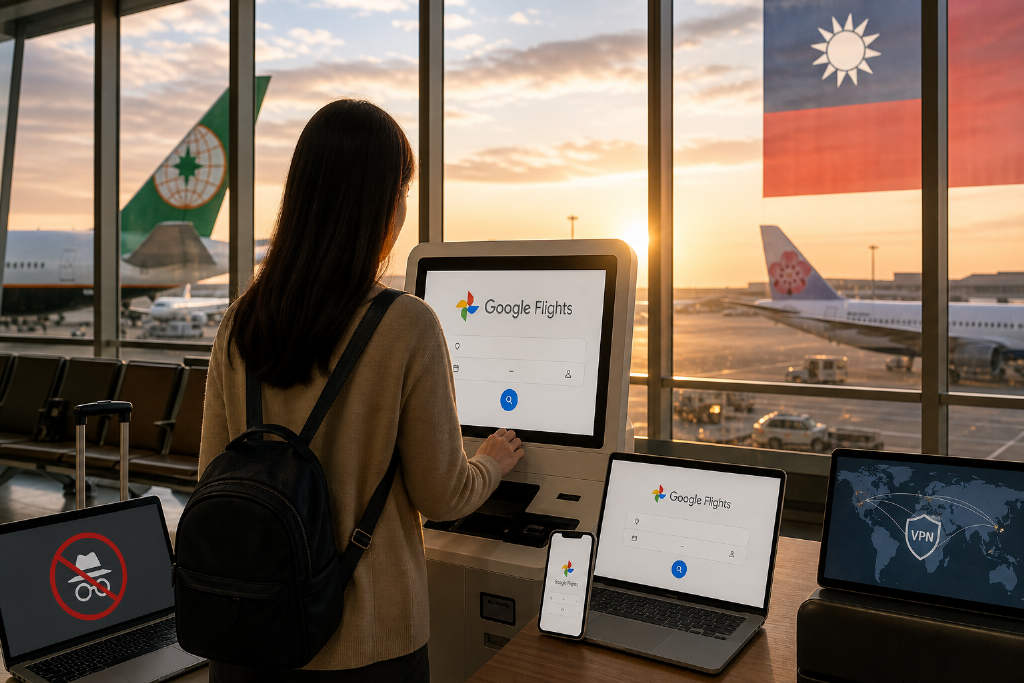
Finding a cheap plane ticket is not just about luck. ABMedia reported that flight deal expert Brian N recently joined the YouTube channel "Shiqi 77" to talk through booking habits, fare tools, and a few claims about airfare pricing that he said do not match reality.
His clearest rebuttal targeted the familiar "incognito mode" theory. According to Brian N, using private browsing does not materially lower ticket prices. He said travelers are better off learning how fare systems work, using Google Flights more effectively, and checking for hidden price gaps through language-setting changes and VPN-assisted comparisons.
Three Google Flights features he singled out
Brian N said Google Flights was not especially complete when it first launched, but he now sees it as a strong AI-driven search and fare comparison tool.
The first feature is consolidated pricing across suppliers. When users search for a specific flight, Google Flights can show fares from airline websites and online travel agencies, or OTAs, on the same page. That removes the need to jump from site to site just to compare offers.
The second is flexible comparison across multiple origins and destinations. Rather than locking in one departure city and one destination too early, he suggested widening the search.
- On the departure side, Google Flights allows users to select as many as five origin points at once. He gave Taipei, Taichung, and Kaohsiung as examples for comparing which city offers the better fare.
- On the destination side, users can also compare five target cities at the same time. They can even leave the destination open and let the system recommend options based on budget.
The third feature is plain-language AI recommendations. Brian N said travelers do not have to fill in a long list of parameters if they already know the kind of trip they want. He gave an example prompt: "I want to take my girlfriend to an island vacation in July with a budget of about X." In that case, he said, the system can recommend routes, airfares, and trip ideas that fit the request.
Language switching may expose fare gaps on Western carriers
Brian N also shared a separate tactic that he said can work with international carriers in Europe and the Americas, including Norwegian Air, LATAM, and the three major U.S. airlines.
His method is to visit the airline’s official website and switch to the local language version. In some cases, he said, changing the page language to the local language or even to a less commonly used language can produce noticeable price differences for the same trip.
To avoid confusion during the booking flow, he suggested opening two windows at the same time, one in Chinese and one in the less common language, then matching the same layout and buttons across both screens while entering details.
He also described a VPN-based approach: open the browser through a VPN, switch to the destination language environment, use translation tools to understand the process, and then return to the language setting that showed the biggest fare gap before completing the purchase.
At checkout, he said travelers should convert the local currency back into New Taiwan dollars and compare again before paying.
For Taiwan airlines, he said the room is smaller
Brian N added that this kind of pricing gap is less common with Taiwan airlines such as China Airlines and EVA Air because their systems are more tightly controlled.
For tickets sold by Taiwan-based carriers, he suggested looking for promotional fares at travel fairs or choosing off-season departures in March and November. He also cautioned that demand for seats during the same period still matters, even in a slower season.
For families or groups that want to sit together, he said one option is to buy tickets one by one and select seats later, which he said can reduce the overall cost.
The article first appeared on ABMedia.