

Bitcoin has fallen about 7% from its recent high over the past two days, but the source article says the move cannot be explained simply by transfers from wallets linked to the U.S. government.

In a piece written by David for TechFlow and published by MarsBit, the argument is that the latest pullback looks more like an internally amplified sell-off triggered by macro liquidity pressure and made worse by a fragile holder structure.
Government transfers are not the same as confirmed spot selling
According to data cited from CryptoQuant, holdings attributed to the U.S. government declined by 569 BTC, 4,632 BTC, and 12,267 BTC on Oct. 6, Oct. 7, and Oct. 8. That brought the three-day total to more than 17,400 BTC, valued at over $1.44 billion. The article says the assets mainly came from funds seized in the 2016 Bitfinex hack case.
Still, the report draws a line between on-chain transfers and actual selling in the secondary spot market. Some of the funds moved to Coinbase Prime, but that alone does not show the coins were immediately sold through the spot matching engine. The article notes that Coinbase Prime is the official crypto custody platform designated by the U.S. Marshals Service, and large transfers can also reflect asset sorting, batch consolidation, or routine custody migration during legal proceedings.
It adds that there is no public evidence or regulatory announcement showing that these coins have already been sold on the spot market. One transfer on Oct. 8, the largest of the batch at more than 12,000 BTC, was sent to a new unlabeled on-chain address rather than directly to an exchange deposit hot wallet.
On that basis, the article says the idea that the government led a $1.4 billion spot dump is better understood as a supply overhang in traders’ minds than as a confirmed wave of executed sell orders.
Short-term holders were sitting on large paper gains
The article puts more weight on unrealized profit among short-term holders. In on-chain analysis, realized price is the cost basis implied by the last on-chain transfer of coins. After a month of steady gains, holders with a holding period of one to three months had seen their average cost basis fall well below spot, leaving them with unusually large paper profits.
That kind of setup can make the market highly reactive to marginal negative signals. Even if a large transfer does not amount to confirmed selling, traders who are already deep in profit may still choose to lock in gains first and leave uncertainty to others.
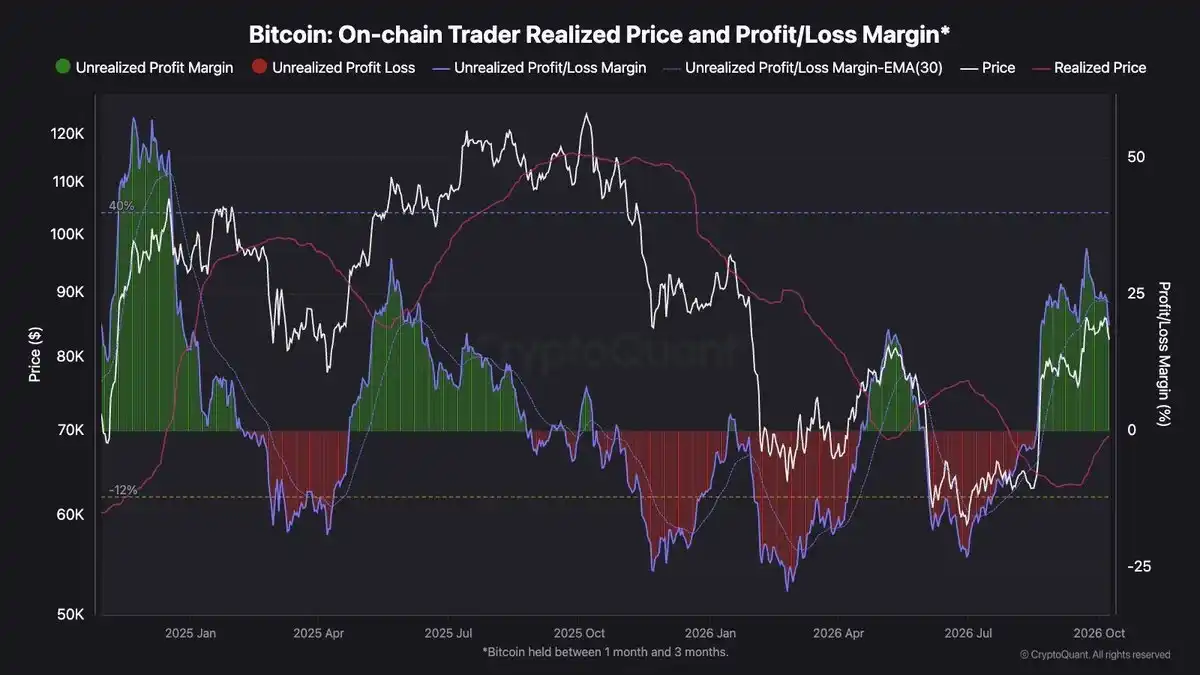
The article points to exchange flow data as the clearest micro signal. During the 24 hours of the breakdown, short-term holders sent 45,600 BTC to centralized exchanges. Of that amount, 29,100 BTC was deposited at a loss, which the article describes as the largest one-day loss-side inflow since the consolidation period in June.
Its reading of the sequence is straightforward. Fast money that had been sitting on gains moved first to take profit once the transfer headlines spread. Then, after price broke below short-term trend support, some traders who had chased higher levels lost risk tolerance and shifted into forced loss-cutting. In that telling, the heavier pressure came from traders stepping on each other inside the market, not from government-held coins still sitting in custody.
Macro liquidity remains tight
The article also places the crypto move alongside weakness in broader risk markets. In the same window that Bitcoin rolled over, risk appetite in traditional finance also cooled.
On the day crypto prices fell, the Nasdaq dropped about 1.25% and the S&P 500 also moved lower. The article says geopolitical tensions and disruptions to oil supply pushed crude prices back up, undermining the market’s earlier pricing of aggressive rate cuts by major central banks and reviving inflation concerns.
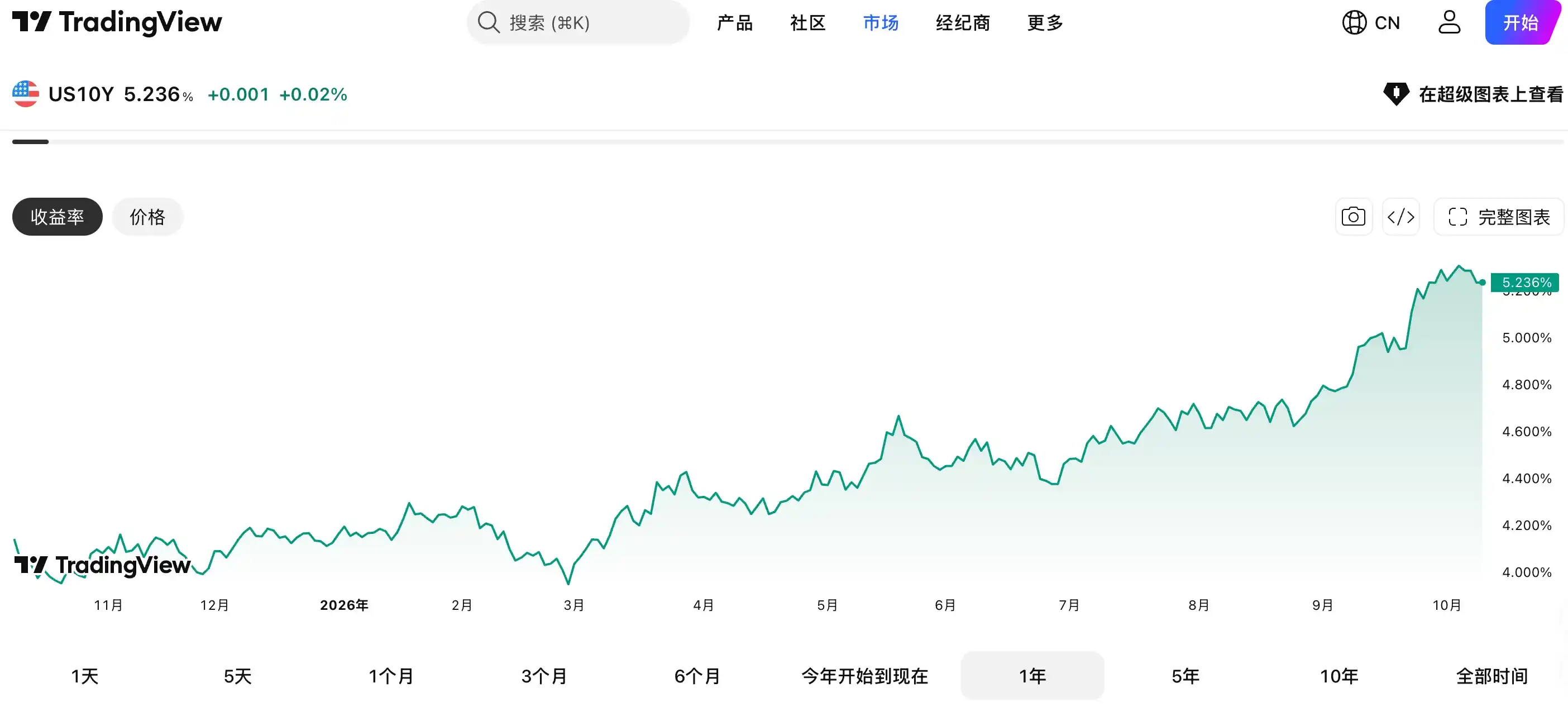
At the same time, the 10-year U.S. Treasury yield stayed above 5.2%, a historically elevated range in the article’s description. When risk-free government bonds can offer stable and attractive annualized returns, valuation multiples for high-beta growth assets tend to come under pressure. The article argues that this dynamic has affected both equities and crypto.
It adds that the earlier rally in semiconductor leaders and major crypto assets had both been driven by strong expectations. Once macro liquidity expectations tightened at the margin, defensive positioning by institutional money in stocks and crypto appeared at nearly the same time. In that framework, macro pressure reduced the market’s tolerance for risk, while crypto’s profit-heavy holder structure amplified the downside.
$74,600 is the on-chain line to watch
The article says traders should spend less time fixating on a single government wallet and more time tracking two practical variables.
The first is the on-chain defense line. Based on a CryptoQuant model cited in the piece, $74,600 is the current short-term holder realized price, or STH Realized Price. In a bull market, that level often acts as a dynamic support center.
If Bitcoin holds above it, the recent move can still be read as a healthy shakeout inside a broader uptrend, with profits being absorbed and derivatives leverage reset. If price breaks below that level with convincing volume, the article says short-term holders as a group would move into unrealized loss territory, opening the door to a deeper deleveraging phase.
The second variable is the macro liquidity turning point. The article calls for close attention to changes in Treasury yields and commodity prices. As long as inflation expectations and rate pressure do not ease in a meaningful way, it says crypto-native headlines alone are unlikely to produce a strong one-way reversal.
Altcoin traders are urged to watch positioning and funding
For other tokens, the article says the analysis has to move further down to micro structure, especially perpetual futures open interest and funding rates.
It mentions several active narratives in the market, including real-revenue protocols, older Layer 1 and Layer 2 businesses shifting toward AI, and themes tied to privacy and resistance to AI compromise. Those catalysts, the article says, can still drive short bursts of upside. It names NEAR, STRK, GRASS, and ZEC as tokens that have already seen such moves.
The author says the more interesting question now is which tokens show the shallowest declines during a broader BTC-led pullback, and then whether those names overlap with the narratives listed above.
The article was written by David for TechFlow and published by MarsBit.